

Cereals, QUAKER, Whole Wheat Natural Cereal, dry
Whole food · Breakfast Cereals

Photo: Wikipedia
Quaker Whole Wheat Natural Cereal is a hearty, crunchy, and mildly sweet toasted wheat cereal that delivers a satisfying, nutty flavor and a substantial, fibrous bite. Its nutritional profile is defined by its high fiber and protein content, making it a filling and wholesome breakfast option. This cereal is a classic example of a simple, minimally processed grain product that provides sustained energy.
Calorie split: 13% protein · 82% carbs · 5% fat
↓ Full nutrition💚 Why it's loved
People love its straightforward, toasty, and nutty flavor that isn't overly sweet, allowing it to be a versatile base for various toppings. Its satisfying crunch and ability to stay firm in milk make it a comforting and reliable breakfast staple.
⚠️ Watch-outs & how to enjoy it better
Its dense, fibrous texture can be too dry or tough for some, potentially causing digestive discomfort if consumed in large quantities without adequate hydration. To counteract this, pair it with a protein source like Greek yogurt or milk and consider soaking it briefly in liquid to soften the texture before eating.
Key benefits
- High in dietary fiber (9.9g per 100g) for digestive health and satiety.
- Good source of plant-based protein (11.8g per 100g).
- Low in fat (2g per 100g) and added sugar (2g per 100g).
- Provides complex carbohydrates for sustained energy release.
- Whole grain content supports heart health and blood sugar management.
🍽️ Popular dishes
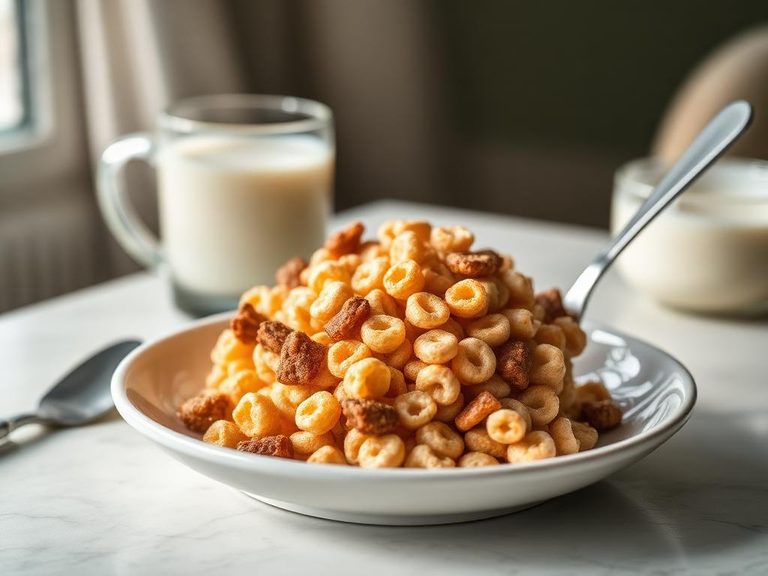
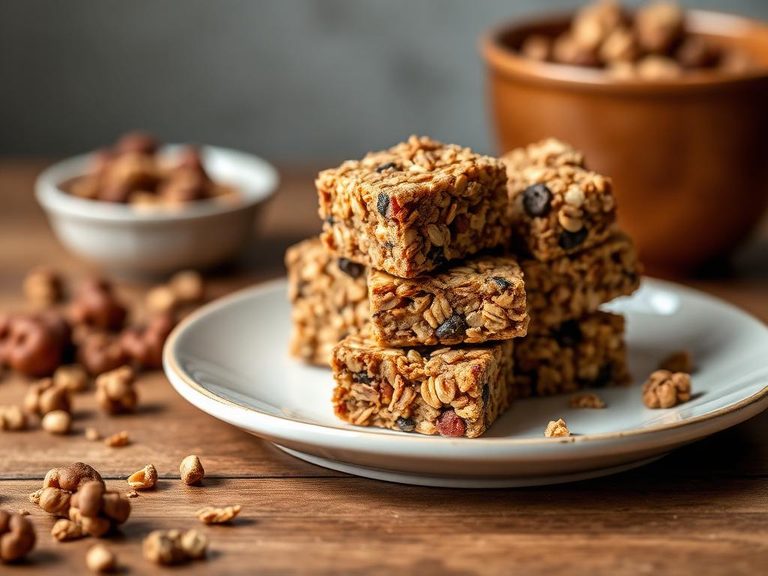
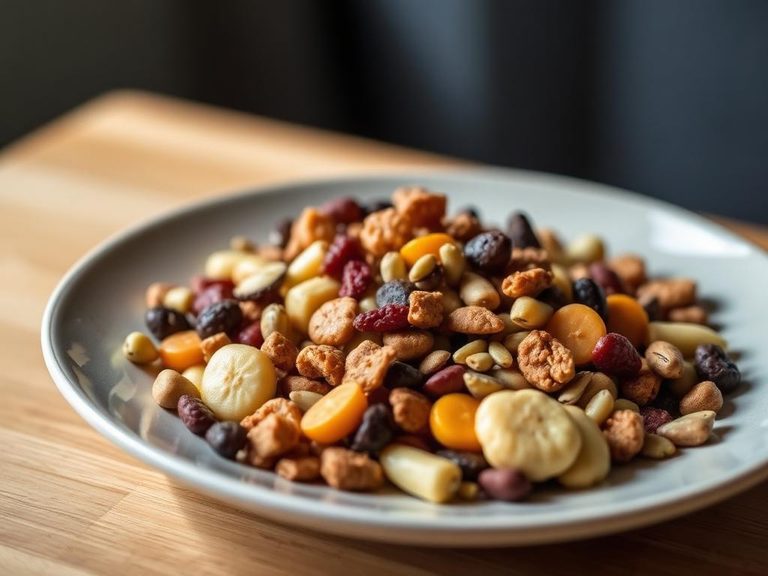
🌍 Where it's eaten
💡 Did you know?
Quaker Whole Wheat Natural Cereal is one of the original 'natural' breakfast cereals introduced in the mid-20th century, predating the modern health food movement and helping to popularize whole grains in American breakfasts.
Full nutrition (USDA data · scales with serving)
| Water | 9.8 g |
| Energy | 333 kcal |
| Energy | 1393 kj |
| Protein | 11.8 g |
| Total lipid (fat) | 2.0 g |
| Ash | 1.6 g |
| Carbohydrate, by difference | 74.8 g |
| Fiber, total dietary | 9.9 g |
| Total Sugars | 2.0 g |
| Calcium, Ca | 44.0 mg |
| Iron, Fe | 3.3 mg |
| Magnesium, Mg | 147 mg |
| Phosphorus, P | 406 mg |
| Potassium, K | 502 mg |
| Sodium, Na | 8.0 mg |
| Zinc, Zn | 4.1 mg |
| Vitamin C, total ascorbic acid | 0.00 mg |
| Thiamin | 0.48 mg |
| Riboflavin | 0.14 mg |
| Niacin | 5.1 mg |
| Vitamin B-6 | 0.44 mg |
| Folate, total | 49.0 ug |
| Folic acid | 0.00 ug |
| Folate, food | 49.0 ug |
| Folate, DFE | 49.0 ug |
| Vitamin B-12 | 0.00 ug |
| Vitamin A, IU | 11.0 iu |
| Vitamin E (alpha-tocopherol) | 0.94 mg |
Fat & fatty acid profile (per 100g)
| Fatty acids, total saturated | 0.42 g |
| Fatty acids, total monounsaturated | 0.31 g |
| Fatty acids, total polyunsaturated | 1.2 g |
| Fatty acids, total trans | 0.00 g |
| Cholesterol | 0.00 mg |
Amino acid profile (per 100g)
Estimated from Cereals ready-to-eat, POST, HONEY BUNCHES OF OATS, honey roasted — USDA does not publish this profile for Cereals.
| Tryptophan | 0.09 g |
| Threonine | 0.24 g |
| Isoleucine | 0.26 g |
| Leucine | 0.80 g |
| Lysine | 0.12 g |
| Methionine | 0.10 g |
| Cystine | 0.11 g |
| Phenylalanine | 0.39 g |
| Tyrosine | 0.21 g |
| Valine | 0.34 g |
| Arginine | 0.24 g |
| Histidine | 0.18 g |
| Alanine | 0.46 g |
| Aspartic acid | 0.48 g |
| Glutamic acid | 1.9 g |
| Glycine | 0.27 g |
| Proline | 0.49 g |
| Serine | 0.38 g |
FAQ
Is Quaker Whole Wheat Natural Cereal gluten-free?
No, it is made from whole wheat, which contains gluten and is not suitable for individuals with celiac disease or gluten sensitivity.
Can I eat this cereal if I'm watching my blood sugar?
Yes, its high fiber and protein content can help moderate blood sugar response, but it's still a carbohydrate-rich food. Pairing it with protein or fat and controlling portion size is recommended.
How should I store this cereal to keep it fresh?
Store it in a cool, dry place in an airtight container to maintain its crunch and prevent staleness or moisture absorption.
Nutrient density (calculated · NRF9.3)
Nutrient Rich Foods index: beneficial nutrients (protein, fiber, vitamins, minerals) minus saturated fat, added sugar & sodium, per 100 kcal.
NRF9.3 index — Fulgoni, Keast & Drewnowski, 2009. Computed from USDA nutrients.
Weight-loss friendliness (composite index)
Energy density 3.33 kcal/g · 14% calories from protein · 9.9 g fiber · 2.0 g sugar per 100 g.
Composite of energy density (Rolls et al., 1999), protein & fiber satiety, minus sugar. A calculated heuristic — ranks satiety-per-calorie, not a clinical measure.
Dietary load (calculated from USDA values)
Potential renal acid load. Positive = acid-forming, negative = alkaline-forming.
Sodium-to-potassium ratio: 0.02 (lower is better — aim for ≤ 1)
Sodium:potassium per WHO potassium guidance. Computed from USDA nutrients.