

Cereals, QUAKER, Instant Grits, Country Bacon flavor, dry
Whole food · Breakfast Cereals

Photo: Wikipedia
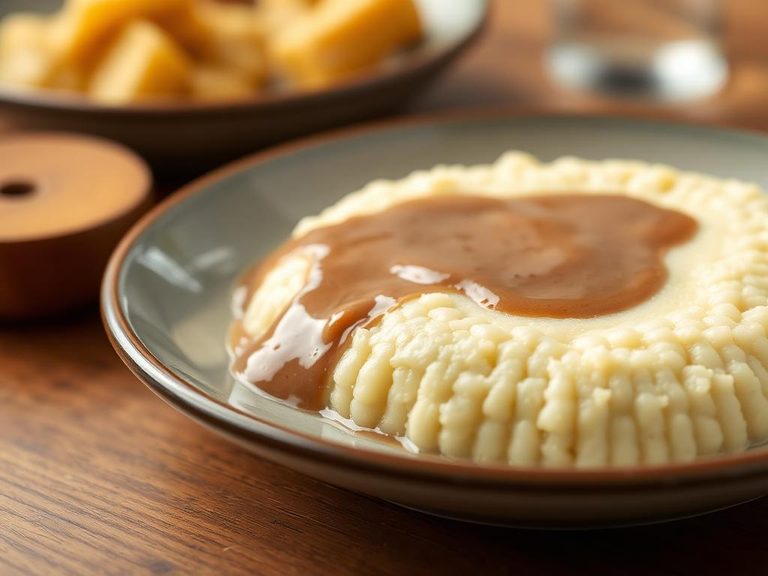
This is a shelf-stable, instant version of Southern-style grits, flavored with a smoky, savory bacon profile. The dry mix cooks into a creamy, porridge-like texture with a distinct salty, meaty taste. Nutritionally, it is a high-carbohydrate, low-fat food with a moderate protein content, often fortified with vitamins and minerals.
Calorie split: 11% protein · 85% carbs · 4% fat
↓ Full nutrition💚 Why it's loved
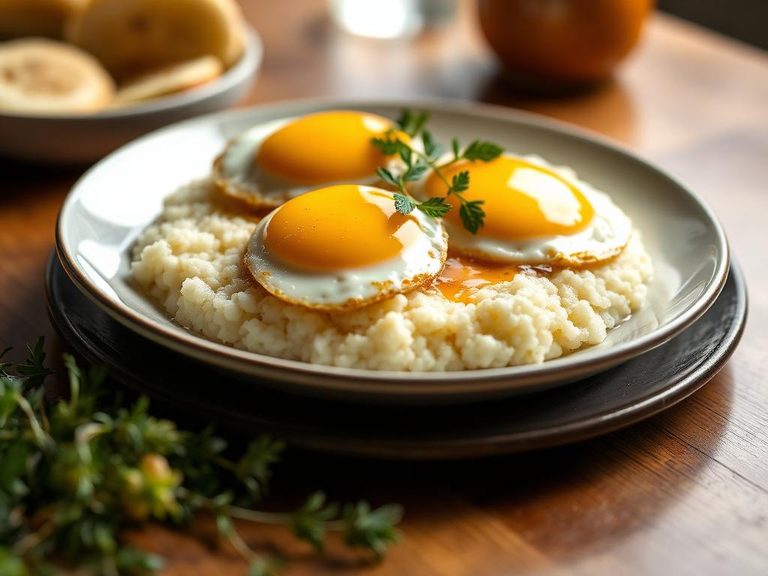
People love it for the comforting, nostalgic taste of bacon combined with the creamy texture of grits, offering a quick Southern-style breakfast. Its convenience and ability to be customized with toppings like cheese or eggs make it a versatile pantry staple.
⚠️ Watch-outs & how to enjoy it better
The high carbohydrate content and low fiber-to-carb ratio can cause rapid blood-sugar spikes, and it is often high in sodium. To counteract this, pair it with a source of protein (like an egg or cheese) and healthy fat, and practice portion control.
Key benefits
- Quick and convenient hot meal preparation
- Good source of complex carbohydrates for energy
- Fortified with essential vitamins and minerals
- Low in fat and cholesterol
- Provides dietary fiber
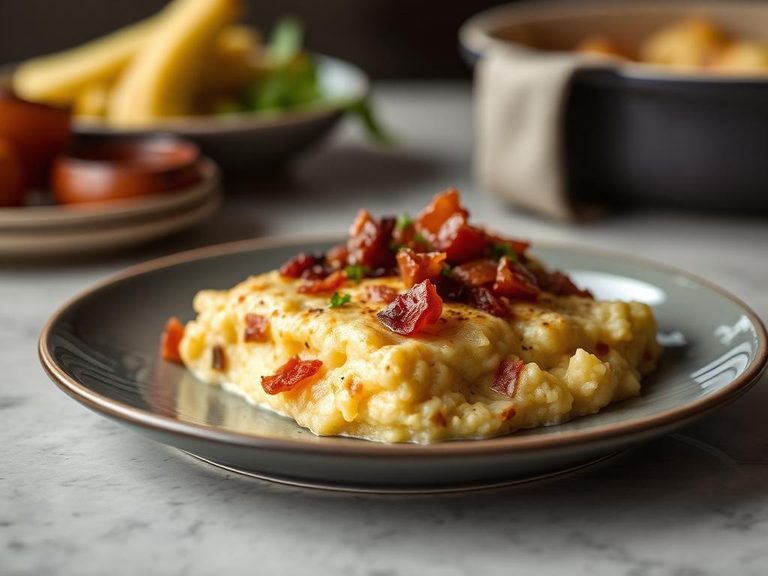
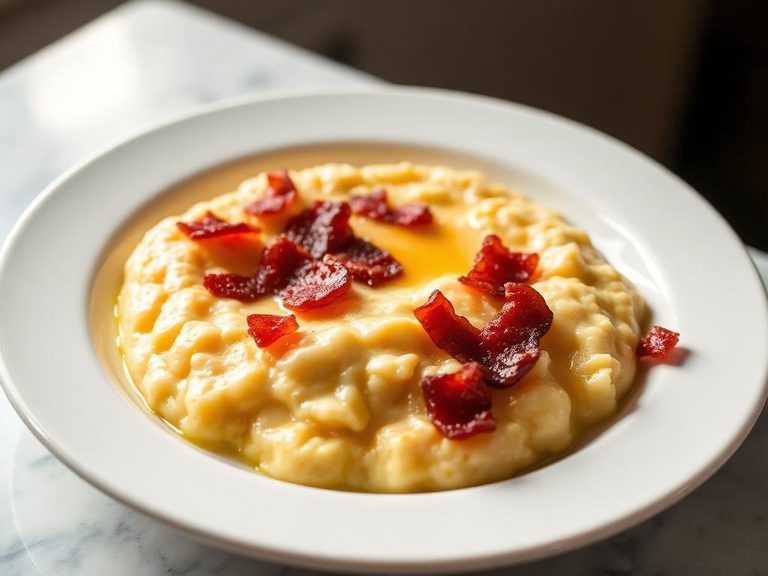
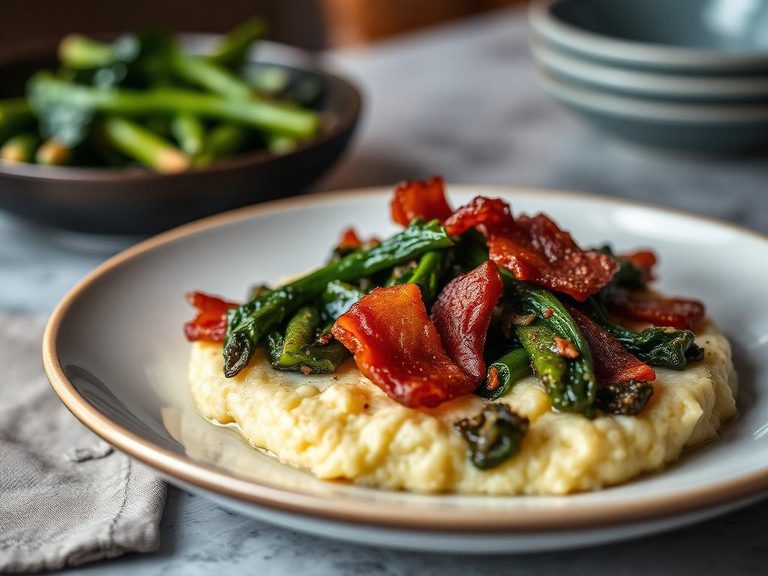
🍽️ Popular dishes
🌍 Where it's eaten
💡 Did you know?
Quaker Oats Company, primarily known for oatmeal, acquired the Quaker brand for grits in 1901, and the name 'grits' comes from the Old English word 'grytt,' meaning coarse meal.
Full nutrition (USDA data · scales with serving)
| Water | 7.4 g |
| Energy | 340 kcal |
| Energy | 1421 kj |
| Protein | 9.9 g |
| Total lipid (fat) | 1.7 g |
| Ash | 5.6 g |
| Carbohydrate, by difference | 75.4 g |
| Fiber, total dietary | 5.1 g |
| Total Sugars | 0.38 g |
| Calcium, Ca | 418 mg |
| Iron, Fe | 30.4 mg |
| Magnesium, Mg | 27.0 mg |
| Phosphorus, P | 93.0 mg |
| Potassium, K | 210 mg |
| Sodium, Na | 1523 mg |
| Zinc, Zn | 0.55 mg |
| Vitamin C, total ascorbic acid | 0.00 mg |
| Thiamin | 0.78 mg |
| Riboflavin | 0.71 mg |
| Niacin | 8.4 mg |
| Vitamin B-6 | 0.14 mg |
| Folate, total | 178 ug |
| Vitamin B-12 | 0.00 ug |
| Retinol | 0.00 ug |
| Vitamin A, IU | 0.00 iu |
| Vitamin E (alpha-tocopherol) | 0.11 mg |
| Alcohol, ethyl | 0.00 g |
Fat & fatty acid profile (per 100g)
| Fatty acids, total saturated | 0.24 g |
| Fatty acids, total monounsaturated | 0.40 g |
| Fatty acids, total polyunsaturated | 0.87 g |
| Fatty acids, total trans | 0.00 g |
| Cholesterol | 0.00 mg |
Amino acid profile (per 100g)
Estimated from Cereals ready-to-eat, POST, HONEY BUNCHES OF OATS, honey roasted — USDA does not publish this profile for Cereals.
| Tryptophan | 0.09 g |
| Threonine | 0.24 g |
| Isoleucine | 0.26 g |
| Leucine | 0.80 g |
| Lysine | 0.12 g |
| Methionine | 0.10 g |
| Cystine | 0.11 g |
| Phenylalanine | 0.39 g |
| Tyrosine | 0.21 g |
| Valine | 0.34 g |
| Arginine | 0.24 g |
| Histidine | 0.18 g |
| Alanine | 0.46 g |
| Aspartic acid | 0.48 g |
| Glutamic acid | 1.9 g |
| Glycine | 0.27 g |
| Proline | 0.49 g |
| Serine | 0.38 g |
FAQ
What is the difference between instant grits and traditional grits?
Instant grits are pre-cooked and dehydrated for quick preparation, while traditional grits are made from coarsely ground corn and require longer cooking times to achieve a creamy texture.
Are instant grits gluten-free?
While corn itself is gluten-free, some instant grits may contain additives or flavorings that could introduce gluten. Always check the label for certified gluten-free status.
Can I use this product in baking?
Yes, it can be used in recipes like grits bread, muffins, or as a thickener for soups and stews, though the bacon flavor will influence the dish.
Nutrient density (calculated · NRF9.3)
Nutrient Rich Foods index: beneficial nutrients (protein, fiber, vitamins, minerals) minus saturated fat, added sugar & sodium, per 100 kcal.
NRF9.3 index — Fulgoni, Keast & Drewnowski, 2009. Computed from USDA nutrients.
Weight-loss friendliness (composite index)
Energy density 3.40 kcal/g · 12% calories from protein · 5.1 g fiber · 0.4 g sugar per 100 g.
Composite of energy density (Rolls et al., 1999), protein & fiber satiety, minus sugar. A calculated heuristic — ranks satiety-per-calorie, not a clinical measure.
Dietary load (calculated from USDA values)
Potential renal acid load. Positive = acid-forming, negative = alkaline-forming.
Sodium-to-potassium ratio: 7.25 (lower is better — aim for ≤ 1)
Sodium:potassium per WHO potassium guidance. Computed from USDA nutrients.