

Beverages, drink mix, QUAKER OATS, GATORADE, orange flavor, powder
Whole food · Beverages

Photo: Wikipedia
This is a powdered drink mix that combines Quaker Oats with Gatorade's signature orange flavor, creating a unique, sweet, and tangy beverage base. When mixed with water, it dissolves into a bright orange, slightly gritty liquid with a nostalgic, candy-like orange taste. Nutritionally, it's a concentrated source of quick energy, delivering nearly all its calories from carbohydrates and sugar.
Calorie split: 0% protein · 97% carbs · 3% fat
↓ Full nutrition💚 Why it's loved
People love the intensely sweet, tangy orange flavor that evokes a sense of nostalgic fun and quick refreshment. Its versatility is key—it can be mixed into water for a drink, used as a dry rub, or added to baked goods for a citrus-sugar punch.
⚠️ Watch-outs & how to enjoy it better
The extremely high sugar content (over 80g per 100g) can cause rapid blood-sugar spikes and is not suitable for low-sugar diets. To counteract this, use a very small portion (e.g., 1-2 teaspoons) and mix it into a large volume of water, or pair it with a source of protein or healthy fat (like nuts or yogurt) to slow sugar absorption.
Key benefits
- Provides rapid carbohydrate energy for hydration or activity
- Convenient, shelf-stable powder for on-the-go preparation
- Offers a familiar, bold orange flavor profile
- Can be mixed to desired strength for calorie control
🍽️ Popular dishes

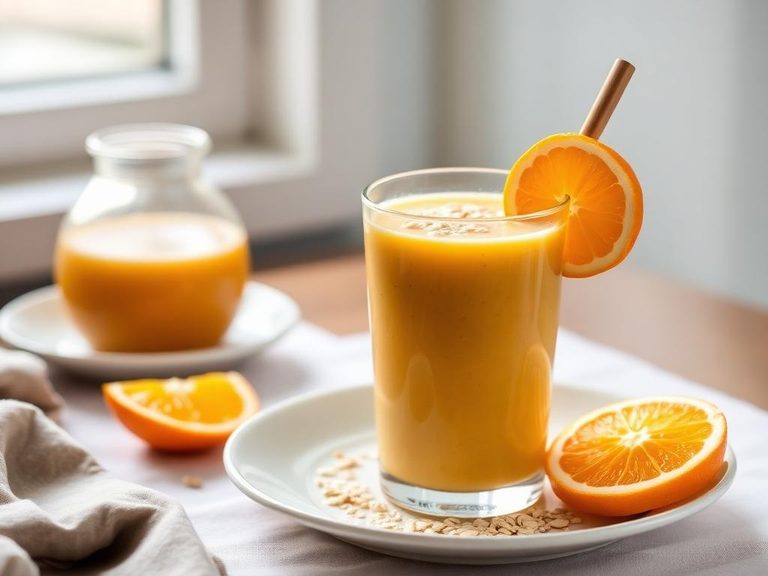


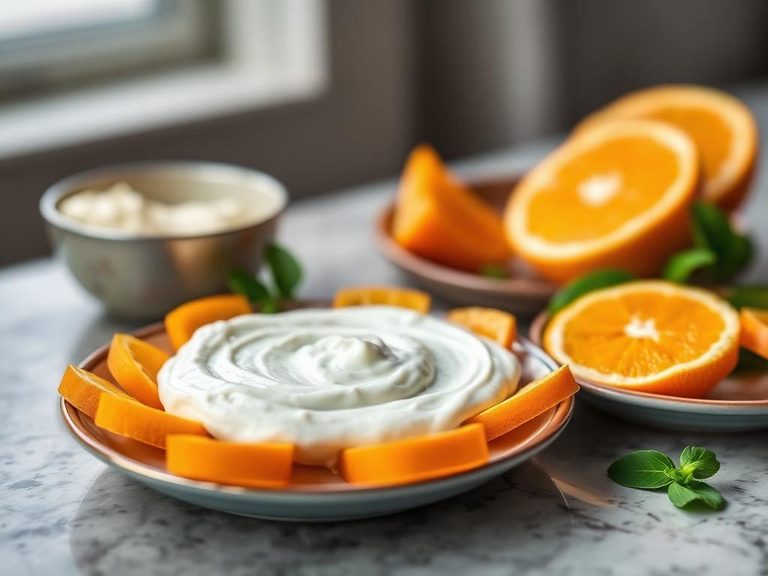
🌍 Where it's eaten
💡 Did you know?
Gatorade was originally developed in 1965 at the University of Florida to help the school's football team, the Gators, combat heat-related illnesses.
Full nutrition (USDA data · scales with serving)
| Water | 2.5 g |
| Energy | 388 kcal |
| Energy | 1621 kj |
| Protein | 0.00 g |
| Total lipid (fat) | 1.2 g |
| Ash | 2.1 g |
| Carbohydrate, by difference | 94.1 g |
| Fiber, total dietary | 0.00 g |
| Total Sugars | 80.5 g |
| Sucrose | 59.9 g |
| Glucose | 20.0 g |
| Fructose | 0.20 g |
| Lactose | 0.20 g |
| Maltose | 0.20 g |
| Calcium, Ca | 40.0 mg |
| Iron, Fe | 0.34 mg |
| Magnesium, Mg | 1.0 mg |
| Phosphorus, P | 120 mg |
| Potassium, K | 30.0 mg |
| Sodium, Na | 63.0 mg |
| Zinc, Zn | 0.06 mg |
| Copper, Cu | 0.25 mg |
| Manganese, Mn | 0.05 mg |
| Vitamin C, total ascorbic acid | 0.40 mg |
| Thiamin | 0.01 mg |
| Riboflavin | 0.80 mg |
| Niacin | 0.22 mg |
| Pantothenic acid | 0.06 mg |
| Vitamin B-6 | 0.02 mg |
Fat & fatty acid profile (per 100g)
| Fatty acids, total saturated | 0.00 g |
| Fatty acids, total monounsaturated | 0.00 g |
| Fatty acids, total polyunsaturated | 0.00 g |
| Fatty acids, total trans | 0.00 g |
| Cholesterol | 0.00 mg |
Amino acid profile (per 100g)
Estimated from Beverages, carbonated, tonic water — USDA does not publish this profile for Beverages.
| Tryptophan | 0.00 g |
| Threonine | 0.00 g |
| Isoleucine | 0.00 g |
| Leucine | 0.00 g |
| Lysine | 0.00 g |
| Methionine | 0.00 g |
| Cystine | 0.00 g |
| Phenylalanine | 0.00 g |
| Tyrosine | 0.00 g |
| Valine | 0.00 g |
| Arginine | 0.00 g |
| Histidine | 0.00 g |
| Alanine | 0.00 g |
| Aspartic acid | 0.00 g |
| Glutamic acid | 0.00 g |
| Glycine | 0.00 g |
| Proline | 0.00 g |
| Serine | 0.00 g |
FAQ
Is this the same as just drinking Gatorade?
No. This is a powdered mix that includes oat-derived ingredients alongside the standard Gatorade electrolytes and flavoring, making it a hybrid product with a slightly different texture and nutritional profile.
Can I use this in baking?
Yes, it can be used as a flavoring agent in frostings, glazes, or cake batters for a strong orange taste. Be mindful that it will add significant sugar and some oat content to your recipe.
How much sugar is in a typical serving?
A typical 20g serving (about 1.5 tablespoons) would contain approximately 16 grams of sugar, which is equivalent to about 4 teaspoons of table sugar.
Nutrient density (calculated · NRF9.3)
Nutrient Rich Foods index: beneficial nutrients (protein, fiber, vitamins, minerals) minus saturated fat, added sugar & sodium, per 100 kcal.
NRF9.3 index — Fulgoni, Keast & Drewnowski, 2009. Computed from USDA nutrients.
Weight-loss friendliness (composite index)
Energy density 3.88 kcal/g · 0% calories from protein · 0.0 g fiber · 80.5 g sugar per 100 g.
Composite of energy density (Rolls et al., 1999), protein & fiber satiety, minus sugar. A calculated heuristic — ranks satiety-per-calorie, not a clinical measure.
Dietary load (calculated from USDA values)
Potential renal acid load. Positive = acid-forming, negative = alkaline-forming.
Sodium-to-potassium ratio: 2.10 (lower is better — aim for ≤ 1)
Sodium:potassium per WHO potassium guidance. Computed from USDA nutrients.