

Beans, Dry, Dark Red Kidney (0% moisture)
Whole food · Legumes and Legume Products
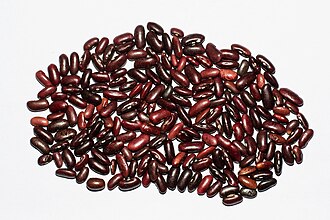
Photo: Wikipedia
Dark red kidney beans are a robust, meaty legume with a deep burgundy skin and a creamy, starchy interior that holds its shape beautifully in hearty dishes. Their flavor is earthy and mildly nutty, making them a staple in everything from spicy chilis to cooling salads. With an impressive 25.9g of protein per 100g (dry weight), they are a powerhouse of plant-based nutrition.
Calorie split: 90% protein · 0% carbs · 10% fat
↓ Full nutrition💚 Why it's loved
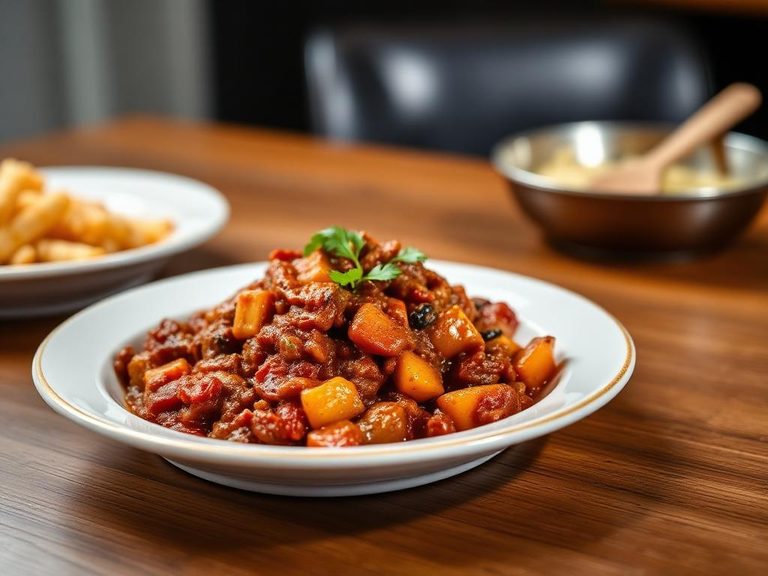
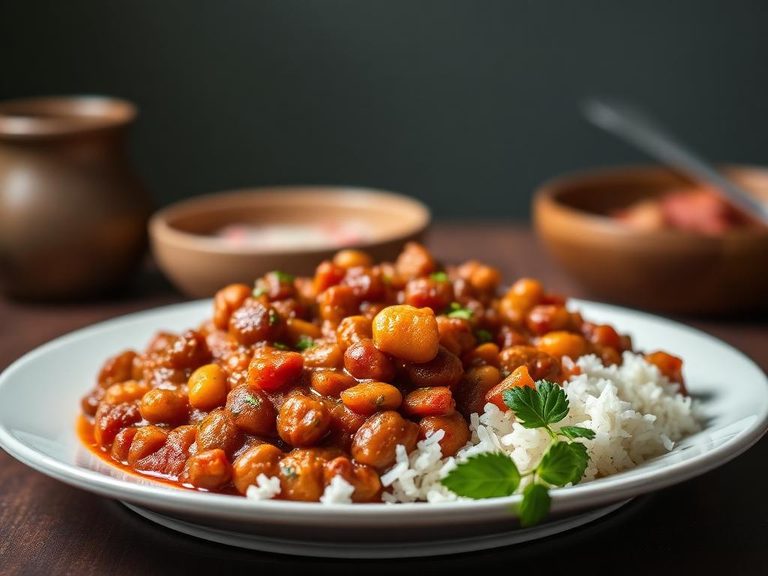
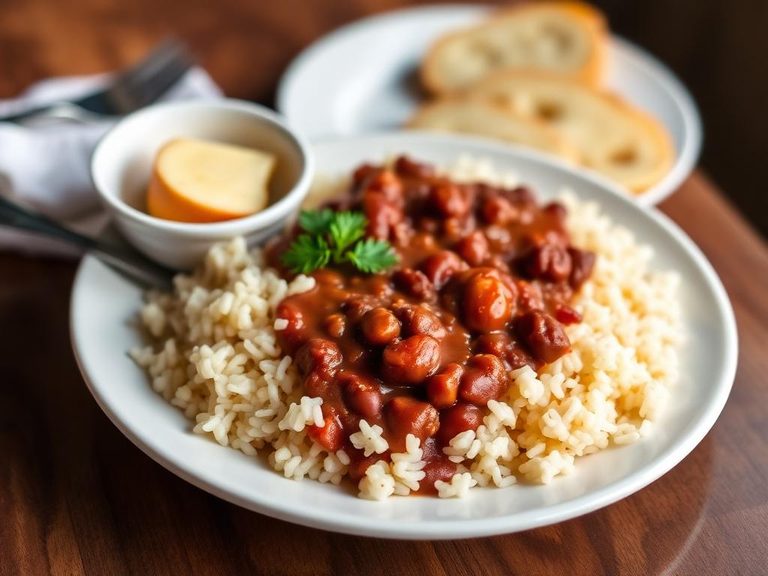
People love them for their satisfying, meaty texture and ability to absorb bold spices, making them a versatile canvas for countless cuisines. They are a cultural cornerstone in dishes like chili con carne, Indian rajma, and Brazilian feijoada, offering comfort and deep flavor.
⚠️ Watch-outs & how to enjoy it better
They contain lectins (phytohemagglutinin) which can cause digestive distress if undercooked; always soak and boil thoroughly until very tender. Their high fiber content may cause gas or bloating for some, so introduce them gradually and ensure ample water intake.
Key benefits
- Exceptionally high in plant-based protein.
- Rich source of dietary fiber for digestive health.
- Contains iron, folate, and potassium.
- Low in fat and naturally cholesterol-free.
- Provides complex carbohydrates for sustained energy.
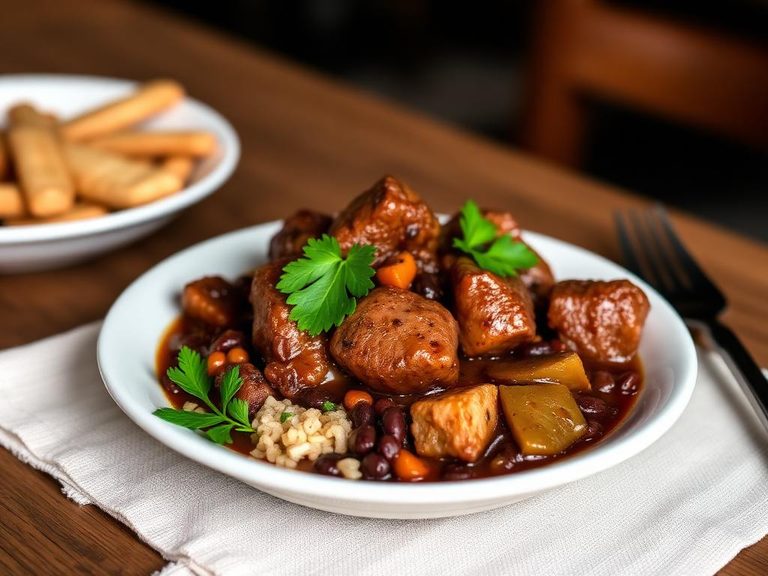
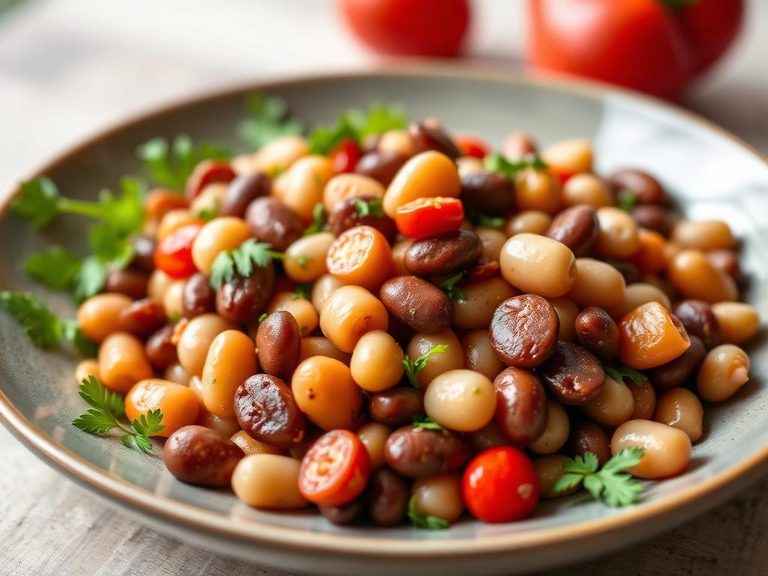
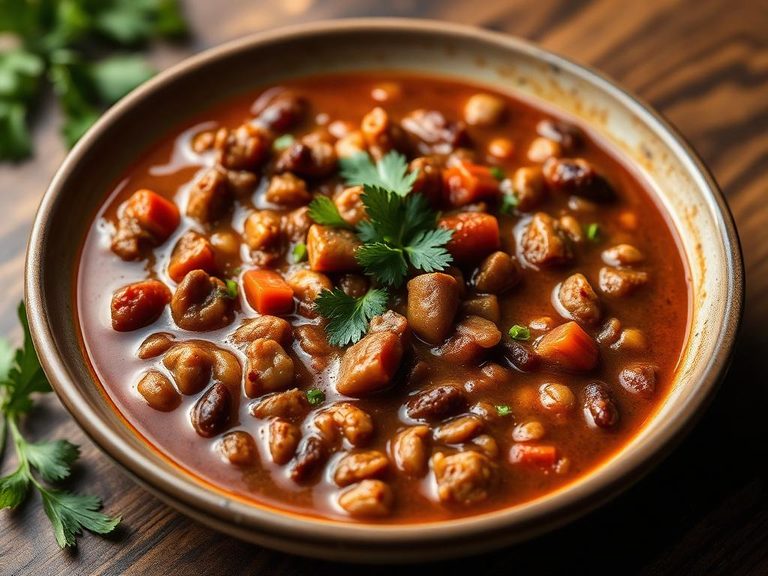
🍽️ Popular dishes
🌍 Where it's eaten
💡 Did you know?
The name 'kidney bean' comes from their distinct shape and color, which closely resemble a human kidney, a likeness noted as far back as the 16th century.
Full nutrition (USDA data · scales with serving)
| Water | 0.00 g |
| Protein | 25.9 g |
| Total lipid (fat) | 1.3 g |
| Fiber, total dietary | 4.3 g |
| Starch | 36.7 g |
| Calcium, Ca | 98.0 mg |
| Iron, Fe | 6.6 mg |
| Magnesium, Mg | 164 mg |
| Phosphorus, P | 612 mg |
| Potassium, K | 1490 mg |
| Zinc, Zn | 3.3 mg |
| Copper, Cu | 0.86 mg |
| Manganese, Mn | 1.7 mg |
| Sulfur, S | 241 mg |
| Nickel, Ni | 79.0 ug |
| Molybdenum, Mo | 572 ug |
| Cobalt, Co | 30.0 ug |
| Boron, B | 1100 ug |
Fat & fatty acid profile (per 100g)
Estimated from Lima beans, thin seeded (baby), mature seeds, cooked, boiled, without salt — USDA does not publish this profile for Beans.
| Fatty acids, total saturated | 0.09 g |
| SFA 12:0 | 0.00 g |
| SFA 14:0 | 0.00 g |
| SFA 16:0 | 0.07 g |
| SFA 18:0 | 0.02 g |
| Fatty acids, total monounsaturated | 0.03 g |
| MUFA 16:1 | 0.00 g |
| MUFA 18:1 | 0.03 g |
| MUFA 20:1 | 0.00 g |
| MUFA 22:1 | 0.00 g |
| Fatty acids, total polyunsaturated | 0.17 g |
| PUFA 18:2 | 0.12 g |
| PUFA 18:3 | 0.05 g |
| Fatty acids, total trans | 0.00 g |
| Cholesterol | 0.00 mg |
Amino acid profile (per 100g)
Estimated from Lima beans, thin seeded (baby), mature seeds, cooked, boiled, without salt — USDA does not publish this profile for Beans.
| Tryptophan | 0.10 g |
| Threonine | 0.35 g |
| Isoleucine | 0.42 g |
| Leucine | 0.69 g |
| Lysine | 0.54 g |
| Methionine | 0.10 g |
| Cystine | 0.09 g |
| Phenylalanine | 0.46 g |
| Tyrosine | 0.28 g |
| Valine | 0.48 g |
| Arginine | 0.49 g |
| Histidine | 0.25 g |
| Alanine | 0.41 g |
| Aspartic acid | 1.0 g |
| Glutamic acid | 1.1 g |
| Glycine | 0.34 g |
| Proline | 0.37 g |
| Serine | 0.54 g |
FAQ
How do I prepare dry kidney beans safely?
Soak them in water for at least 8 hours (or overnight), then drain and rinse. Boil them vigorously in fresh water for at least 45-60 minutes until they are very tender. Never cook them in a slow cooker on low heat without pre-boiling, as this can leave them toxic.
Are kidney beans a good source of protein?
Yes, they are one of the best plant-based protein sources, providing about 15g of protein per cooked cup. They are a complete protein when paired with grains like rice.
What is the best way to reduce gas from beans?
Soaking and discarding the water, rinsing canned beans thoroughly, and gradually increasing your intake can help. Cooking them with digestive aids like ginger, cumin, or bay leaves may also reduce bloating.
Dietary load (calculated from USDA values)
Potential renal acid load. Positive = acid-forming, negative = alkaline-forming.
Sodium:potassium per WHO potassium guidance. Computed from USDA nutrients.