

Oscar Mayer, Braunschweiger Liver Sausage (sliced)
Whole food · Sausages and Luncheon Meats

Photo: Wikipedia
Oscar Mayer Braunschweiger is a smooth, spreadable liver sausage made from a blend of pork liver and other meats, seasoned with a hint of spice. Its texture is creamy and fine-grained, with a rich, savory, and slightly mineral flavor. Nutritionally, it is a dense source of high-quality protein and healthy fats, but it is very low in carbohydrates.
Calorie split: 17% protein · 3% carbs · 80% fat
↓ Full nutrition💚 Why it's loved
People love its intensely savory, umami-rich flavor and velvety spreadable texture, which makes it a quick, satisfying protein boost. It's a nostalgic staple for many, often enjoyed simply on crackers or toast as a classic American snack.
⚠️ Watch-outs & how to enjoy it better
Due to its high fat and calorie density, portion control is key for those managing weight. It is also typically high in sodium, which can be a concern for blood pressure. For those watching cholesterol, it should be consumed in moderation. **Tip:** Pair it with fiber-rich vegetables or whole-grain crackers to add bulk and balance the meal.
Key benefits
- Excellent source of complete protein for muscle maintenance.
- Rich in heme iron, which is highly absorbable.
- Provides a good dose of vitamin B12 for nerve function.
- Naturally low in carbohydrates and sugars.
- Contains healthy fats, including some omega-3s from organ meats.
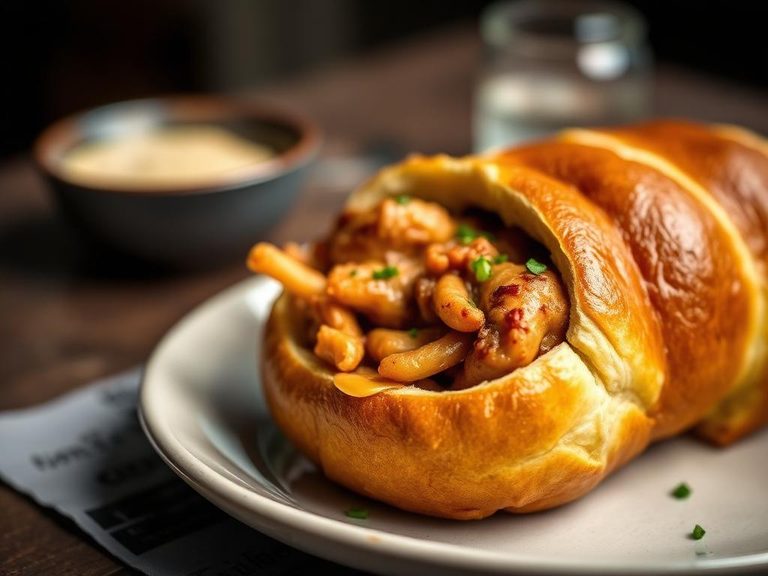
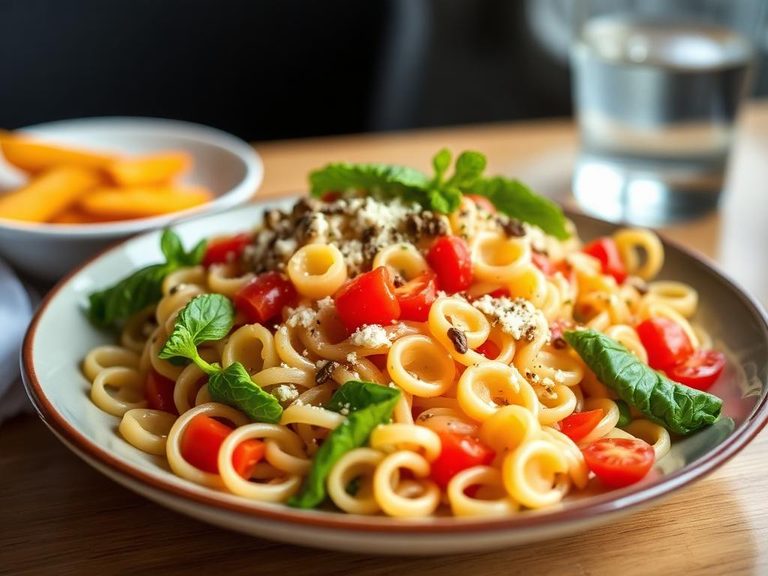
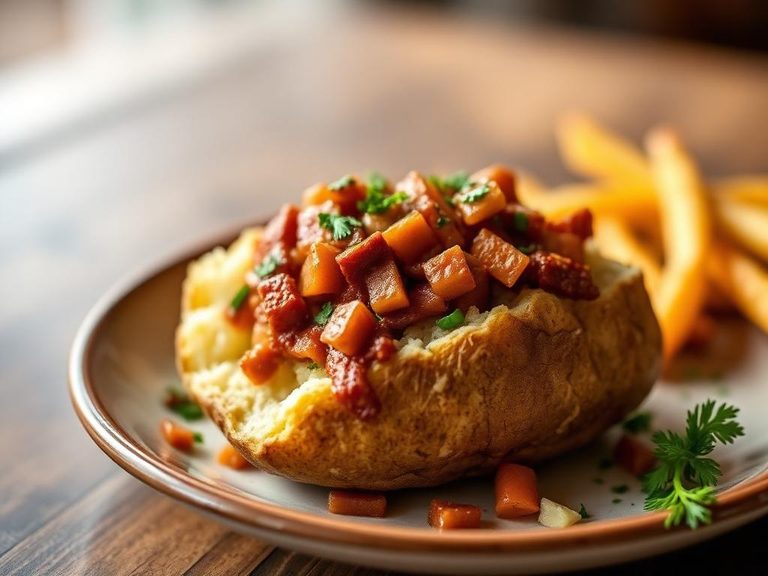
🍽️ Popular dishes


🌍 Where it's eaten
💡 Did you know?
The name 'Braunschweiger' refers to the German city of Braunschweig (Brunswick), where a similar style of liver sausage originated, though the American version is typically smoother and more spreadable than its German cousin.
Full nutrition (USDA data · scales with serving)
| Water | 50.5 g |
| Energy | 331 kcal |
| Energy | 1387 kj |
| Protein | 14.3 g |
| Total lipid (fat) | 29.4 g |
| Ash | 3.4 g |
| Carbohydrate, by difference | 2.6 g |
| Fiber, total dietary | 0.20 g |
| Total Sugars | 1.2 g |
| Calcium, Ca | 9.0 mg |
| Iron, Fe | 10.5 mg |
| Magnesium, Mg | 14.0 mg |
| Phosphorus, P | 199 mg |
| Potassium, K | 202 mg |
| Sodium, Na | 1159 mg |
| Zinc, Zn | 3.4 mg |
| Copper, Cu | 0.50 mg |
| Manganese, Mn | 0.15 mg |
| Vitamin C, total ascorbic acid | 9.0 mg |
| Thiamin | 0.23 mg |
| Riboflavin | 1.6 mg |
| Niacin | 9.2 mg |
| Pantothenic acid | 3.5 mg |
| Vitamin B-6 | 0.33 mg |
| Folate, total | 47.0 ug |
| Folic acid | 0.00 ug |
| Folate, food | 47.0 ug |
| Folate, DFE | 47.0 ug |
| Vitamin B-12 | 18.8 ug |
| Vitamin A, RAE | 4723 ug |
| Retinol | 4723 ug |
| Carotene, beta | 0.00 ug |
| Carotene, alpha | 0.00 ug |
| Cryptoxanthin, beta | 0.00 ug |
| Vitamin A, IU | 15744 iu |
| Lycopene | 0.00 ug |
| Lutein + zeaxanthin | 0.00 ug |
| Vitamin D (D2 + D3), International Units | 44.0 iu |
| Vitamin D (D2 + D3) | 1.1 ug |
| Alcohol, ethyl | 0.00 g |
| Caffeine | 0.00 mg |
| Theobromine | 0.00 mg |
Fat & fatty acid profile (per 100g)
| Fatty acids, total saturated | 10.9 g |
| SFA 12:0 | 0.04 g |
| SFA 14:0 | 0.42 g |
| SFA 16:0 | 7.0 g |
| SFA 18:0 | 3.5 g |
| Fatty acids, total monounsaturated | 15.5 g |
| MUFA 16:1 | 1.2 g |
| MUFA 18:1 | 14.3 g |
| Fatty acids, total polyunsaturated | 3.7 g |
| PUFA 18:2 | 3.4 g |
| PUFA 18:3 | 0.36 g |
| Cholesterol | 178 mg |
FAQ
Is Braunschweiger the same as liverwurst?
They are very similar and often used interchangeably. Generally, Braunschweiger is a specific type of liverwurst that is typically smoked and has a smoother, more spreadable consistency, while 'liverwurst' can be a broader term for various liver sausages.
How should I store and serve it?
Keep it refrigerated and tightly wrapped. It's ready to eat cold, sliced or spread. For a warm option, you can pan-fry slices until the edges are crisp, or add it to a grilled cheese sandwich.
What are the main nutritional considerations?
It's a high-protein, high-fat food with significant cholesterol and sodium. It's also a great source of iron and B12. Enjoy it as part of a balanced diet, paying attention to portion size.
Nutrient density (calculated · NRF9.3)
Nutrient Rich Foods index: beneficial nutrients (protein, fiber, vitamins, minerals) minus saturated fat, added sugar & sodium, per 100 kcal.
NRF9.3 index — Fulgoni, Keast & Drewnowski, 2009. Computed from USDA nutrients.
Weight-loss friendliness (composite index)
Energy density 3.31 kcal/g · 17% calories from protein · 0.2 g fiber · 1.2 g sugar per 100 g.
Composite of energy density (Rolls et al., 1999), protein & fiber satiety, minus sugar. A calculated heuristic — ranks satiety-per-calorie, not a clinical measure.
Dietary load (calculated from USDA values)
Potential renal acid load. Positive = acid-forming, negative = alkaline-forming.
Sodium-to-potassium ratio: 5.74 (lower is better — aim for ≤ 1)
Sodium:potassium per WHO potassium guidance. Computed from USDA nutrients.