

Mushroom, enoki
Whole food · Vegetables and Vegetable Products

Photo: Wikipedia
Enoki mushrooms are delicate, long-stemmed fungi with tiny, convex caps, prized for their crisp, slightly crunchy texture and mild, fruity flavor. Nutritionally, they are exceptionally low in calories while providing a notable amount of dietary fiber and a clean protein source. Their unique appearance and texture make them a standout ingredient in both raw and cooked preparations.
Calorie split: 22% protein · 73% carbs · 5% fat
↓ Full nutrition💚 Why it's loved
People love enoki for its satisfying, snappy crunch and ability to absorb the flavors of broths and sauces without becoming mushy. It's a versatile ingredient that adds visual elegance and textural contrast to a wide array of dishes, from hot pots to salads.
⚠️ Watch-outs & how to enjoy it better
Some may find their mild flavor too subtle if not paired with bold seasonings. They have a high water content and can become slimy if overcooked or stored improperly. To counteract this, add them late in the cooking process and ensure they are thoroughly dried before stir-frying. For those concerned about food safety, always purchase from reputable sources and cook them thoroughly.
Key benefits
- Excellent source of dietary fiber (2.9g per 100g).
- Very low in calories (44 kcal per 100g).
- Provides a good plant-based protein source.
- Naturally fat-free and sugar-free.
- Contains antioxidants like ergothioneine.
🍽️ Popular dishes
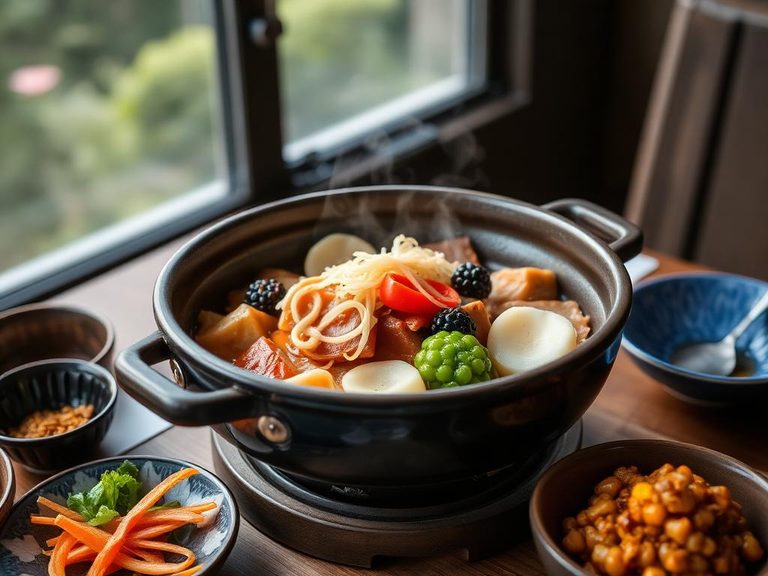
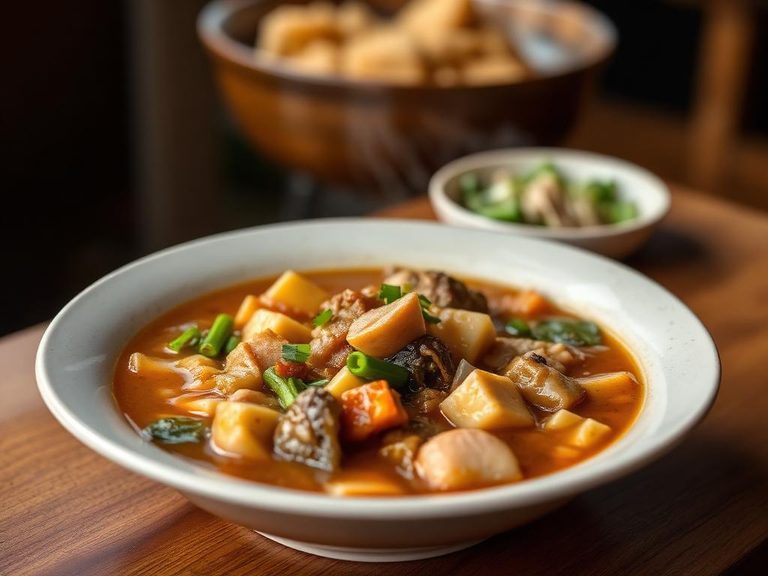
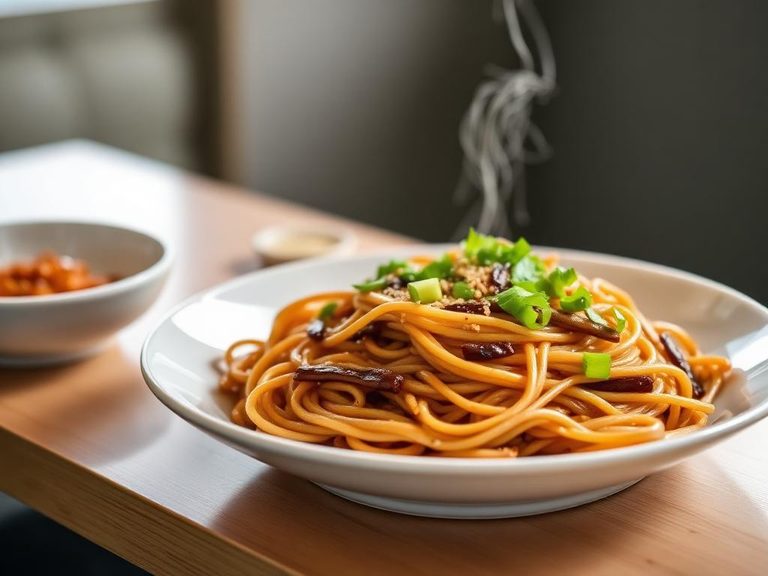
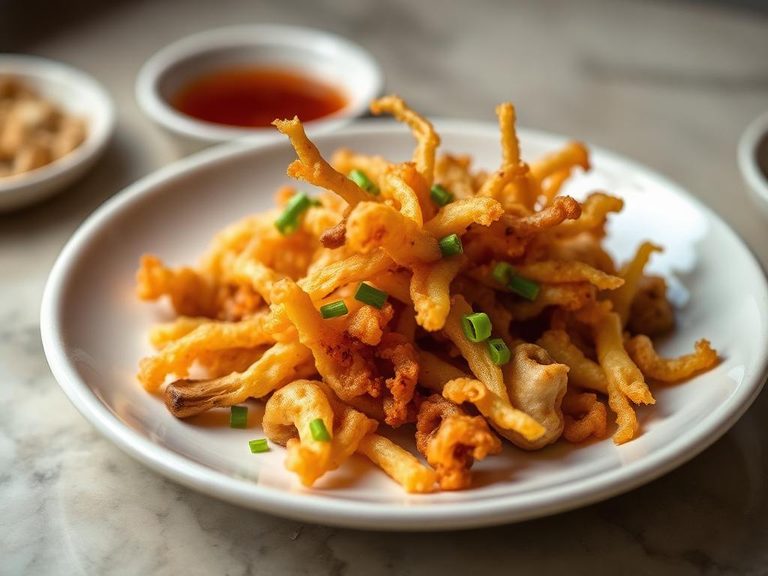
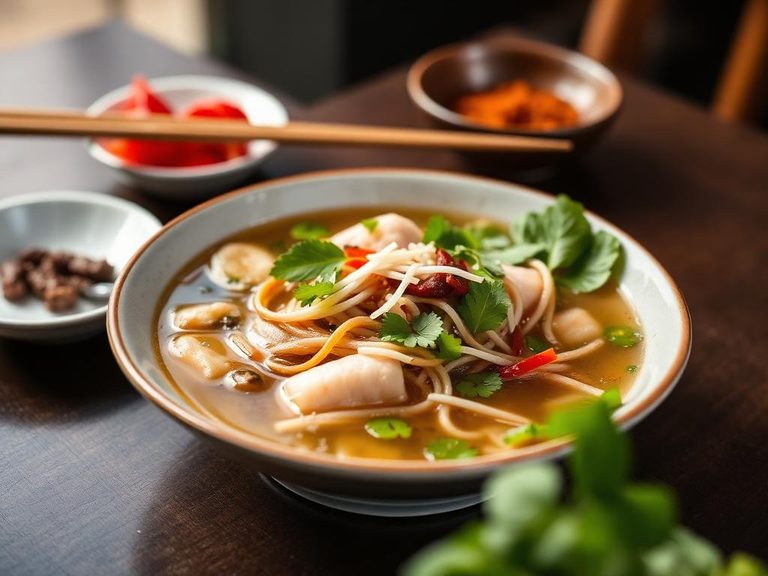
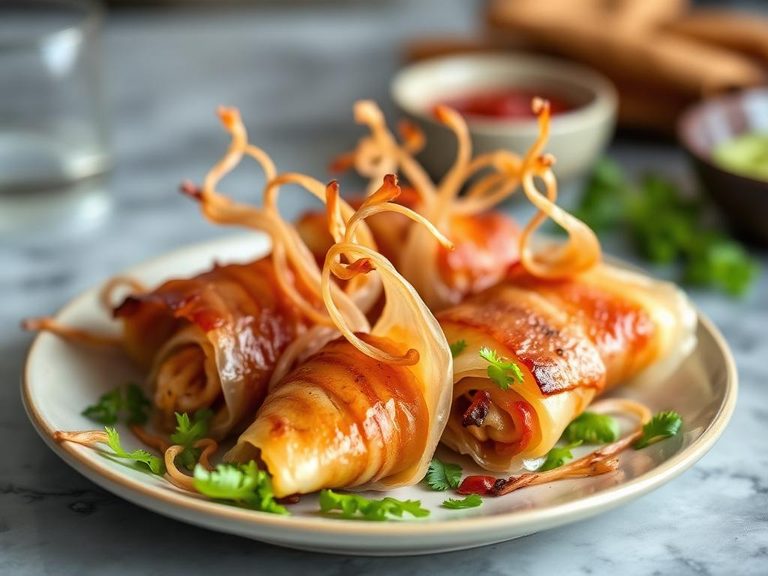
🌍 Where it's eaten
💡 Did you know?
The long, slender stems of commercially cultivated enoki mushrooms grow in the dark, which prevents chlorophyll formation and results in their distinctive pale, white color.
Full nutrition (USDA data · scales with serving)
| Water | 88.3 g |
| Energy (Atwater General Factors) | 44.4 kcal |
| Energy (Atwater Specific Factors) | 36.7 kcal |
| Nitrogen | 0.39 g |
| Protein | 2.4 g |
| Total lipid (fat) | 0.24 g |
| Ash | 0.91 g |
| Carbohydrate, by difference | 8.1 g |
| Fiber, total dietary | 2.9 g |
| Beta-glucan | 1.7 g |
| Calcium, Ca | 1.4 mg |
| Iron, Fe | 1.3 mg |
| Magnesium, Mg | 12.8 mg |
| Phosphorus, P | 84.1 mg |
| Potassium, K | 402 mg |
| Sodium, Na | 0.42 mg |
| Zinc, Zn | 0.48 mg |
| Copper, Cu | 0.09 mg |
| Manganese, Mn | 0.09 mg |
| Selenium, Se | 0.00 ug |
| Thiamin | 0.01 mg |
| Riboflavin | 0.24 mg |
| Niacin | 7.0 mg |
| Vitamin B-6 | 0.12 mg |
| Biotin | 12.5 ug |
| Vitamin D (D2 + D3), International Units | 0.00 iu |
| Vitamin D (D2 + D3) | 0.00 ug |
| Vitamin D2 (ergocalciferol) | 0.00 ug |
| Vitamin D4 | 0.00 ug |
| Glutathione | 25.7 mg |
| Ergosta-7-enol | 3.0 mg |
| Ergosta-5,7-dienol | 15.2 mg |
| Ergosta-7,22-dienol | 0.63 mg |
| Delta-7-Stigmastenol | 0.00 mg |
| Ergothioneine | 25.8 mg |
Fat & fatty acid profile (per 100g)
| Stigmasterol | 0.00 mg |
| Campesterol | 0.00 mg |
| Beta-sitosterol | 0.00 mg |
| Ergosterol | 36.5 mg |
| Beta-sitostanol | 0.00 mg |
| Delta-5-avenasterol | 0.00 mg |
Amino acid profile (per 100g)
| Tryptophan | 0.27 g |
| Threonine | 0.78 g |
| Isoleucine | 0.64 g |
| Leucine | 1.1 g |
| Lysine | 0.93 g |
| Methionine | 0.19 g |
| Phenylalanine | 0.82 g |
| Valine | 1.4 g |
| Histidine | 0.47 g |
FAQ
How do I clean enoki mushrooms?
Gently rinse them under cold water and pat dry with paper towels. Trim off the root base where they are joined together before separating the strands.
What's the best way to cook them?
They cook very quickly. Add them to soups, stews, or stir-fries in the last 1-2 minutes. For a crispy texture, try deep-frying them as tempura or pan-searing them in a dry skillet.
Can I eat them raw?
Yes, they are often added raw to salads or used as a garnish for their crisp texture. Ensure they are very fresh and well-washed.
Nutrient density (calculated · NRF9.3)
Nutrient Rich Foods index: beneficial nutrients (protein, fiber, vitamins, minerals) minus saturated fat, added sugar & sodium, per 100 kcal.
NRF9.3 index — Fulgoni, Keast & Drewnowski, 2009. Computed from USDA nutrients.
Weight-loss friendliness (composite index)
Energy density 0.44 kcal/g · 22% calories from protein · 2.9 g fiber · 0.0 g sugar per 100 g.
Composite of energy density (Rolls et al., 1999), protein & fiber satiety, minus sugar. A calculated heuristic — ranks satiety-per-calorie, not a clinical measure.
Dietary load (calculated from USDA values)
Potential renal acid load. Positive = acid-forming, negative = alkaline-forming.
Sodium-to-potassium ratio: 0.00 (lower is better — aim for ≤ 1)
Sodium:potassium per WHO potassium guidance. Computed from USDA nutrients.