

Moose, liver, braised (Alaska Native)
Whole food · American Indian/Alaska Native Foods

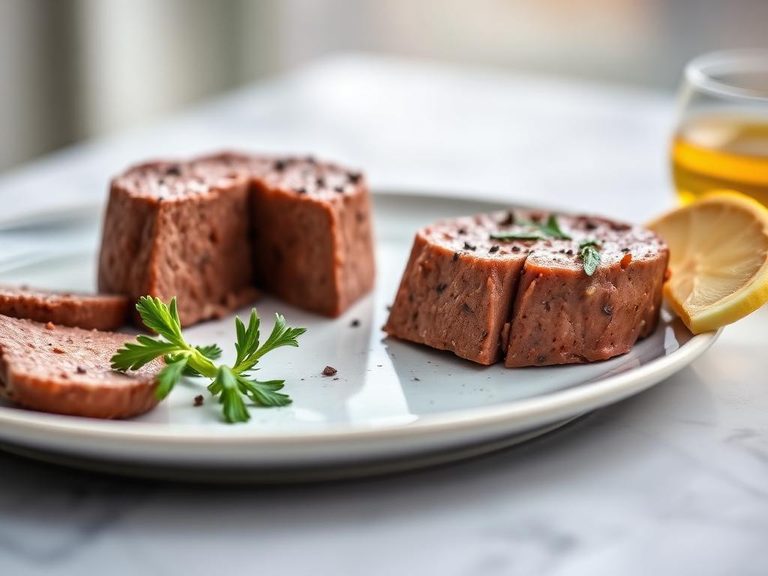
Photo: Wikipedia
Braised moose liver is a dense, iron-rich organ meat with a deep, mineral flavor and a smooth, slightly grainy texture when cooked properly. Its nutrition is exceptional, delivering over 24g of protein per 100g with minimal fat and carbs. This is a traditional, nutrient-dense food from Alaska Native cuisines, prized for its ability to sustain in harsh environments.
Calorie split: 63% protein · 9% carbs · 28% fat
↓ Full nutrition💚 Why it's loved
People love it for its intense, clean, gamey flavor that is deeply savory and satisfying. It's valued as a traditional, nose-to-tail food that connects eaters to subsistence cultures and provides powerful nutrition from a single, sustainable source.
⚠️ Watch-outs & how to enjoy it better
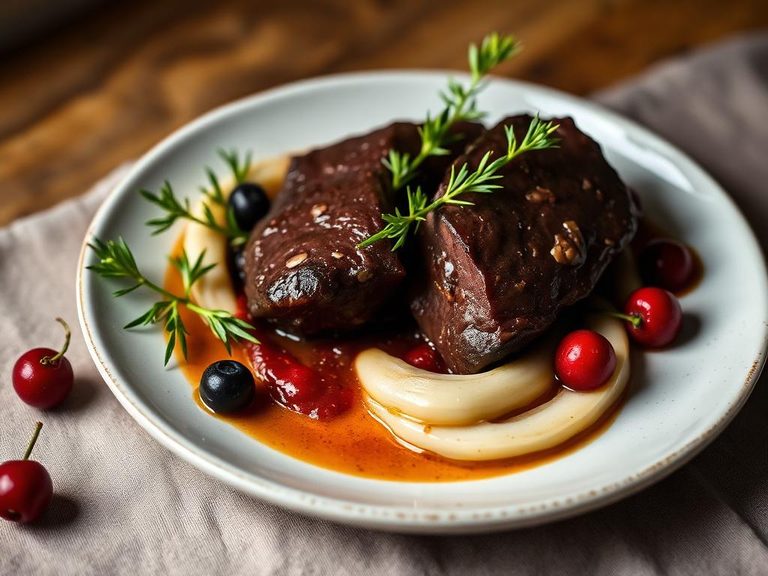
The strong, metallic taste and dense texture can be off-putting to those unfamiliar with organ meats. Those with hemochromatosis (iron overload disorder) should avoid it. To mitigate the strong flavor, soak slices in milk or water for a few hours before cooking, and pair it with bold, acidic ingredients like cranberry sauce or vinegar-based sides.
Key benefits
- Extremely high in bioavailable heme iron
- Excellent source of complete protein
- Rich in vitamin B12 and folate
- Very low in carbohydrates
- Contains significant vitamin A and copper
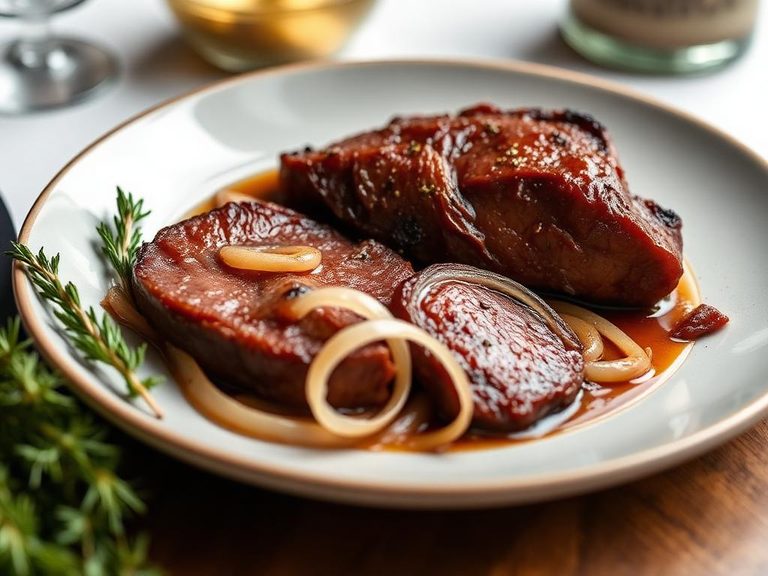
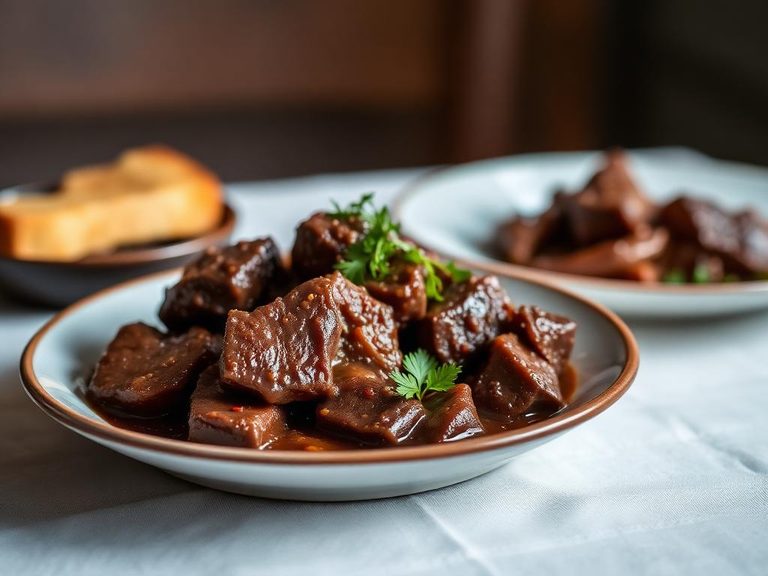
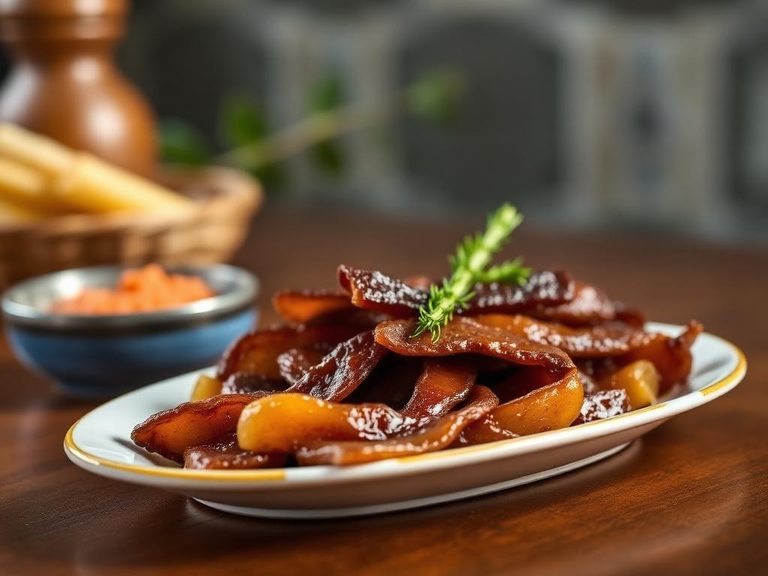
🍽️ Popular dishes
🌍 Where it's eaten
💡 Did you know?
Moose liver is one of the most concentrated natural food sources of vitamin A; a single 100g serving can provide over 100% of the daily value, which is why traditional cultures often consumed it in specific, seasonal amounts.
Full nutrition (USDA data · scales with serving)
| Water | 66.0 g |
| Energy | 155 kcal |
| Energy | 650 kj |
| Protein | 24.4 g |
| Total lipid (fat) | 4.9 g |
| Ash | 1.3 g |
| Carbohydrate, by difference | 3.4 g |
| Calcium, Ca | 7.0 mg |
| Iron, Fe | 6.8 mg |
| Magnesium, Mg | 20.0 mg |
| Phosphorus, P | 429 mg |
| Potassium, K | 235 mg |
| Sodium, Na | 70.0 mg |
| Zinc, Zn | 6.1 mg |
| Copper, Cu | 2.8 mg |
| Manganese, Mn | 0.41 mg |
| Vitamin C, total ascorbic acid | 22.6 mg |
| Thiamin | 0.20 mg |
| Riboflavin | 4.1 mg |
| Niacin | 10.7 mg |
| Pantothenic acid | 4.6 mg |
| Vitamin B-6 | 0.91 mg |
| Folate, total | 217 ug |
| Folate, food | 217 ug |
| Vitamin B-12 | 71.0 ug |
| Vitamin A, IU | 96000 iu |
Fat & fatty acid profile (per 100g)
| Fatty acids, total monounsaturated | 0.65 g |
| Fatty acids, total polyunsaturated | 1.1 g |
| PUFA 18:3 | 0.45 g |
| Cholesterol | 389 mg |
Amino acid profile (per 100g)
Estimated from Game meat, moose, raw — USDA does not publish this profile for Moose.
| Threonine | 1.0 g |
| Isoleucine | 1.1 g |
| Leucine | 2.0 g |
| Lysine | 2.0 g |
| Methionine | 0.57 g |
| Phenylalanine | 0.96 g |
| Tyrosine | 0.82 g |
| Valine | 1.2 g |
| Arginine | 1.4 g |
| Histidine | 0.75 g |
| Alanine | 1.3 g |
| Aspartic acid | 2.1 g |
| Glutamic acid | 3.6 g |
| Glycine | 0.97 g |
| Proline | 0.90 g |
| Serine | 0.80 g |
FAQ
How do I cook moose liver so it isn't tough or grainy?
Cook it quickly over high heat to medium-rare or medium. Overcooking makes it tough and chalky. Slice it thin, pat it very dry, and sear it in a hot skillet for just 1-2 minutes per side.
Is moose liver safe to eat? Are there any toxins?
Yes, it's safe when sourced from healthy animals and cooked properly. As an organ, it filters substances, so sourcing from non-industrial, wild game is key. Always cook to an internal temperature of at least 160°F (71°C) for safety.
Why is moose liver so nutritious compared to muscle meat?
The liver is the body's metabolic hub, storing and processing nutrients. This makes it exceptionally dense in vitamins (like B12, A) and minerals (like iron, copper) that are more concentrated here than in standard muscle cuts.
Nutrient density (calculated · NRF9.3)
Nutrient Rich Foods index: beneficial nutrients (protein, fiber, vitamins, minerals) minus saturated fat, added sugar & sodium, per 100 kcal.
NRF9.3 index — Fulgoni, Keast & Drewnowski, 2009. Computed from USDA nutrients.
Weight-loss friendliness (composite index)
Energy density 1.55 kcal/g · 63% calories from protein · 0.0 g fiber · 0.0 g sugar per 100 g.
Composite of energy density (Rolls et al., 1999), protein & fiber satiety, minus sugar. A calculated heuristic — ranks satiety-per-calorie, not a clinical measure.
Dietary load (calculated from USDA values)
Potential renal acid load. Positive = acid-forming, negative = alkaline-forming.
Sodium-to-potassium ratio: 0.30 (lower is better — aim for ≤ 1)
Sodium:potassium per WHO potassium guidance. Computed from USDA nutrients.