

Caribou, bone marrow, raw (Alaska Native)
Whole food · American Indian/Alaska Native Foods

Photo: Wikipedia
Raw caribou bone marrow is a prized, energy-dense traditional food harvested from the leg bones of caribou. It has a rich, buttery, and slightly sweet flavor with a smooth, creamy, and melt-in-your-mouth texture when raw. Nutritionally, it is almost pure fat, providing a significant source of calories and fat-soluble vitamins.
Calorie split: 3% protein · 0% carbs · 97% fat
↓ Full nutrition💚 Why it's loved
It is loved for its intensely rich, buttery flavor and luxurious, creamy texture that coats the palate. It holds deep cultural significance as a vital, celebratory food in Alaska Native and other Indigenous Arctic cuisines.
⚠️ Watch-outs & how to enjoy it better
Its extremely high fat content (84.4g per 100g) makes it very calorie-dense and potentially unsuitable for low-fat diets. To enjoy it mindfully, practice strict portion control (a teaspoon or two) and pair it with lean protein or fiber-rich foods to balance the meal.
Key benefits
- Extremely high in calorie-dense fat for energy.
- Source of fat-soluble vitamins like A, K2, and E.
- Contains conjugated linoleic acid (CLA) and omega-3 fatty acids.
- Traditional source of essential nutrients in Arctic diets.
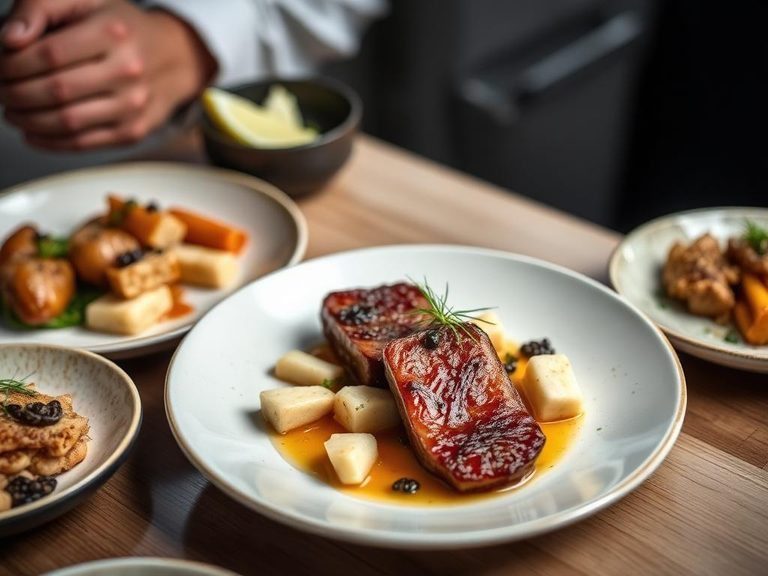
🍽️ Popular dishes
🌍 Where it's eaten
💡 Did you know?
In some traditions, the marrow is so valued that the leg bones are cracked open with a specific tool called an 'ulu' or a mallet immediately after a hunt, and the marrow is eaten raw on the spot as a celebratory first meal.
Full nutrition (USDA data · scales with serving)
| Water | 7.4 g |
| Energy | 786 kcal |
| Energy | 3290 kj |
| Protein | 6.7 g |
| Total lipid (fat) | 84.4 g |
| Ash | 1.5 g |
| Carbohydrate, by difference | 0.00 g |
| Iron, Fe | 4.5 mg |
| Phosphorus, P | 107 mg |
| Thiamin | 0.04 mg |
| Niacin | 0.20 mg |
| Vitamin A, IU | 240 iu |
Fat & fatty acid profile (per 100g)
Estimated from Game meat, caribou, raw — USDA does not publish this profile for Caribou.
| Fatty acids, total saturated | 1.3 g |
| SFA 14:0 | 0.09 g |
| SFA 16:0 | 0.68 g |
| SFA 18:0 | 0.45 g |
| Fatty acids, total monounsaturated | 1.0 g |
| MUFA 16:1 | 0.08 g |
| MUFA 18:1 | 0.93 g |
| Fatty acids, total polyunsaturated | 0.47 g |
| PUFA 18:2 | 0.23 g |
| PUFA 18:3 | 0.03 g |
| PUFA 20:4 | 0.14 g |
| PUFA 22:5 n-3 (DPA) | 0.02 g |
| PUFA 22:6 n-3 (DHA) | 0.05 g |
| Cholesterol | 83.0 mg |
Amino acid profile (per 100g)
Estimated from Game meat, caribou, raw — USDA does not publish this profile for Caribou.
| Tryptophan | 0.35 g |
| Threonine | 0.97 g |
| Isoleucine | 1.0 g |
| Leucine | 1.9 g |
| Lysine | 2.0 g |
| Methionine | 0.51 g |
| Cystine | 0.16 g |
| Phenylalanine | 1.0 g |
| Tyrosine | 0.74 g |
| Valine | 1.1 g |
| Arginine | 1.3 g |
| Histidine | 0.90 g |
| Alanine | 1.2 g |
| Aspartic acid | 2.0 g |
| Glutamic acid | 3.6 g |
| Glycine | 0.95 g |
| Proline | 0.70 g |
| Serine | 0.80 g |
FAQ
How is raw caribou bone marrow typically eaten?
It is often scooped directly from the cracked bone and eaten raw, sometimes with a pinch of salt or sprinkled on dried fish or meat.
Is it safe to eat raw?
When sourced from healthy, wild caribou and handled properly, it is a traditional raw food. As with any raw animal product, there are inherent risks, and sourcing from reputable, traditional harvesters is key.
What does it taste like?
It has a very rich, buttery, and slightly sweet flavor, often described as more intense and 'meaty' than beef marrow, with a smooth, creamy texture.
Weight-loss friendliness (composite index)
Energy density 7.86 kcal/g · 3% calories from protein · 0.0 g fiber · 0.0 g sugar per 100 g.
Composite of energy density (Rolls et al., 1999), protein & fiber satiety, minus sugar. A calculated heuristic — ranks satiety-per-calorie, not a clinical measure.