

Salmon nuggets, cooked as purchased, unheated
Whole food · Finfish and Shellfish Products
These are bite-sized, pre-cooked pieces of salmon, typically encased in a light, crispy breadcrumb or batter coating that locks in moisture. They offer a savory, mildly fishy flavor with a satisfying crunch on the outside and a tender, flaky interior. Nutritionally, they provide a balanced profile with nearly equal parts protein and fat, making them a more substantial snack than plain fish sticks.
Calorie split: 25% protein · 25% carbs · 50% fat
↓ Full nutrition💚 Why it's loved
People love these for their convenience and kid-friendly appeal, turning a nutritious fish into an approachable, crunchy snack. They are incredibly versatile, working equally well as a quick appetizer, a lunchbox addition, or a topping for a salad.
⚠️ Watch-outs & how to enjoy it better
The breading can be high in sodium and refined carbohydrates, which may cause blood sugar spikes in sensitive individuals. To counteract this, pair them with a fiber-rich side like a green salad or steamed vegetables, and opt for a smaller portion (around 100g) as part of a balanced meal.
Key benefits
- High-quality protein source for muscle maintenance
- Rich in omega-3 fatty acids for heart health
- Convenient, ready-to-eat format
- Balanced macronutrient profile
- Good source of vitamin D and B12
🍽️ Popular dishes
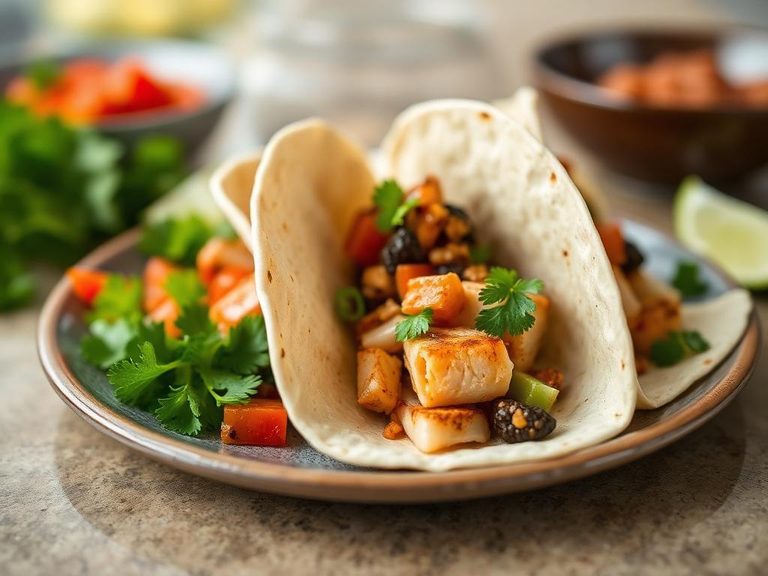
🌍 Where it's eaten
💡 Did you know?
The concept of coating fish in breadcrumbs dates back to 13th-century Persia, where it was called 'mahshi' and was considered a delicacy.
Full nutrition (USDA data · scales with serving)
| Water | 64.6 g |
| Energy | 189 kcal |
| Energy | 791 kj |
| Protein | 12.0 g |
| Total lipid (fat) | 10.4 g |
| Ash | 1.2 g |
| Carbohydrate, by difference | 11.8 g |
| Fiber, total dietary | 0.00 g |
| Calcium, Ca | 9.0 mg |
| Iron, Fe | 1.5 mg |
| Magnesium, Mg | 20.0 mg |
| Phosphorus, P | 173 mg |
| Potassium, K | 161 mg |
| Sodium, Na | 167 mg |
| Zinc, Zn | 0.46 mg |
| Copper, Cu | 0.07 mg |
| Manganese, Mn | 0.11 mg |
| Vitamin C, total ascorbic acid | 0.00 mg |
| Thiamin | 0.20 mg |
| Riboflavin | 0.14 mg |
| Niacin | 5.9 mg |
| Pantothenic acid | 0.52 mg |
| Vitamin B-6 | 0.22 mg |
| Folate, total | 9.0 ug |
| Folic acid | 3.0 ug |
| Folate, food | 6.0 ug |
| Folate, DFE | 11.0 ug |
| Vitamin B-12 | 2.2 ug |
| Alcohol, ethyl | 0.00 g |
Fat & fatty acid profile (per 100g)
| Fatty acids, total saturated | 1.5 g |
| SFA 4:0 | 0.00 g |
| SFA 6:0 | 0.00 g |
| SFA 8:0 | 0.01 g |
| SFA 10:0 | 0.00 g |
| SFA 12:0 | 0.00 g |
| SFA 14:0 | 0.06 g |
| SFA 16:0 | 0.92 g |
| SFA 18:0 | 0.34 g |
| Fatty acids, total monounsaturated | 4.3 g |
| MUFA 16:1 | 0.07 g |
| MUFA 18:1 | 4.0 g |
| MUFA 20:1 | 0.19 g |
| MUFA 22:1 | 0.01 g |
| Fatty acids, total polyunsaturated | 2.9 g |
| PUFA 18:2 | 2.2 g |
| PUFA 18:3 | 0.12 g |
| PUFA 18:4 | 0.00 g |
| PUFA 20:4 | 0.01 g |
| PUFA 20:5 n-3 (EPA) | 0.05 g |
| PUFA 22:5 n-3 (DPA) | 0.00 g |
| PUFA 22:6 n-3 (DHA) | 0.41 g |
| Cholesterol | 27.0 mg |
FAQ
Are salmon nuggets healthy?
Yes, they are a good source of protein and omega-3s, but the breading can add extra calories and sodium. Choosing baked over fried versions can make them a healthier option.
How do I reheat salmon nuggets without making them soggy?
The best way is to use an oven or air fryer at 375°F (190°C) for 5-8 minutes. Avoid microwaving, as it will make the breading soft and chewy.
Can I freeze salmon nuggets?
Yes, they freeze well. Place them in a single layer on a baking sheet to freeze, then transfer to a freezer bag. They can be stored for up to 3 months.
Nutrient density (calculated · NRF9.3)
Nutrient Rich Foods index: beneficial nutrients (protein, fiber, vitamins, minerals) minus saturated fat, added sugar & sodium, per 100 kcal.
NRF9.3 index — Fulgoni, Keast & Drewnowski, 2009. Computed from USDA nutrients.
Weight-loss friendliness (composite index)
Energy density 1.89 kcal/g · 25% calories from protein · 0.0 g fiber · 0.0 g sugar per 100 g.
Composite of energy density (Rolls et al., 1999), protein & fiber satiety, minus sugar. A calculated heuristic — ranks satiety-per-calorie, not a clinical measure.
Dietary load (calculated from USDA values)
Potential renal acid load. Positive = acid-forming, negative = alkaline-forming.
Sodium-to-potassium ratio: 1.04 (lower is better — aim for ≤ 1)
Sodium:potassium per WHO potassium guidance. Computed from USDA nutrients.