

Mushroom, crimini
Whole food · Vegetables and Vegetable Products

Photo: Wikipedia
The crimini mushroom, often called a 'baby bella,' is a firm, tan-capped variety of Agaricus bisporus with a deeper, earthier flavor than its white button cousin. Its dense, meaty texture holds up beautifully to high-heat cooking like sautéing or roasting, developing a rich, savory umami character. Nutritionally, it's a standout low-calorie, high-fiber food that provides a notable amount of protein for a vegetable.
Calorie split: 41% protein · 53% carbs · 6% fat
↓ Full nutrition💚 Why it's loved
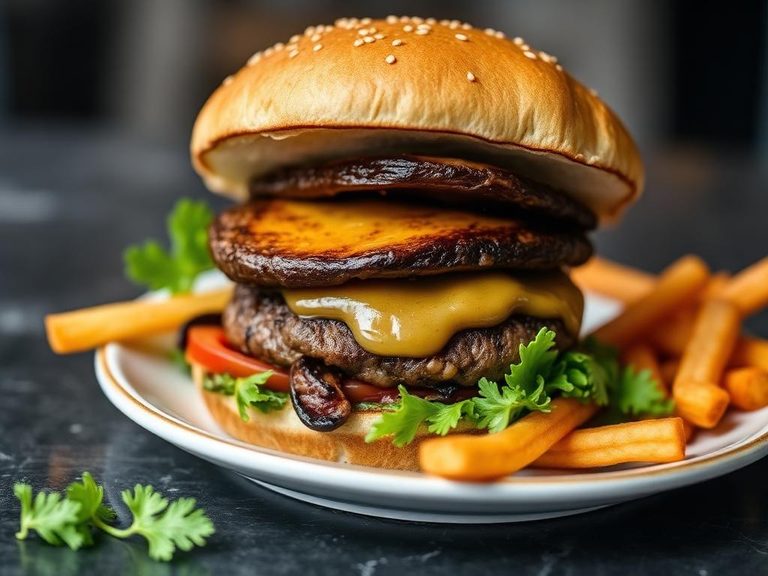
People love criminis for their robust, meaty flavor that adds deep umami to dishes without overpowering other ingredients. They are incredibly versatile, seamlessly fitting into everything from stir-fries and pasta sauces to burgers and roasted vegetable medleys.
⚠️ Watch-outs & how to enjoy it better
Some individuals may experience digestive discomfort like gas or bloating from the chitin in mushroom cell walls, which can be tough to digest. To counteract this, ensure they are thoroughly cooked, which helps break down the chitin, and start with smaller portions if you're sensitive. As with all mushrooms, they should be cleaned well before cooking, as they can harbor dirt.
Key benefits
- Excellent source of selenium, a key antioxidant mineral
- Provides B vitamins like riboflavin and niacin for energy metabolism
- High in beta-glucans, a type of soluble fiber that supports immune health
- Naturally low in calories, fat, and sodium
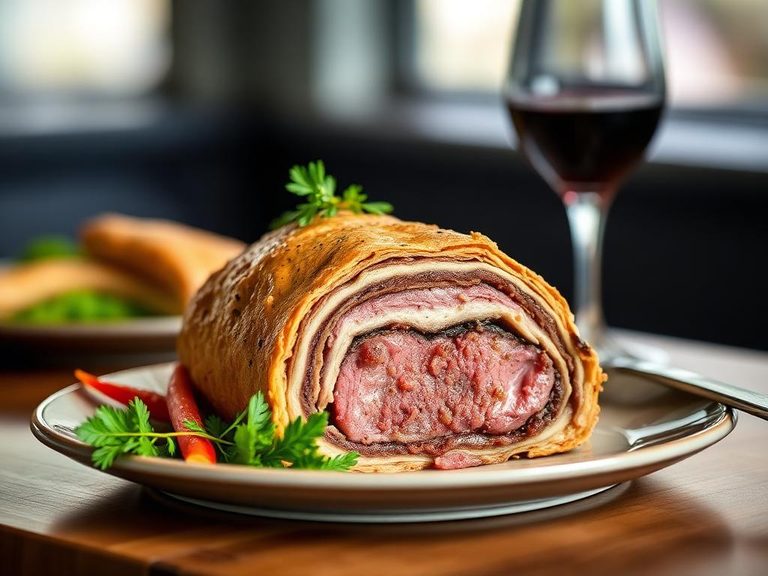
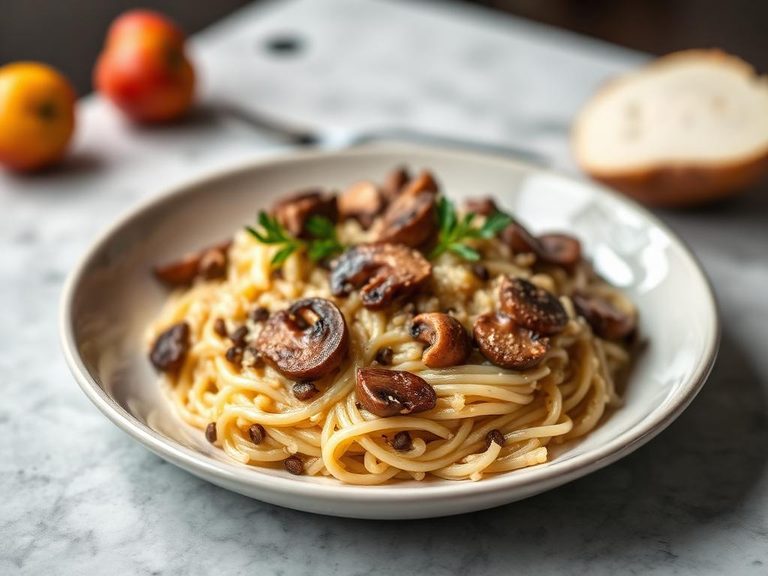
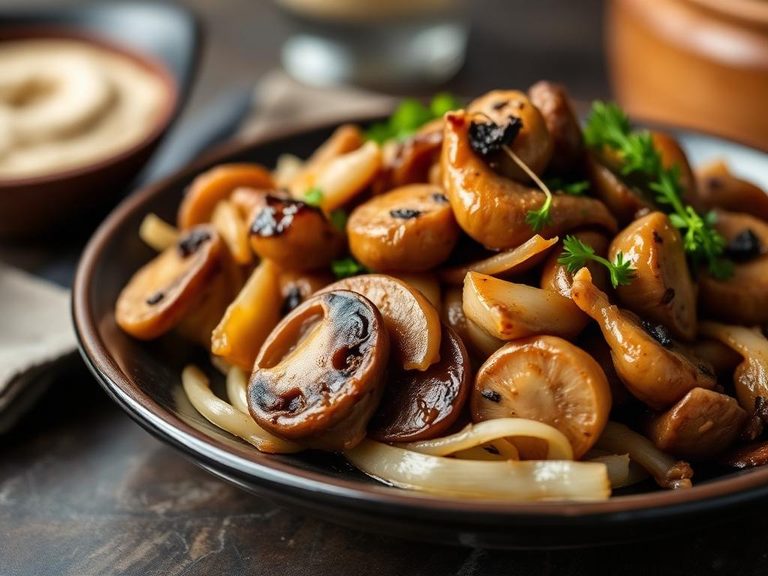
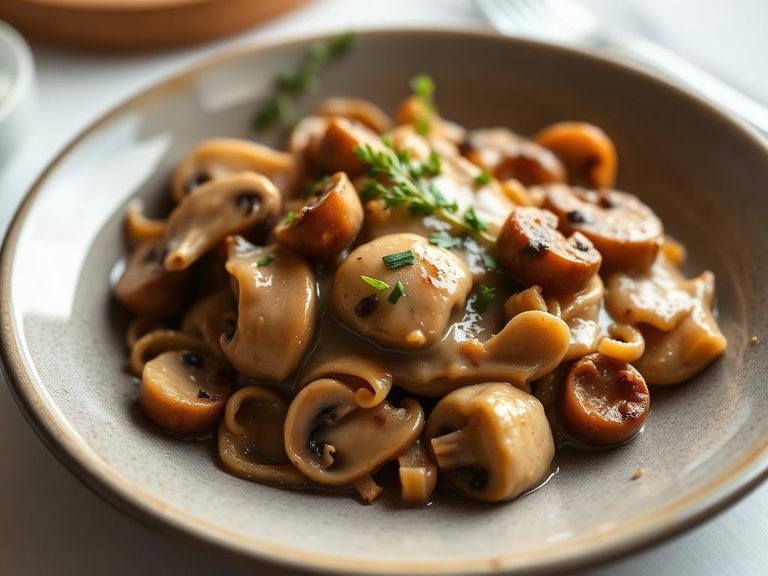
🍽️ Popular dishes
🌍 Where it's eaten
💡 Did you know?
The crimini is the exact same species (Agaricus bisporus) as the common white button mushroom and the large portobello; they are simply different developmental stages of the same fungus.
Full nutrition (USDA data · scales with serving)
| Water | 91.8 g |
| Energy (Atwater General Factors) | 30.2 kcal |
| Energy (Atwater Specific Factors) | 23.7 kcal |
| Nitrogen | 0.49 g |
| Protein | 3.1 g |
| Total lipid (fat) | 0.20 g |
| Ash | 0.88 g |
| Carbohydrate, by difference | 4.0 g |
| Fiber, total dietary | 1.8 g |
| Beta-glucan | 0.92 g |
| Calcium, Ca | 4.1 mg |
| Iron, Fe | 0.31 mg |
| Magnesium, Mg | 10.3 mg |
| Phosphorus, P | 101 mg |
| Potassium, K | 380 mg |
| Sodium, Na | 4.6 mg |
| Zinc, Zn | 0.51 mg |
| Copper, Cu | 0.32 mg |
| Manganese, Mn | 0.06 mg |
| Selenium, Se | 15.3 ug |
| Thiamin | 0.00 mg |
| Riboflavin | 0.52 mg |
| Niacin | 4.2 mg |
| Vitamin B-6 | 0.11 mg |
| Biotin | 12.6 ug |
| Vitamin D (D2 + D3), International Units | 0.00 iu |
| Vitamin D (D2 + D3) | 0.00 ug |
| Vitamin D2 (ergocalciferol) | 0.00 ug |
| Vitamin D4 | 0.00 ug |
| Glutathione | 5.7 mg |
| Ergosta-7-enol | 2.1 mg |
| Ergosta-5,7-dienol | 5.0 mg |
| Ergosta-7,22-dienol | 1.8 mg |
| Delta-7-Stigmastenol | 0.00 mg |
| Ergothioneine | 1.3 mg |
Fat & fatty acid profile (per 100g)
| Stigmasterol | 0.00 mg |
| Campesterol | 0.00 mg |
| Beta-sitosterol | 0.00 mg |
| Ergosterol | 55.4 mg |
| Beta-sitostanol | 0.00 mg |
| Delta-5-avenasterol | 0.00 mg |
Amino acid profile (per 100g)
| Tryptophan | 0.50 g |
| Threonine | 1.4 g |
| Isoleucine | 1.2 g |
| Leucine | 2.0 g |
| Lysine | 1.8 g |
| Methionine | 0.40 g |
| Phenylalanine | 1.2 g |
| Valine | 2.3 g |
| Histidine | 0.68 g |
FAQ
What's the difference between a crimini and a portobello mushroom?
They are the same mushroom at different ages. A crimini is a young, immature portobello. As the mushroom matures, its cap expands, the gills darken, and the texture becomes even more pronounced and 'meaty.'
Should I wash or wipe crimini mushrooms?
For a quick clean, gently wiping with a damp paper towel or soft brush is often recommended to avoid waterlogging. However, a brief, gentle rinse under cold water followed by immediate and thorough patting dry is perfectly acceptable and ensures all grit is removed.
How can I store crimini mushrooms to make them last longer?
Keep them in their original paper bag or a loosely closed paper bag in the refrigerator's main compartment (not the crisper drawer). The paper absorbs excess moisture, which helps prevent sliminess and extends their freshness for up to a week.
Nutrient density (calculated · NRF9.3)
Nutrient Rich Foods index: beneficial nutrients (protein, fiber, vitamins, minerals) minus saturated fat, added sugar & sodium, per 100 kcal.
NRF9.3 index — Fulgoni, Keast & Drewnowski, 2009. Computed from USDA nutrients.
Weight-loss friendliness (composite index)
Energy density 0.30 kcal/g · 41% calories from protein · 1.8 g fiber · 0.0 g sugar per 100 g.
Composite of energy density (Rolls et al., 1999), protein & fiber satiety, minus sugar. A calculated heuristic — ranks satiety-per-calorie, not a clinical measure.
Dietary load (calculated from USDA values)
Potential renal acid load. Positive = acid-forming, negative = alkaline-forming.
Sodium-to-potassium ratio: 0.01 (lower is better — aim for ≤ 1)
Sodium:potassium per WHO potassium guidance. Computed from USDA nutrients.