

MORI-NU, Tofu, silken, extra firm
Whole food · Legumes and Legume Products

Photo: Wikipedia
Mori-Nu silken extra-firm tofu is a shelf-stable Japanese tofu with a remarkably smooth, custard-like texture that holds its shape surprisingly well. It has a delicate, clean soy flavor and a creamy, almost pudding-like mouthfeel that's lighter than firm tofu. With an impressive 7.4g of protein per 100g for only 55 calories, it's a lean, protein-packed ingredient.
Calorie split: 54% protein · 15% carbs · 31% fat
↓ Full nutrition💚 Why it's loved
People love it for its silky, melt-in-your-mouth texture that seamlessly blends into smoothies, desserts, and sauces, adding protein without altering flavor. Its incredible versatility makes it a staple in both savory Asian dishes and sweet Western creations.
⚠️ Watch-outs & how to enjoy it better
Its delicate, custard-like texture can be too soft for those expecting the chew of firm tofu, and it may crumble if handled roughly. Some may find its mild flavor bland; counter this by marinating it or pairing it with bold sauces like miso, teriyaki, or spicy chili oil.
Key benefits
- High-quality, complete plant protein
- Very low in calories and fat
- Shelf-stable, no refrigeration needed until opened
- Smooth, creamy texture without dairy
- Source of calcium if set with calcium sulfate
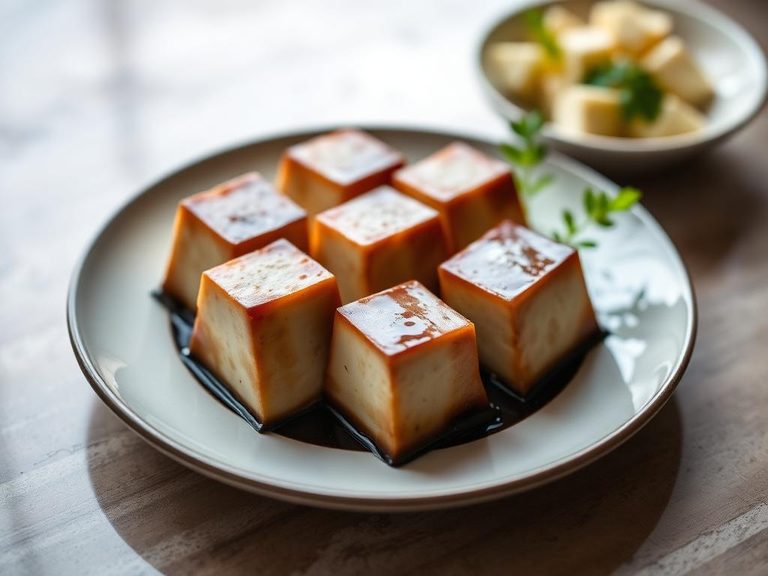
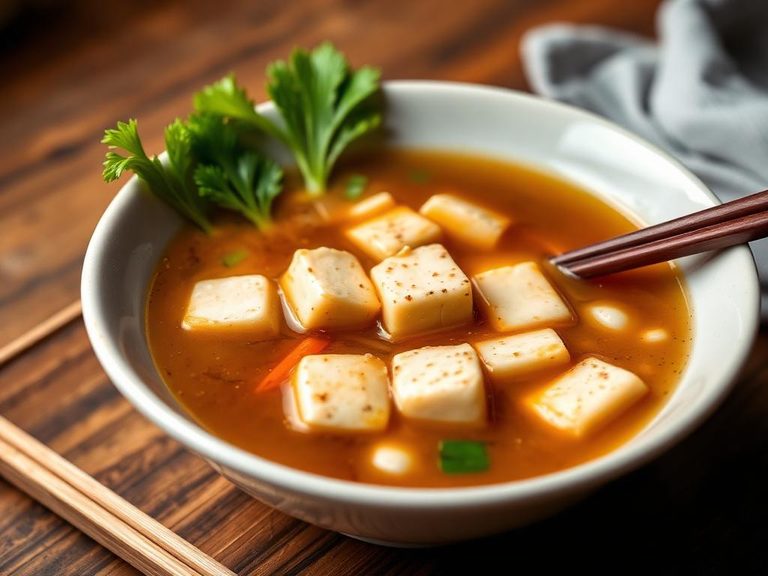
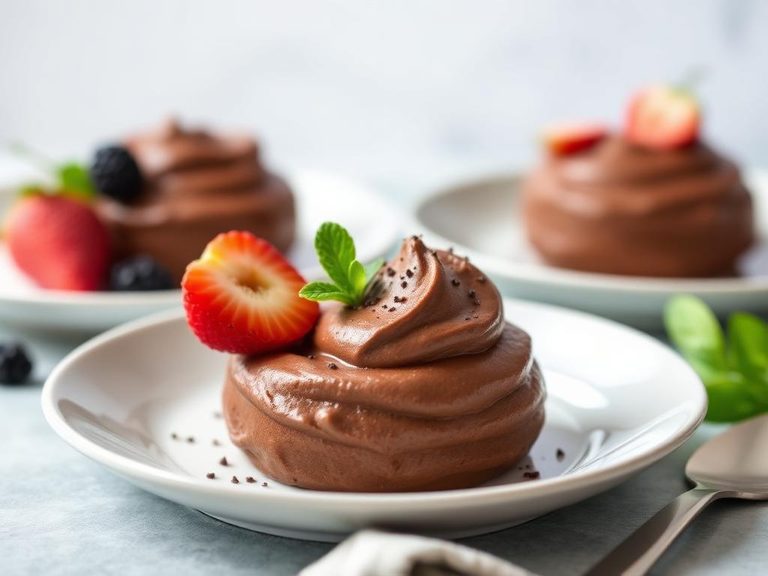
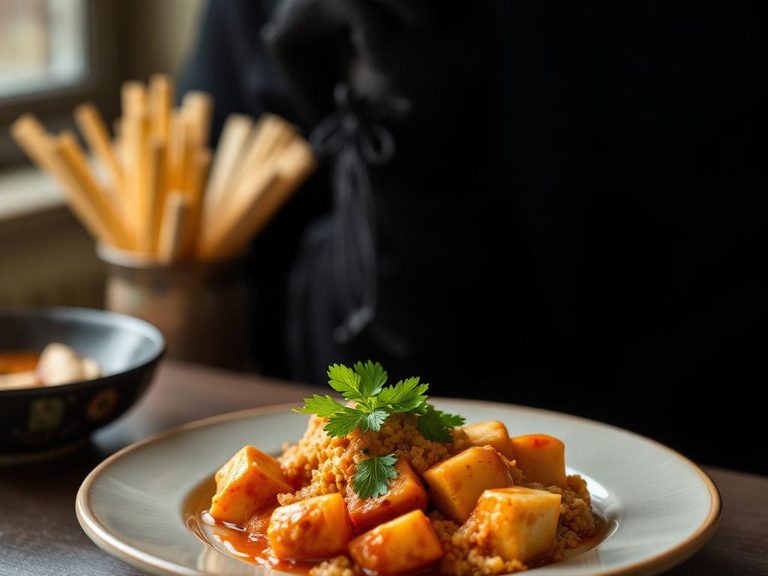
🍽️ Popular dishes
🌍 Where it's eaten
💡 Did you know?
The 'silken' in its name refers to its production method: the soy milk is coagulated directly in its final packaging, creating a seamless, water-content-rich curd without pressing, which gives it that signature custard consistency.
Full nutrition (USDA data · scales with serving)
| Water | 88.1 g |
| Energy | 55.0 kcal |
| Energy | 230 kj |
| Protein | 7.4 g |
| Total lipid (fat) | 1.9 g |
| Ash | 0.60 g |
| Carbohydrate, by difference | 2.0 g |
| Fiber, total dietary | 0.10 g |
| Total Sugars | 0.99 g |
| Calcium, Ca | 31.0 mg |
| Iron, Fe | 1.2 mg |
| Magnesium, Mg | 27.0 mg |
| Phosphorus, P | 100 mg |
| Potassium, K | 154 mg |
| Sodium, Na | 63.0 mg |
| Zinc, Zn | 0.60 mg |
| Copper, Cu | 0.20 mg |
| Vitamin C, total ascorbic acid | 0.00 mg |
| Thiamin | 0.08 mg |
| Riboflavin | 0.03 mg |
| Niacin | 0.23 mg |
| Vitamin B-6 | 0.01 mg |
| Vitamin B-12 | 0.00 ug |
| Vitamin A, RAE | 0.00 ug |
| Retinol | 0.00 ug |
| Vitamin A, IU | 0.00 iu |
Fat & fatty acid profile (per 100g)
| Fatty acids, total saturated | 0.30 g |
| Fatty acids, total monounsaturated | 0.34 g |
| Fatty acids, total polyunsaturated | 1.1 g |
| Fatty acids, total trans | 0.00 g |
| Cholesterol | 0.00 mg |
Amino acid profile (per 100g)
| Tryptophan | 0.12 g |
| Threonine | 0.31 g |
| Isoleucine | 0.38 g |
| Leucine | 0.64 g |
| Lysine | 0.49 g |
| Methionine | 0.09 g |
| Cystine | 0.13 g |
| Phenylalanine | 0.43 g |
| Tyrosine | 0.31 g |
| Valine | 0.40 g |
| Arginine | 0.53 g |
| Histidine | 0.18 g |
| Alanine | 0.28 g |
| Aspartic acid | 0.82 g |
| Glutamic acid | 1.3 g |
| Glycine | 0.28 g |
| Proline | 0.36 g |
| Serine | 0.35 g |
FAQ
What's the difference between silken and regular tofu?
Silken tofu is unpressed, with a custard-like texture and high water content. Regular (or 'bean curd') tofu is pressed to remove whey, resulting in a firmer, chewier texture that holds up better to frying and grilling.
Can I use this for scrambling or frying?
While it will hold its shape better than soft silken tofu, it's still delicate. For scrambling, gently fold it in at the end. For frying, it's best breaded and deep-fried or pan-fried very gently in a non-stick pan to avoid crumbling.
Why is it shelf-stable?
It's pasteurized and packaged aseptically (like a juice box), which sterilizes the product and seals it in a sterile container, allowing it to be stored at room temperature for months. Refrigerate after opening and use within a few days.
Nutrient density (calculated · NRF9.3)
Nutrient Rich Foods index: beneficial nutrients (protein, fiber, vitamins, minerals) minus saturated fat, added sugar & sodium, per 100 kcal.
NRF9.3 index — Fulgoni, Keast & Drewnowski, 2009. Computed from USDA nutrients.
Weight-loss friendliness (composite index)
Energy density 0.55 kcal/g · 54% calories from protein · 0.1 g fiber · 1.0 g sugar per 100 g.
Composite of energy density (Rolls et al., 1999), protein & fiber satiety, minus sugar. A calculated heuristic — ranks satiety-per-calorie, not a clinical measure.
Dietary load (calculated from USDA values)
Potential renal acid load. Positive = acid-forming, negative = alkaline-forming.
Sodium-to-potassium ratio: 0.41 (lower is better — aim for ≤ 1)
Sodium:potassium per WHO potassium guidance. Computed from USDA nutrients.