

Candies, REESE'S BITES
Whole food · Sweets

Photo: Wikipedia
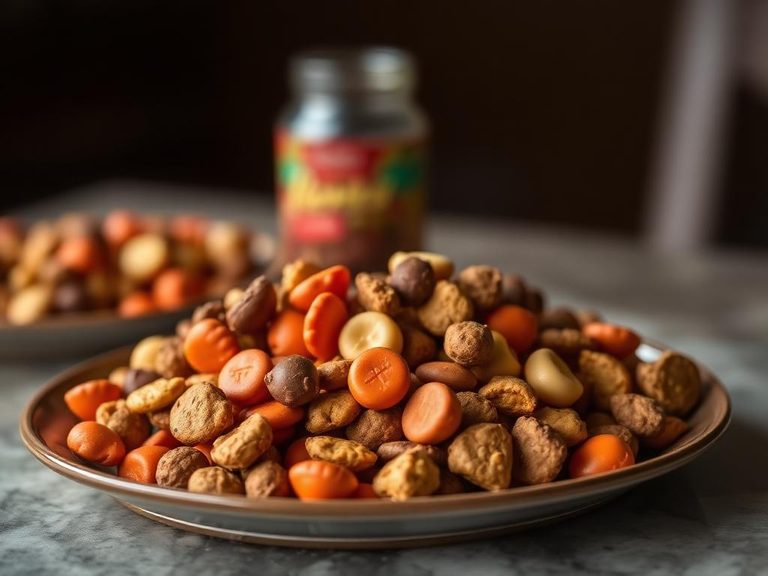
Reese's Bites are bite-sized, crunchy morsels of peanut butter and milk chocolate, offering a satisfying snap followed by a rich, creamy, and salty-sweet core. Each piece packs a dense, indulgent flavor profile, delivering a powerful hit of energy with 521 kcal per 100g. The high protein content (11.34g) from peanuts provides a more substantial texture than standard chocolate candies.
Calorie split: 8% protein · 41% carbs · 50% fat
↓ Full nutrition💚 Why it's loved
People love Reese's Bites for the iconic, perfectly balanced combination of salty peanut butter and sweet milk chocolate in a convenient, poppable format. The crunchy texture adds a satisfying dimension that elevates the classic Reese's experience, making it a favorite for snacking and sharing.
⚠️ Watch-outs & how to enjoy it better
The high sugar (48.03g) and calorie density (521 kcal) can lead to blood-sugar spikes and are a concern for those managing weight or diabetes. To counteract this, practice strict portion control (e.g., limit to a small handful) and pair with a source of protein or fiber (like a piece of fruit or Greek yogurt) to slow sugar absorption. Be cautious of peanut allergies, a common and serious allergen.
Key benefits
- High protein content from peanuts (11.34g per 100g)
- Provides quick energy due to high carbohydrate and sugar content
- Rich source of healthy monounsaturated fats from peanuts
- Convenient, portable snack format for on-the-go consumption
- Contains dietary fiber (3.1g per 100g) for digestive support
🍽️ Popular dishes



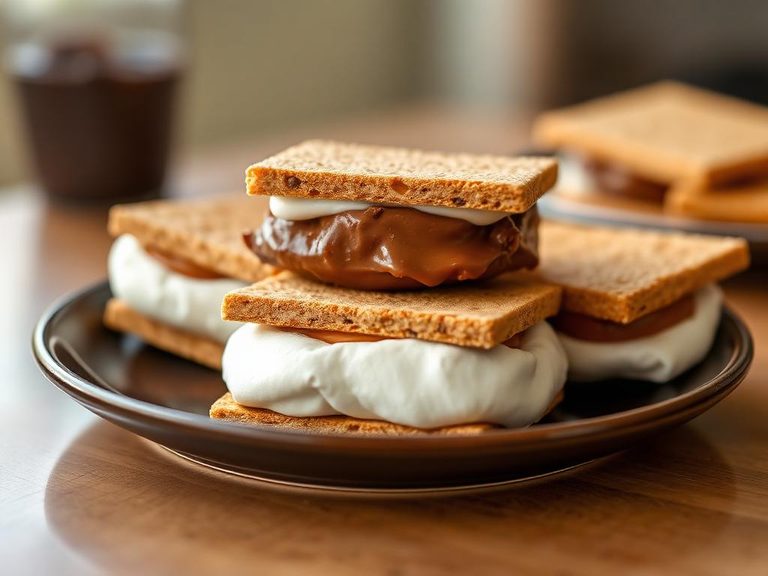

🌍 Where it's eaten
💡 Did you know?
The Reese's Peanut Butter Cup was invented by H.B. Reese, a former dairy foreman for Milton Hershey, and the two companies didn't merge until 1963, 27 years after Reese's death.
Full nutrition (USDA data · scales with serving)
| Water | 1.6 g |
| Energy | 521 kcal |
| Energy | 2181 kj |
| Protein | 11.3 g |
| Total lipid (fat) | 29.9 g |
| Ash | 1.6 g |
| Carbohydrate, by difference | 55.2 g |
| Fiber, total dietary | 3.1 g |
| Total Sugars | 48.0 g |
| Calcium, Ca | 112 mg |
| Iron, Fe | 0.85 mg |
| Magnesium, Mg | 63.0 mg |
| Phosphorus, P | 194 mg |
| Potassium, K | 382 mg |
| Sodium, Na | 179 mg |
| Zinc, Zn | 1.1 mg |
| Copper, Cu | 0.30 mg |
| Manganese, Mn | 0.65 mg |
| Selenium, Se | 1.6 ug |
| Vitamin C, total ascorbic acid | 0.80 mg |
| Thiamin | 0.15 mg |
| Riboflavin | 0.21 mg |
| Niacin | 4.3 mg |
| Pantothenic acid | 0.57 mg |
| Vitamin B-6 | 0.10 mg |
| Folate, total | 42.0 ug |
| Vitamin A, IU | 60.0 iu |
| Alcohol, ethyl | 0.00 g |
| Caffeine | 0.00 mg |
Fat & fatty acid profile (per 100g)
| Fatty acids, total saturated | 18.0 g |
| Fatty acids, total monounsaturated | 7.1 g |
| Fatty acids, total polyunsaturated | 1.8 g |
| Fatty acids, total trans | 0.05 g |
| Cholesterol | 7.0 mg |
Amino acid profile (per 100g)
Estimated from Candies, honey-combed, with peanut butter — USDA does not publish this profile for Candies.
| Tryptophan | 0.09 g |
| Threonine | 0.21 g |
| Isoleucine | 0.24 g |
| Leucine | 0.61 g |
| Lysine | 0.27 g |
| Methionine | 0.10 g |
| Cystine | 0.09 g |
| Phenylalanine | 0.47 g |
| Tyrosine | 0.33 g |
| Valine | 0.31 g |
| Arginine | 1.1 g |
| Histidine | 0.22 g |
| Alanine | 0.36 g |
| Aspartic acid | 1.2 g |
| Glutamic acid | 2.0 g |
| Glycine | 0.56 g |
| Proline | 0.55 g |
| Serine | 0.58 g |
FAQ
Are Reese's Bites gluten-free?
Reese's Bites are generally considered gluten-free as they do not contain gluten-containing ingredients, but they are produced in facilities that may handle wheat, so cross-contamination is possible. Always check the packaging for the most current allergen information.
How many calories are in a serving of Reese's Bites?
A standard serving size (about 118g or 1 bag) contains approximately 615 calories, based on the per-100g nutritional data.
Can I use Reese's Bites in baking?
Yes, Reese's Bites are excellent in baking. They can be folded into cookie dough, brownie batter, or used as a topping for cakes and ice cream to add a crunchy, peanut buttery texture.
Nutrient density (calculated · NRF9.3)
Nutrient Rich Foods index: beneficial nutrients (protein, fiber, vitamins, minerals) minus saturated fat, added sugar & sodium, per 100 kcal.
NRF9.3 index — Fulgoni, Keast & Drewnowski, 2009. Computed from USDA nutrients.
Weight-loss friendliness (composite index)
Energy density 5.21 kcal/g · 9% calories from protein · 3.1 g fiber · 48.0 g sugar per 100 g.
Composite of energy density (Rolls et al., 1999), protein & fiber satiety, minus sugar. A calculated heuristic — ranks satiety-per-calorie, not a clinical measure.
Dietary load (calculated from USDA values)
Potential renal acid load. Positive = acid-forming, negative = alkaline-forming.
Sodium-to-potassium ratio: 0.47 (lower is better — aim for ≤ 1)
Sodium:potassium per WHO potassium guidance. Computed from USDA nutrients.