

Artichokes, (globe or french), frozen, unprepared
Whole food · Vegetables and Vegetable Products

Photo: Wikipedia
Frozen globe artichoke hearts are tender, pre-trimmed buds from a thistle-like plant, offering a mild, nutty flavor with a pleasant, slightly meaty texture. They are a low-calorie, high-fiber vegetable, providing nearly 4 grams of fiber per 100g with negligible fat and no sugar.
Calorie split: 23% protein · 68% carbs · 9% fat
↓ Full nutrition💚 Why it's loved
People love them for their unique, earthy-sweet flavor and satisfying, tender texture that readily absorbs sauces and seasonings. They are a versatile staple in Mediterranean cuisines, celebrated in everything from simple antipasti to rich braised dishes.
⚠️ Watch-outs & how to enjoy it better
Some may find their natural bitterness or tannic 'pucker' unappealing, and they contain oxalates which can be a concern for individuals prone to certain kidney stones. To counteract bitterness, pair with acidic ingredients like lemon juice or vinaigrette; for oxalate concerns, ensure adequate hydration and balance with calcium-rich foods.
Key benefits
- Excellent source of dietary fiber (3.9g per 100g)
- Very low in calories (38 kcal per 100g)
- Contains prebiotic inulin fiber for gut health
- Good source of plant-based protein (2.63g per 100g)
- Naturally fat-free and sugar-free
🍽️ Popular dishes
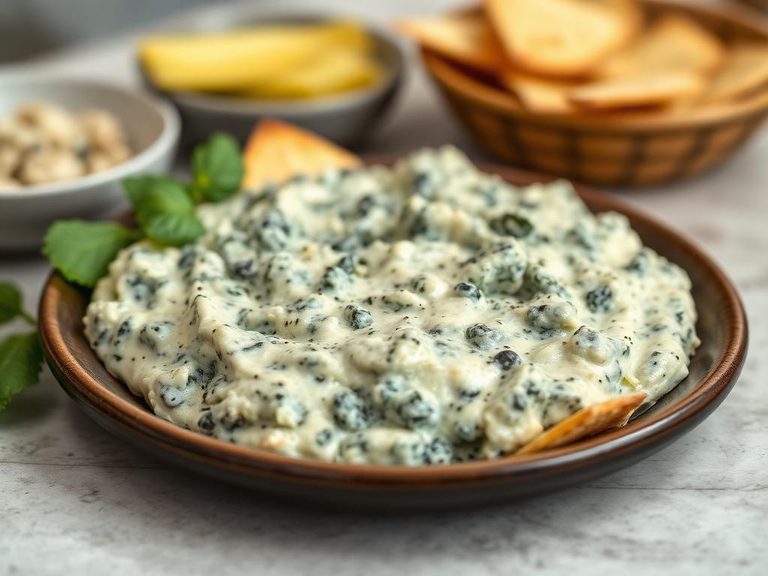
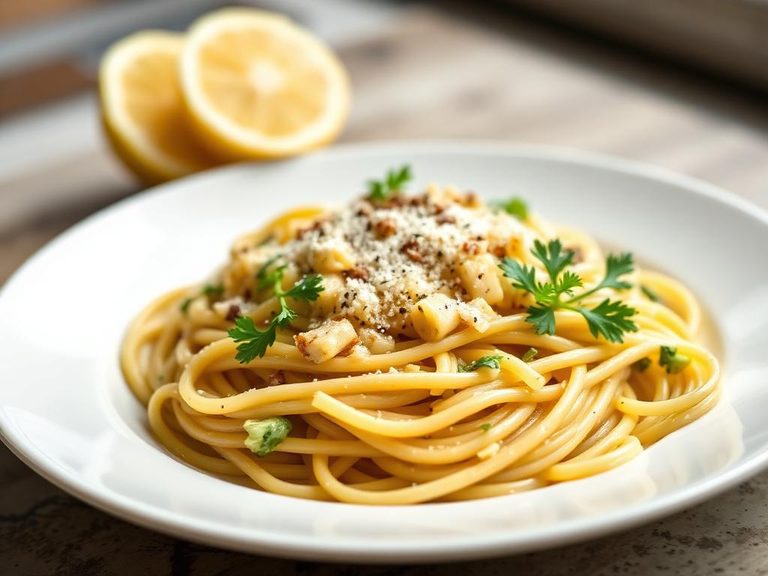
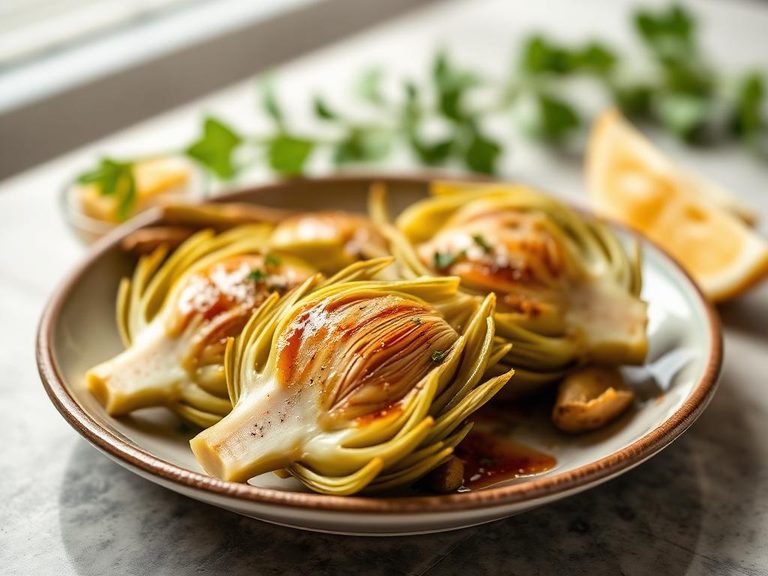
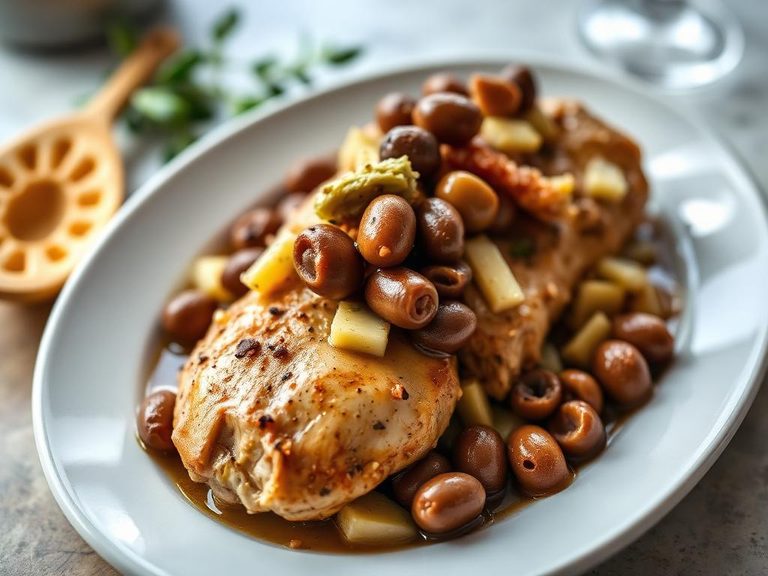
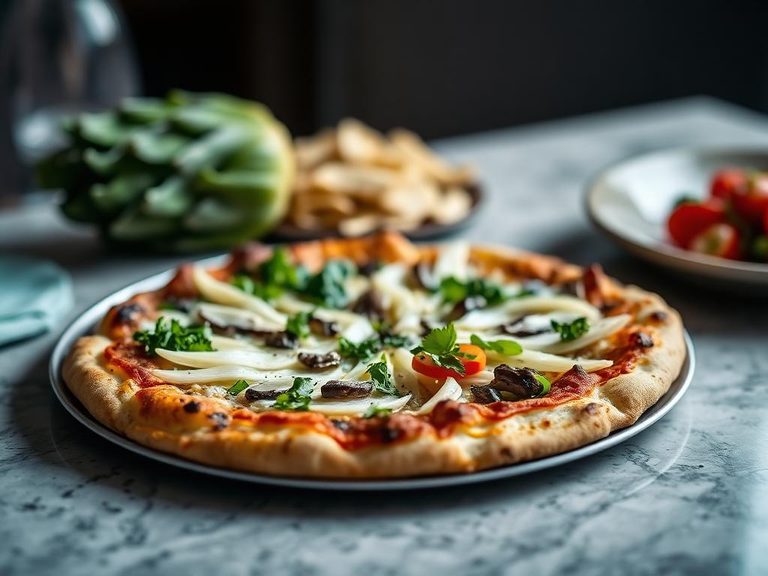
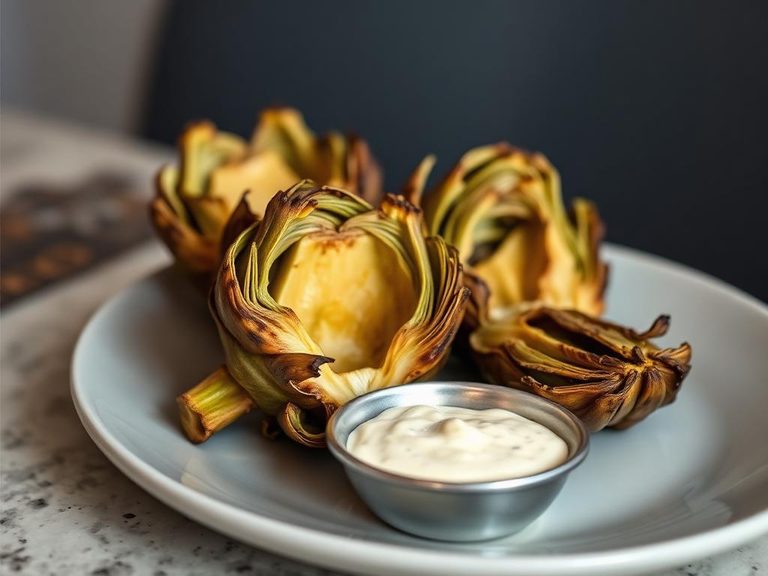
🌍 Where it's eaten
💡 Did you know?
The edible portion is actually the immature flower bud of the plant; if left to bloom, it opens into a stunning, vibrant purple thistle flower.
Full nutrition (USDA data · scales with serving)
| Water | 88.6 g |
| Energy | 38.0 kcal |
| Energy | 158 kj |
| Protein | 2.6 g |
| Total lipid (fat) | 0.43 g |
| Ash | 0.60 g |
| Carbohydrate, by difference | 7.8 g |
| Fiber, total dietary | 3.9 g |
| Calcium, Ca | 19.0 mg |
| Iron, Fe | 0.50 mg |
| Magnesium, Mg | 27.0 mg |
| Phosphorus, P | 58.0 mg |
| Potassium, K | 248 mg |
| Sodium, Na | 47.0 mg |
| Zinc, Zn | 0.32 mg |
| Copper, Cu | 0.05 mg |
| Manganese, Mn | 0.24 mg |
| Selenium, Se | 0.20 ug |
| Vitamin C, total ascorbic acid | 5.3 mg |
| Thiamin | 0.06 mg |
| Riboflavin | 0.14 mg |
| Niacin | 0.86 mg |
| Pantothenic acid | 0.19 mg |
| Vitamin B-6 | 0.08 mg |
| Folate, total | 126 ug |
| Folic acid | 0.00 ug |
| Folate, food | 126 ug |
| Folate, DFE | 126 ug |
| Vitamin B-12 | 0.00 ug |
| Vitamin A, RAE | 8.0 ug |
| Retinol | 0.00 ug |
| Vitamin A, IU | 154 iu |
| Vitamin D (D2 + D3), International Units | 0.00 iu |
| Vitamin D (D2 + D3) | 0.00 ug |
Fat & fatty acid profile (per 100g)
| Fatty acids, total saturated | 0.10 g |
| SFA 12:0 | 0.00 g |
| SFA 14:0 | 0.00 g |
| SFA 16:0 | 0.08 g |
| SFA 18:0 | 0.01 g |
| Fatty acids, total monounsaturated | 0.01 g |
| MUFA 18:1 | 0.01 g |
| Fatty acids, total polyunsaturated | 0.18 g |
| PUFA 18:2 | 0.13 g |
| PUFA 18:3 | 0.05 g |
| Fatty acids, total trans | 0.00 g |
| Cholesterol | 0.00 mg |
FAQ
Are frozen artichoke hearts as nutritious as fresh?
Yes, they are flash-frozen at peak ripeness, which preserves most vitamins, minerals, and fiber very effectively, often better than 'fresh' ones that have traveled long distances.
Why do some artichokes make my mouth feel dry or fuzzy?
This is caused by compounds called cynarin and tannins, which can temporarily alter your taste perception, making water taste sweet afterward. This is a normal, harmless reaction.
How can I reduce the bitterness in frozen artichokes?
Soak them briefly in cold water with a splash of lemon juice or vinegar before cooking. Cooking methods like braising or sautéing with garlic and olive oil also mellow the flavor.
Nutrient density (calculated · NRF9.3)
Nutrient Rich Foods index: beneficial nutrients (protein, fiber, vitamins, minerals) minus saturated fat, added sugar & sodium, per 100 kcal.
NRF9.3 index — Fulgoni, Keast & Drewnowski, 2009. Computed from USDA nutrients.
Weight-loss friendliness (composite index)
Energy density 0.38 kcal/g · 28% calories from protein · 3.9 g fiber · 0.0 g sugar per 100 g.
Composite of energy density (Rolls et al., 1999), protein & fiber satiety, minus sugar. A calculated heuristic — ranks satiety-per-calorie, not a clinical measure.
Dietary load (calculated from USDA values)
Potential renal acid load. Positive = acid-forming, negative = alkaline-forming.
Sodium-to-potassium ratio: 0.19 (lower is better — aim for ≤ 1)
Sodium:potassium per WHO potassium guidance. Computed from USDA nutrients.