

Stinging Nettles, blanched (Northern Plains Indians)
Whole food · American Indian/Alaska Native Foods
Blanched stinging nettles are the tender, cooked leaves of a wild plant, transformed from a stinging nuisance into a nutrient-dense, spinach-like green with a mild, earthy flavor and soft texture. They are a powerhouse of fiber and plant-based protein, offering a surprisingly delicate taste once the sting is neutralized by heat. This traditional ingredient, cherished by Northern Plains Indigenous communities, provides a unique connection to foraged, seasonal eating.
Calorie split: 26% protein · 72% carbs · 2% fat
↓ Full nutrition💚 Why it's loved
People love blanched stinging nettles for their deep, earthy, and slightly grassy flavor that is more complex than spinach, and for their cultural significance as a traditional spring food that connects eaters to the land. They are prized for their versatility, easily incorporated into soups, sautés, and baked goods, offering a unique taste of the wild.
⚠️ Watch-outs & how to enjoy it better
The primary downside is the presence of oxalates, which can contribute to kidney stone formation in susceptible individuals, and the need for careful handling and cooking to neutralize the sting. To counteract oxalates, blanching or boiling the nettles and discarding the water is effective; pairing them with calcium-rich foods can also help bind oxalates in the digestive tract.
Key benefits
- Exceptionally high in dietary fiber (6.9g per 100g)
- Good source of plant-based protein (2.71g per 100g)
- Very low in fat (0.11g per 100g)
- Rich in iron and other minerals (implied by traditional use)
- A traditional, foraged wild food with deep cultural roots
🍽️ Popular dishes
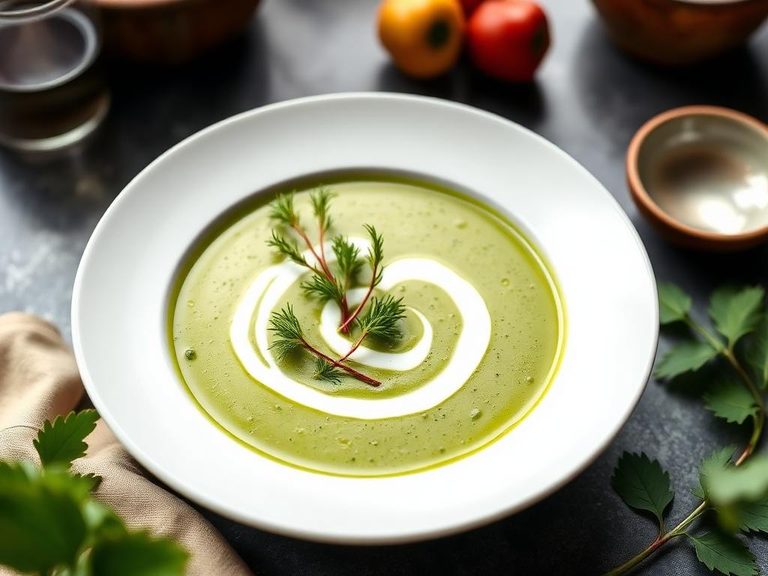 Stinging Nettle Soup (a classic European and North American spring dish)
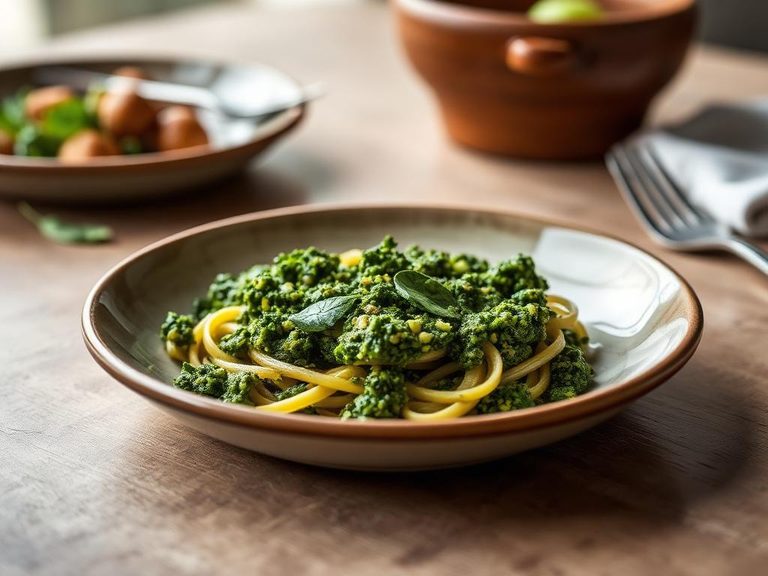 Nettle Pesto (a vibrant, earthy twist on traditional pesto)
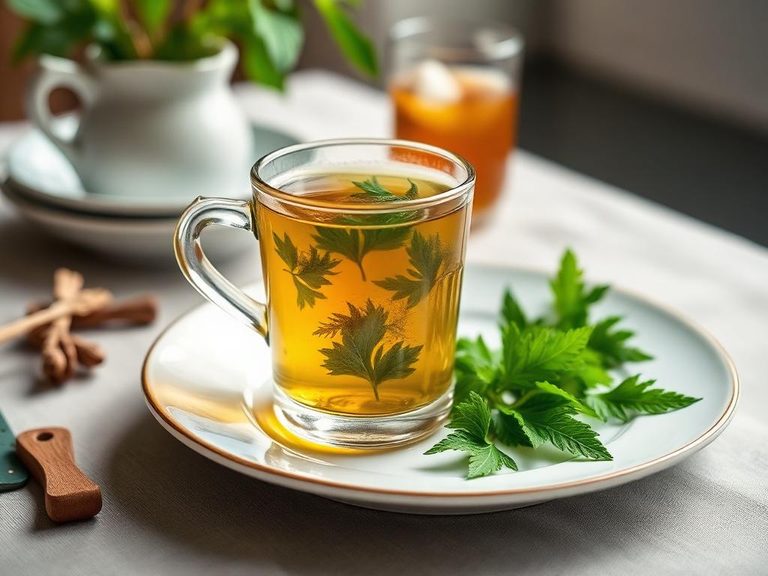 Nettle Tea (a traditional herbal infusion)
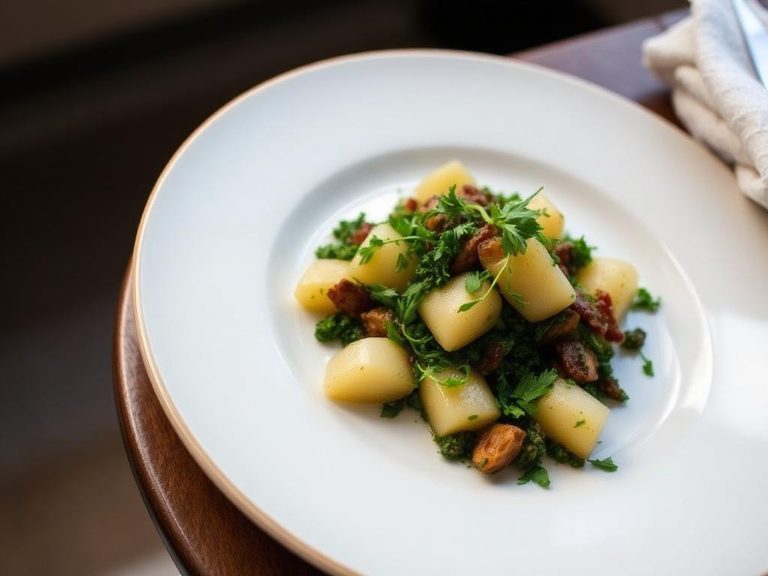 Nettle and Potato Hash (a hearty, savory side dish)
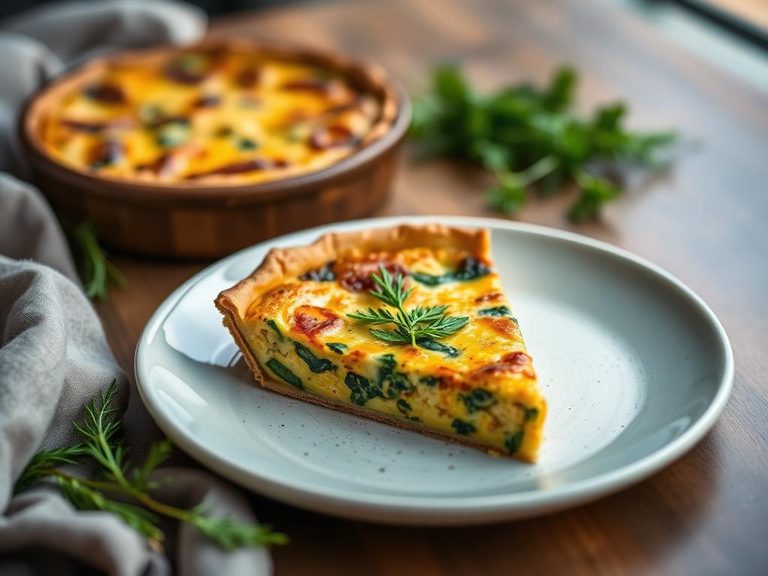 Nettle Frittata or Quiche (a common way to use the greens in eggs)
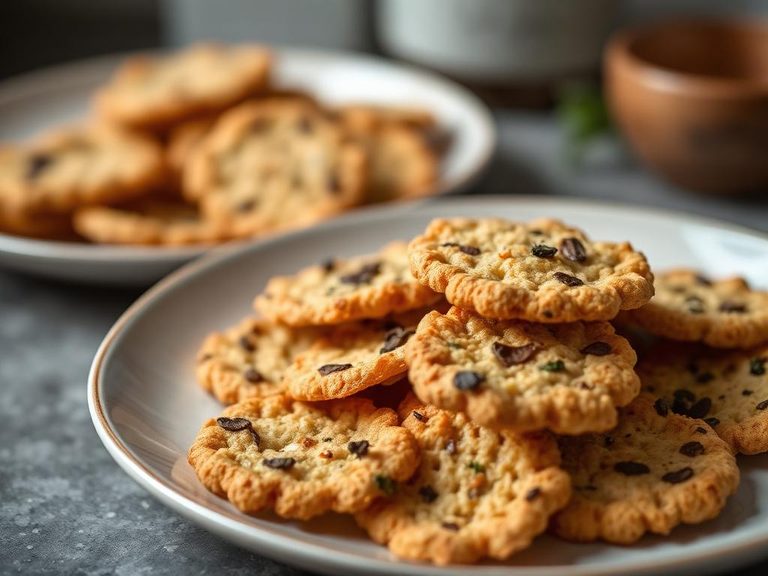 Nettle Bread or Crackers (incorporated into doughs)
🌍 Where it's eaten
💡 Did you know?
The stinging hairs on the nettle leaves contain histamine, serotonin, and formic acid, which cause the infamous sting, but these compounds are completely broken down and neutralized by the heat of blanching or cooking, making the plant safe and nutritious to eat.
Full nutrition (USDA data · scales with serving)
| Water | 87.7 g |
| Energy | 42.0 kcal |
| Energy | 175 kj |
| Protein | 2.7 g |
| Total lipid (fat) | 0.11 g |
| Ash | 2.0 g |
| Carbohydrate, by difference | 7.5 g |
| Fiber, total dietary | 6.9 g |
| Total Sugars | 0.25 g |
| Sucrose | 0.10 g |
| Glucose | 0.07 g |
| Fructose | 0.07 g |
| Lactose | 0.00 g |
| Maltose | 0.00 g |
| Galactose | 0.00 g |
| Calcium, Ca | 481 mg |
| Iron, Fe | 1.6 mg |
| Magnesium, Mg | 57.0 mg |
| Phosphorus, P | 71.0 mg |
| Potassium, K | 334 mg |
| Sodium, Na | 4.0 mg |
| Zinc, Zn | 0.34 mg |
| Copper, Cu | 0.08 mg |
| Manganese, Mn | 0.78 mg |
| Selenium, Se | 0.30 ug |
| Thiamin | 0.01 mg |
| Riboflavin | 0.16 mg |
| Niacin | 0.39 mg |
| Vitamin B-6 | 0.10 mg |
| Folate, total | 14.0 ug |
| Folic acid | 0.00 ug |
| Folate, food | 14.0 ug |
| Folate, DFE | 14.0 ug |
| Choline, total | 17.4 mg |
| Betaine | 21.4 mg |
| Vitamin A, RAE | 101 ug |
| Carotene, beta | 1150 ug |
| Carotene, alpha | 114 ug |
| Cryptoxanthin, beta | 0.00 ug |
| Vitamin A, IU | 2011 iu |
| Lycopene | 0.00 ug |
| Lutein + zeaxanthin | 4178 ug |
| Vitamin K (phylloquinone) | 499 ug |
| Vitamin K (Dihydrophylloquinone) | 0.00 ug |
| Vitamin K (Menaquinone-4) | 0.00 ug |
FAQ
How do I handle and cook stinging nettles without getting stung?
Always wear thick gloves when handling raw nettles. To cook, quickly blanch them in boiling water for 1-2 minutes, then shock in ice water, or sauté them directly in a hot pan until wilted. The heat neutralizes the sting.
What do blanched stinging nettles taste like?
They have a mild, earthy, and slightly grassy flavor, often compared to spinach but with a deeper, more complex taste. The texture is soft and tender once cooked.
Are stinging nettles nutritious?
Yes, they are very nutritious, being high in fiber (6.9g per 100g), a good source of plant protein (2.71g), and low in fat. They are also a traditional source of vitamins and minerals like iron.
Can I eat stinging nettles raw?
No, you should not eat them raw due to the stinging hairs. They must be cooked or blanched to neutralize the sting and make them safe to consume.
Nutrient density (calculated · NRF9.3)
Nutrient Rich Foods index: beneficial nutrients (protein, fiber, vitamins, minerals) minus saturated fat, added sugar & sodium, per 100 kcal.
NRF9.3 index — Fulgoni, Keast & Drewnowski, 2009. Computed from USDA nutrients.
Weight-loss friendliness (composite index)
Energy density 0.42 kcal/g · 26% calories from protein · 6.9 g fiber · 0.3 g sugar per 100 g.
Composite of energy density (Rolls et al., 1999), protein & fiber satiety, minus sugar. A calculated heuristic — ranks satiety-per-calorie, not a clinical measure.
Dietary load (calculated from USDA values)
Potential renal acid load. Positive = acid-forming, negative = alkaline-forming.
Sodium-to-potassium ratio: 0.01 (lower is better — aim for ≤ 1)
Sodium:potassium per WHO potassium guidance. Computed from USDA nutrients.