Stinging Nettle Soup
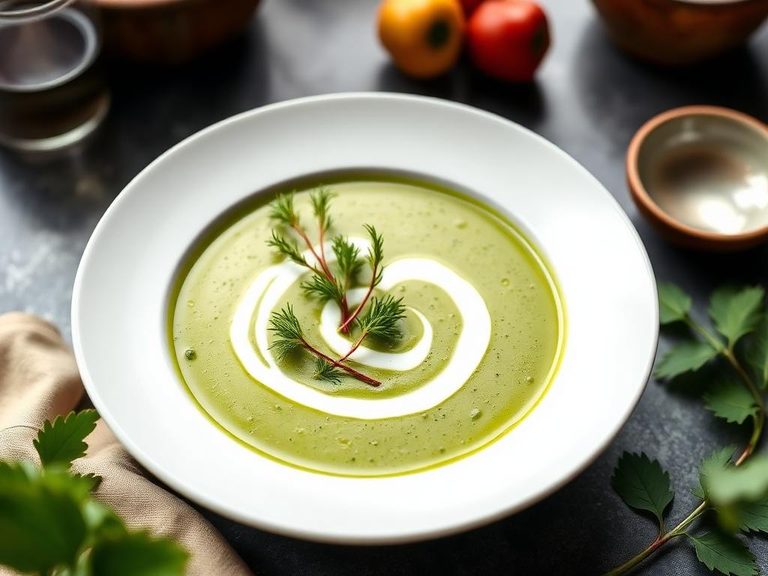
Stinging nettle soup is a vibrant, earthy green soup made from the young, tender leaves of the stinging nettle plant, which lose their sting when cooked. It is a traditional springtime dish found across Europe, particularly in the UK, Ireland, and Eastern Europe, often foraged from hedgerows and woodlands. The base typically includes nettles, onions, potatoes, and vegetable or chicken stock.
🍽️ Nutrition at a glance
This soup is low in calories, fat, and protein, but is a good source of dietary fiber and provides a notable amount of vitamins and minerals. A typical serving offers a significant boost of iron, vitamin K, and vitamin A, making it a nutrient-dense addition to a meal.
Nutrition breakdown
| Calories | 85 kcal |
| Protein | 4 g |
| Carbs | 12 g |
| Fat | 3 g |
| Fiber | 3 g |
| Sugar | 2 g |
| Sodium | 450 mg |
| Vitamin K | 450 mcg |
| Vitamin A | 8500 IU |
| Iron | 4.5 mg |
| Calcium | 220 mg |
| Potassium | 350 mg |
| Magnesium | 40 mg |
| Manganese | 0.8 mg |
| Vitamin C | 15 mg |
Per 1 cup (240 g) · estimated, varies by recipe
💡 What's interesting
Culturally, nettle soup is a classic example of foraging cuisine, turning a plant often considered a weed into a nutritious spring tonic. Nutritionally, the leaves are exceptionally rich in iron and vitamin K, which support blood health and bone function, respectively.