

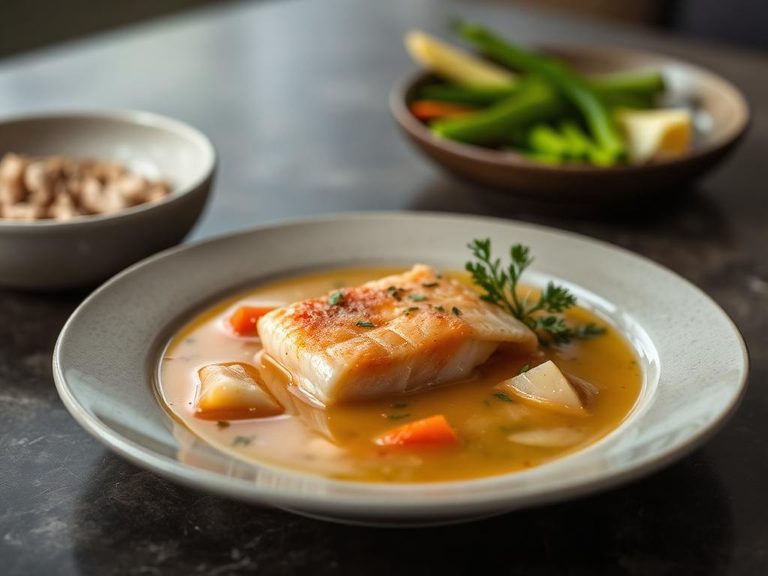
Soup, fish, homemade (Alaska Native)
Whole food · American Indian/Alaska Native Foods

Photo: Wikipedia
A traditional Alaskan Native soup, this is a light, brothy preparation where tender flakes of fish are simmered in water or a simple stock. The taste is clean and savory, highlighting the natural, mild flavor of the fish with a delicate, flaky texture. Its standout nutritional feature is its high protein-to-calorie ratio, offering over 7 grams of protein for just 72 calories per 100 grams.
Calorie split: 41% protein · 31% carbs · 28% fat
↓ Full nutrition💚 Why it's loved
People love this soup for its pure, comforting flavor that celebrates the natural taste of fresh fish, often a staple in coastal communities. It is cherished for its simplicity, versatility, and deep cultural roots, often served as a nourishing meal during cold weather or communal gatherings.
⚠️ Watch-outs & how to enjoy it better
The primary concern is the potential for high sodium if prepared with salted broth or preserved fish, which can be an issue for those monitoring blood pressure. To counteract this, use unsalted water or low-sodium broth and season with herbs like dill or seaweed instead. Additionally, ensure the fish is cooked thoroughly to avoid any risk of parasites, and be mindful of any fish allergies.
Key benefits
- Excellent source of lean, high-quality protein
- Very low in calories, making it ideal for weight management
- Naturally low in fat and contains no added sugar
- Hydrating and gentle on the digestive system
- Rich in essential amino acids from the fish
🍽️ Popular dishes

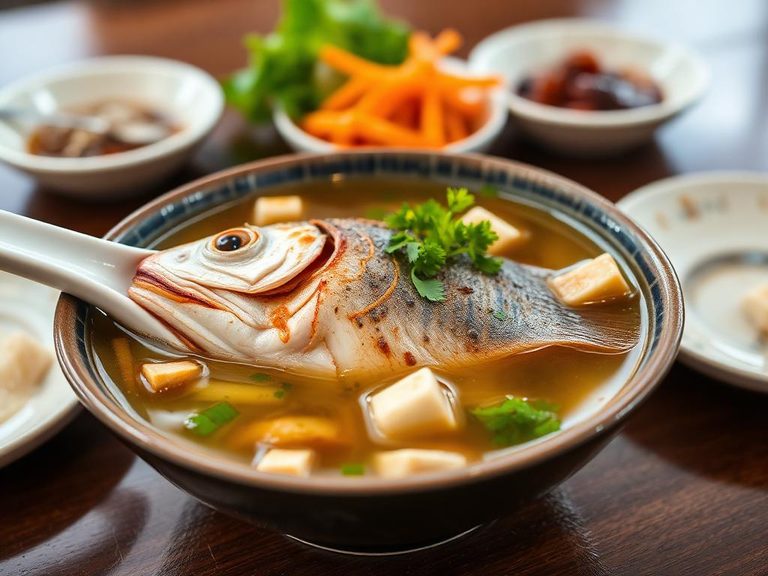
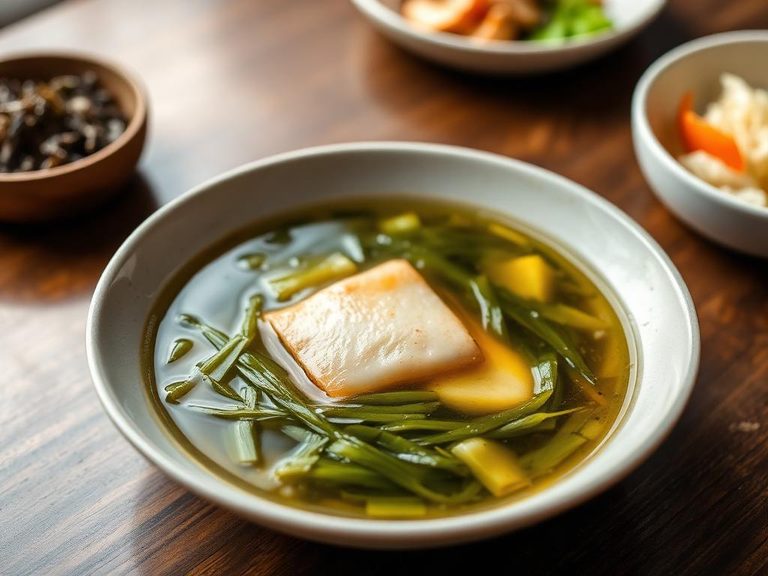
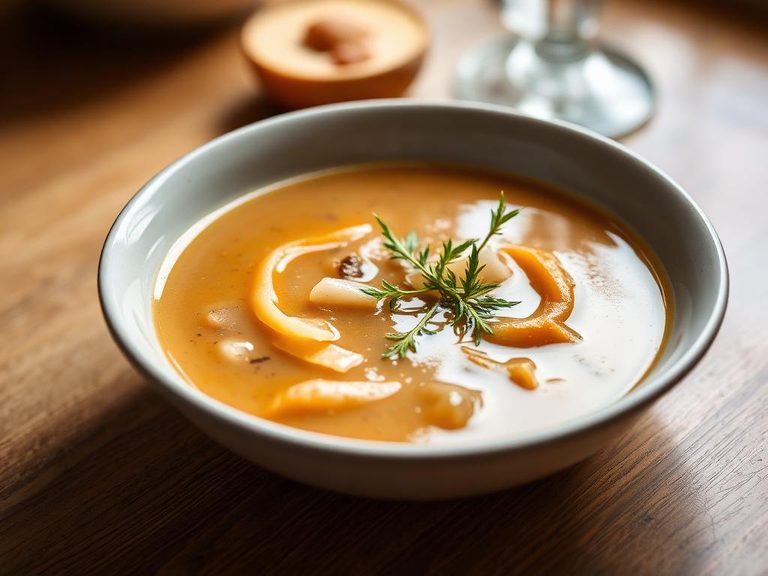
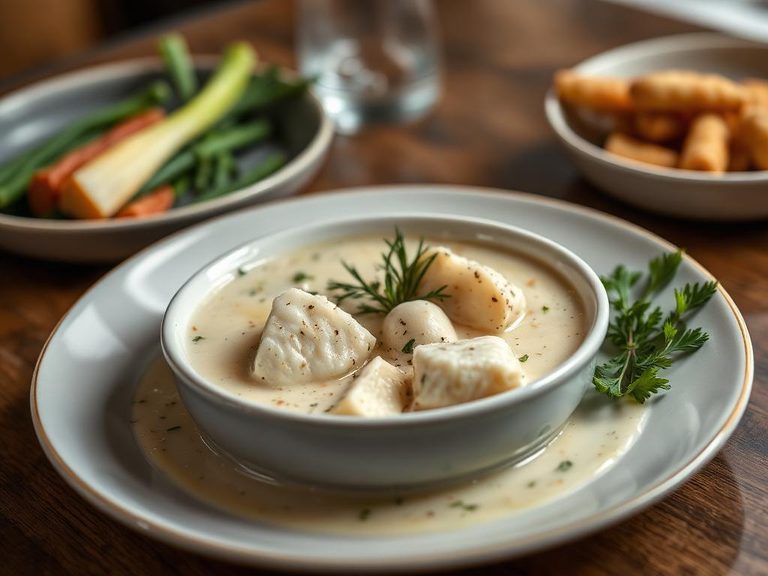
🌍 Where it's eaten
💡 Did you know?
In many Alaskan Native traditions, fish soup was a critical source of liquid and nutrients during the long, frozen winters, and the broth was often prized even more than the fish itself for its restorative properties.
Full nutrition (USDA data · scales with serving)
| Water | 84.0 g |
| Energy | 72.0 kcal |
| Energy | 300 kj |
| Protein | 7.4 g |
| Total lipid (fat) | 2.2 g |
| Ash | 0.80 g |
| Carbohydrate, by difference | 5.6 g |
| Calcium, Ca | 35.0 mg |
| Iron, Fe | 0.50 mg |
| Magnesium, Mg | 1.0 mg |
| Phosphorus, P | 112 mg |
| Potassium, K | 128 mg |
| Sodium, Na | 30.0 mg |
| Manganese, Mn | 0.01 mg |
| Vitamin C, total ascorbic acid | 0.30 mg |
| Thiamin | 0.07 mg |
| Riboflavin | 0.02 mg |
| Niacin | 2.6 mg |
| Pantothenic acid | 0.01 mg |
| Vitamin B-6 | 0.01 mg |
| Folate, total | 1.0 ug |
| Folate, food | 1.0 ug |
| Vitamin A, IU | 40.0 iu |
Fat & fatty acid profile (per 100g)
| Fatty acids, total saturated | 0.50 g |
| Cholesterol | 12.0 mg |
Amino acid profile (per 100g)
Estimated from Restaurant, Latino, black bean soup — USDA does not publish this profile for Soup.
| Tryptophan | 0.04 g |
| Threonine | 0.17 g |
| Isoleucine | 0.16 g |
| Leucine | 0.32 g |
| Lysine | 0.27 g |
| Methionine | 0.10 g |
| Cystine | 0.04 g |
| Phenylalanine | 0.16 g |
| Tyrosine | 0.13 g |
| Valine | 0.20 g |
| Arginine | 0.35 g |
| Histidine | 0.09 g |
| Alanine | 0.35 g |
| Aspartic acid | 0.38 g |
| Glutamic acid | 0.72 g |
| Glycine | 0.58 g |
| Proline | 0.36 g |
| Serine | 0.20 g |
FAQ
What type of fish is typically used in this soup?
Commonly used fish include salmon, halibut, cod, and herring, often sourced locally from Alaskan waters.
Is this soup suitable for a low-carb diet?
Yes, it is very low in carbohydrates, with only about 5.6 grams per 100 grams, making it suitable for low-carb and ketogenic diets.
Can I add vegetables to this soup?
Absolutely, traditional versions often include potatoes, onions, or seaweed, which add texture and nutrients without significantly increasing calories.
Nutrient density (calculated · NRF9.3)
Nutrient Rich Foods index: beneficial nutrients (protein, fiber, vitamins, minerals) minus saturated fat, added sugar & sodium, per 100 kcal.
NRF9.3 index — Fulgoni, Keast & Drewnowski, 2009. Computed from USDA nutrients.
Weight-loss friendliness (composite index)
Energy density 0.72 kcal/g · 41% calories from protein · 0.0 g fiber · 0.0 g sugar per 100 g.
Composite of energy density (Rolls et al., 1999), protein & fiber satiety, minus sugar. A calculated heuristic — ranks satiety-per-calorie, not a clinical measure.
Dietary load (calculated from USDA values)
Potential renal acid load. Positive = acid-forming, negative = alkaline-forming.
Sodium-to-potassium ratio: 0.23 (lower is better — aim for ≤ 1)
Sodium:potassium per WHO potassium guidance. Computed from USDA nutrients.