

Mushroom, portabella
Whole food · Vegetables and Vegetable Products

Photo: Wikipedia
The portabella is a mature cremini mushroom, prized for its large, meaty cap that can span 4-6 inches across. Its flavor is deeply savory and earthy with a rich umami profile, and its texture is firm and juicy, making it a popular meat substitute. Nutritionally, it's a low-calorie, high-fiber food that provides a good source of B vitamins and essential minerals like selenium.
Calorie split: 34% protein · 57% carbs · 9% fat
↓ Full nutrition💚 Why it's loved
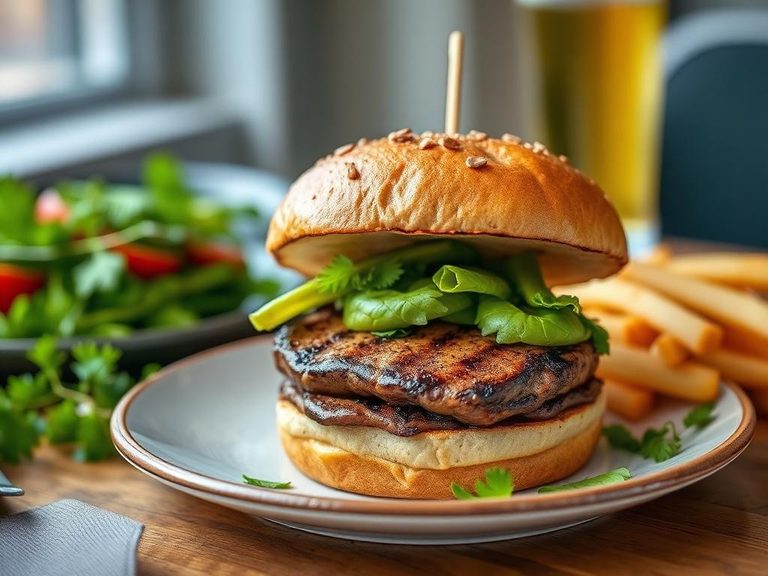
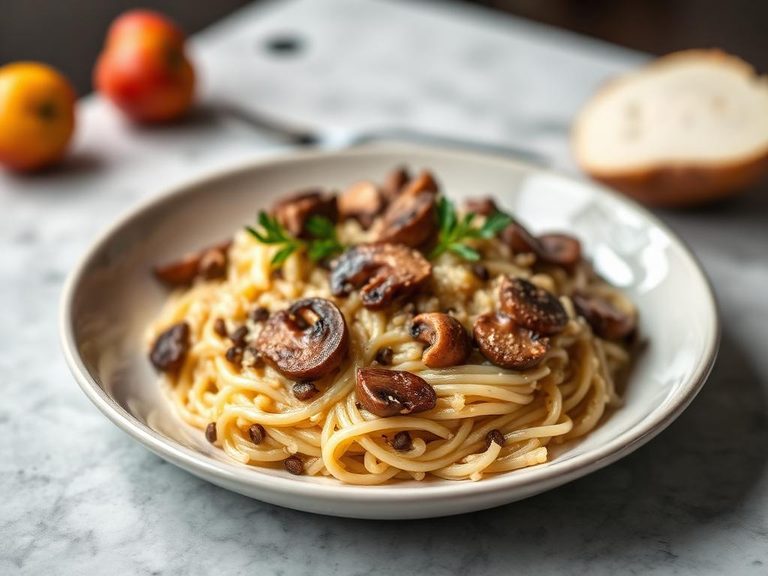
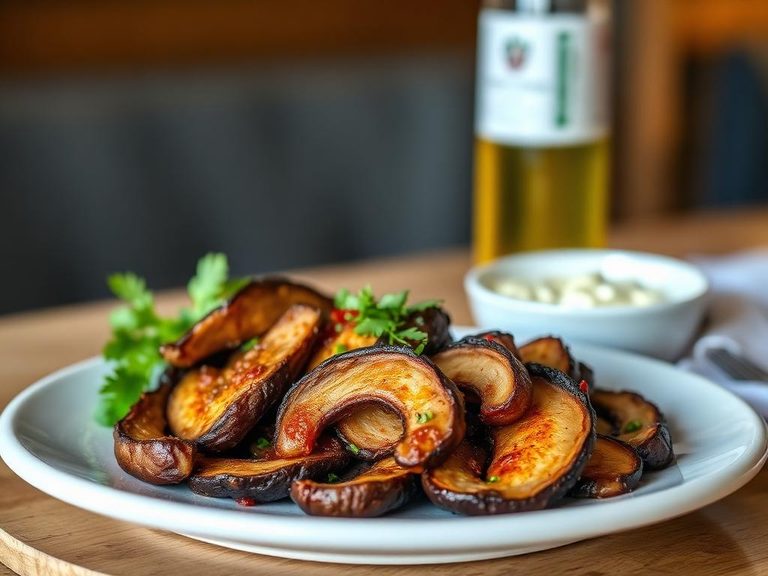
People love portabellas for their substantial, steak-like texture and deep, savory flavor that intensifies when grilled or roasted. They are incredibly versatile, acting as a hearty centerpiece for vegetarian meals or a flavor-packed addition to pastas, burgers, and salads.
⚠️ Watch-outs & how to enjoy it better
Some individuals may experience digestive discomfort due to the mushroom's high fiber content and naturally occurring sugars like mannitol, which can be a trigger for those with IBS. To mitigate this, start with smaller portions, ensure it's thoroughly cooked, and pair it with a source of protein or healthy fat to slow digestion.
Key benefits
- Excellent source of dietary fiber (1.88g per 100g)
- Very low in calories (32 kcal per 100g)
- Provides key B vitamins like niacin and riboflavin
- Good source of the antioxidant mineral selenium
- Naturally low in fat and sugar
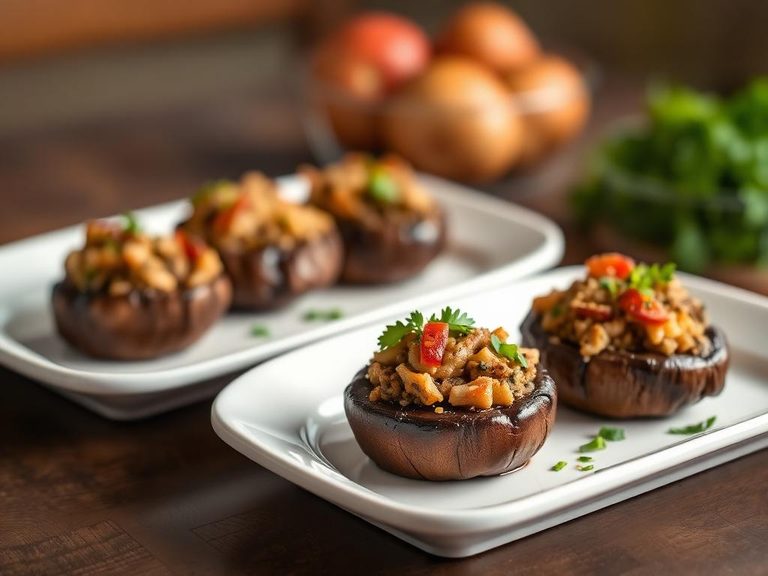
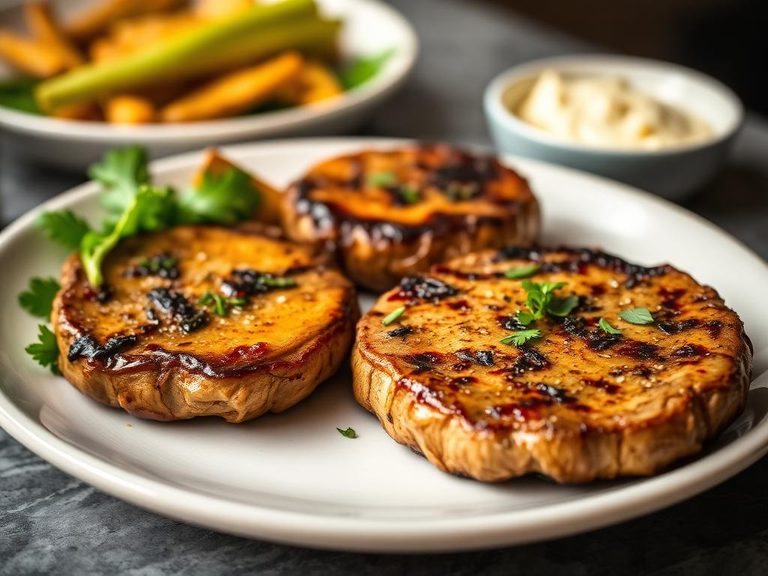
🍽️ Popular dishes
🌍 Where it's eaten
💡 Did you know?
The gills on the underside of a portabella cap are so dark and dense that they can be used as a natural, edible ink for food decoration.
Full nutrition (USDA data · scales with serving)
| Water | 91.5 g |
| Energy (Atwater General Factors) | 32.4 kcal |
| Energy (Atwater Specific Factors) | 26.0 kcal |
| Nitrogen | 0.44 g |
| Protein | 2.8 g |
| Total lipid (fat) | 0.31 g |
| Ash | 0.80 g |
| Carbohydrate, by difference | 4.7 g |
| Fiber, total dietary | 1.9 g |
| Beta-glucan | 1.1 g |
| Calcium, Ca | 3.2 mg |
| Iron, Fe | 0.14 mg |
| Magnesium, Mg | 9.0 mg |
| Phosphorus, P | 87.5 mg |
| Potassium, K | 349 mg |
| Sodium, Na | 5.3 mg |
| Zinc, Zn | 0.39 mg |
| Copper, Cu | 0.20 mg |
| Manganese, Mn | 0.05 mg |
| Selenium, Se | 14.7 ug |
| Thiamin | 0.01 mg |
| Riboflavin | 0.47 mg |
| Niacin | 3.9 mg |
| Vitamin B-6 | 0.10 mg |
| Biotin | 11.1 ug |
| Vitamin D (D2 + D3), International Units | 0.00 iu |
| Vitamin D (D2 + D3) | 0.00 ug |
| Vitamin D2 (ergocalciferol) | 0.00 ug |
| Vitamin D4 | 0.00 ug |
| Glutathione | 5.0 mg |
| Ergosta-7-enol | 1.8 mg |
| Ergosta-5,7-dienol | 4.7 mg |
| Ergosta-7,22-dienol | 1.8 mg |
| Delta-7-Stigmastenol | 0.00 mg |
| Ergothioneine | 2.3 mg |
Fat & fatty acid profile (per 100g)
| Stigmasterol | 0.00 mg |
| Campesterol | 0.00 mg |
| Beta-sitosterol | 0.00 mg |
| Ergosterol | 48.9 mg |
| Beta-sitostanol | 0.00 mg |
| Delta-5-avenasterol | 0.00 mg |
Amino acid profile (per 100g)
| Tryptophan | 0.41 g |
| Threonine | 1.2 g |
| Isoleucine | 1.0 g |
| Leucine | 1.6 g |
| Lysine | 1.5 g |
| Methionine | 0.35 g |
| Phenylalanine | 1.0 g |
| Valine | 2.2 g |
| Histidine | 0.56 g |
FAQ
Should I remove the gills before cooking?
It's optional. The gills can turn dishes a dark color and have a slightly stronger flavor. Many cooks scrape them out for a milder taste and cleaner presentation, especially for stuffing or grilling whole.
How do I clean a portabella mushroom?
Avoid soaking, as mushrooms absorb water. Instead, gently wipe the cap with a damp paper towel or soft brush to remove dirt. For stubborn spots, a quick rinse under running water is fine, but pat it dry immediately.
What's the best way to store them?
Store them in a paper bag in the refrigerator's main compartment (not the crisper drawer). The paper bag absorbs excess moisture, preventing sliminess. Use within 3-5 days for best quality.
Nutrient density (calculated · NRF9.3)
Nutrient Rich Foods index: beneficial nutrients (protein, fiber, vitamins, minerals) minus saturated fat, added sugar & sodium, per 100 kcal.
NRF9.3 index — Fulgoni, Keast & Drewnowski, 2009. Computed from USDA nutrients.
Weight-loss friendliness (composite index)
Energy density 0.32 kcal/g · 34% calories from protein · 1.9 g fiber · 0.0 g sugar per 100 g.
Composite of energy density (Rolls et al., 1999), protein & fiber satiety, minus sugar. A calculated heuristic — ranks satiety-per-calorie, not a clinical measure.
Dietary load (calculated from USDA values)
Potential renal acid load. Positive = acid-forming, negative = alkaline-forming.
Sodium-to-potassium ratio: 0.02 (lower is better — aim for ≤ 1)
Sodium:potassium per WHO potassium guidance. Computed from USDA nutrients.