

Cereals, QUAKER, hominy grits, white, quick, dry
Whole food · Breakfast Cereals

Photo: Wikipedia
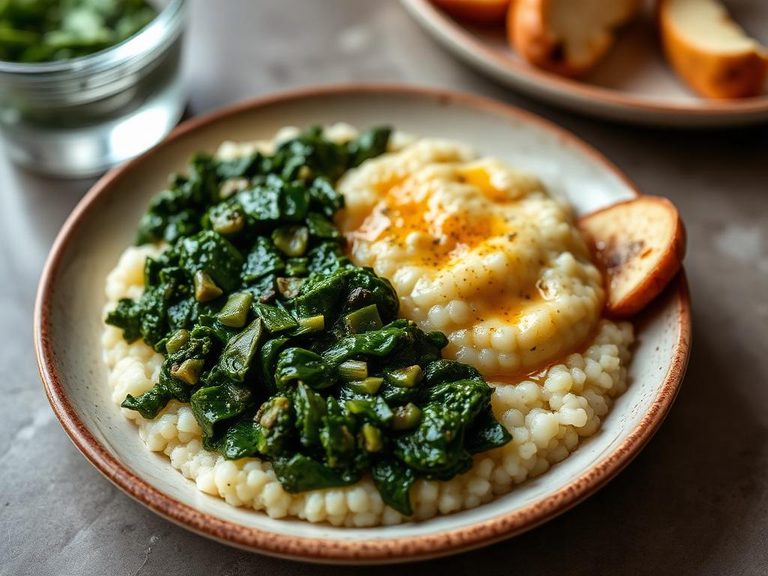
Hominy grits are coarse, stone-ground corn kernels that have been nixtamalized, giving them a distinct, earthy corn flavor and a creamy, slightly chewy texture when cooked. This quick-cook version offers a hearty, comforting base with a notable 4.8g of fiber per 100g dry, making it more substantial than refined cornmeal.
Calorie split: 10% protein · 87% carbs · 3% fat
↓ Full nutrition💚 Why it's loved
People love grits for their mild, corn-forward flavor and versatile, creamy texture that acts as a perfect canvas for savory toppings like cheese, butter, or shrimp. It's a deeply comforting staple in Southern U.S. cuisine, evoking a sense of tradition and home cooking.
⚠️ Watch-outs & how to enjoy it better
The high carbohydrate content (79.6g per 100g dry) can cause rapid blood sugar spikes if eaten alone. To counteract this, always pair grits with a protein (like eggs or shrimp) and a healthy fat (like butter or olive oil) to slow glucose absorption. Portion control is also key for blood sugar management.
Key benefits
- Good source of dietary fiber for digestive health
- Nixtamalization process increases niacin (vitamin B3) availability
- Provides complex carbohydrates for sustained energy
- Low in fat and naturally cholesterol-free
- Gluten-free grain option
🍽️ Popular dishes
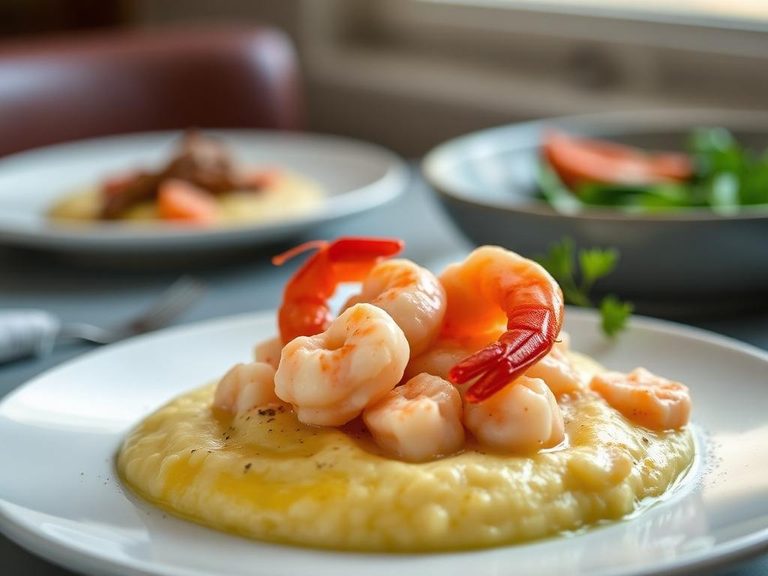
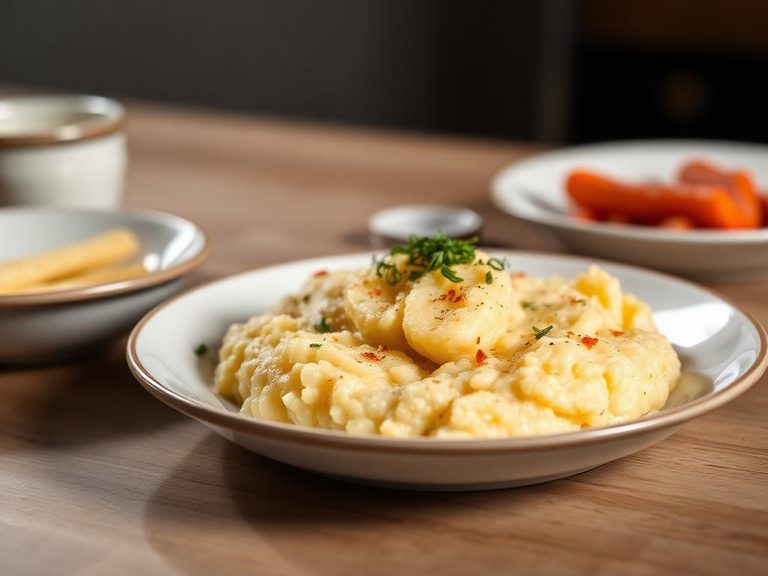
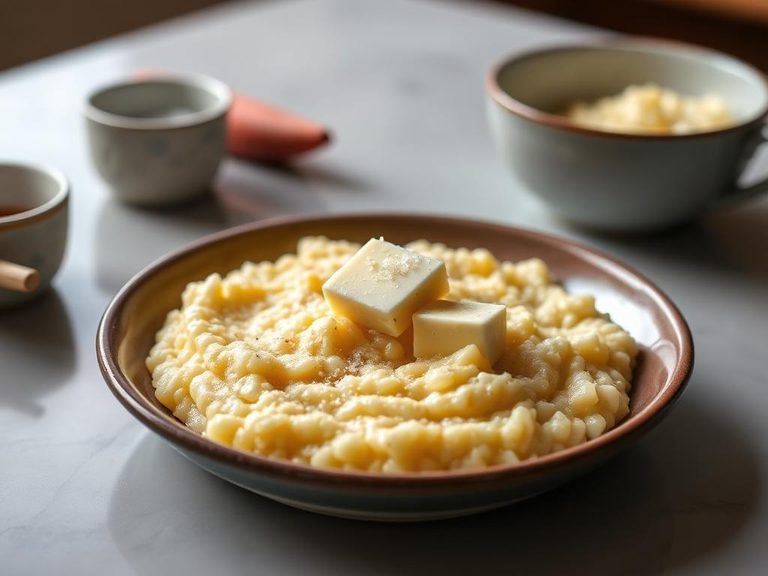
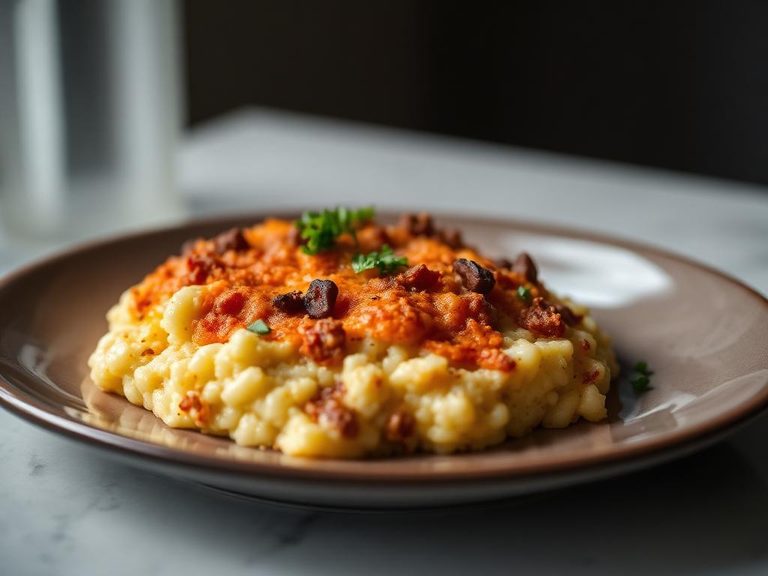
🌍 Where it's eaten
💡 Did you know?
The nixtamalization process that creates hominy involves soaking corn in an alkaline solution (like lime water), which not only boosts nutrition but also gives hominy its characteristic puffed, chewy texture and unique flavor.
Full nutrition (USDA data · scales with serving)
| Water | 10.0 g |
| Energy | 348 kcal |
| Energy | 1458 kj |
| Protein | 8.8 g |
| Total lipid (fat) | 1.2 g |
| Ash | 0.41 g |
| Carbohydrate, by difference | 79.6 g |
| Fiber, total dietary | 4.8 g |
| Total Sugars | 0.30 g |
| Calcium, Ca | 2.0 mg |
| Iron, Fe | 4.4 mg |
| Magnesium, Mg | 27.0 mg |
| Phosphorus, P | 73.0 mg |
| Potassium, K | 137 mg |
| Sodium, Na | 1.0 mg |
| Zinc, Zn | 0.41 mg |
| Vitamin C, total ascorbic acid | 0.00 mg |
| Thiamin | 0.61 mg |
| Riboflavin | 0.36 mg |
| Niacin | 5.3 mg |
| Vitamin B-6 | 0.15 mg |
| Folate, total | 205 ug |
| Vitamin B-12 | 0.00 ug |
| Vitamin A, IU | 0.00 iu |
| Vitamin E (alpha-tocopherol) | 0.12 mg |
Fat & fatty acid profile (per 100g)
| Fatty acids, total saturated | 0.16 g |
| Fatty acids, total monounsaturated | 0.29 g |
| Fatty acids, total polyunsaturated | 0.51 g |
| Fatty acids, total trans | 0.00 g |
| Cholesterol | 0.00 mg |
Amino acid profile (per 100g)
Estimated from Cereals ready-to-eat, POST, HONEY BUNCHES OF OATS, honey roasted — USDA does not publish this profile for Cereals.
| Tryptophan | 0.09 g |
| Threonine | 0.24 g |
| Isoleucine | 0.26 g |
| Leucine | 0.80 g |
| Lysine | 0.12 g |
| Methionine | 0.10 g |
| Cystine | 0.11 g |
| Phenylalanine | 0.39 g |
| Tyrosine | 0.21 g |
| Valine | 0.34 g |
| Arginine | 0.24 g |
| Histidine | 0.18 g |
| Alanine | 0.46 g |
| Aspartic acid | 0.48 g |
| Glutamic acid | 1.9 g |
| Glycine | 0.27 g |
| Proline | 0.49 g |
| Serine | 0.38 g |
FAQ
What is the difference between hominy grits and regular corn grits?
Hominy grits are made from corn kernels that have been nixtamalized (treated with an alkaline solution), which softens the hull, adds nutrients, and gives them a distinct flavor and chewier texture. Regular corn grits are simply ground dried corn.
Why are they called 'quick' grits?
Quick grits are more finely ground than regular or stone-ground grits, which allows them to cook much faster, typically in 5-10 minutes, making them a convenient option.
Are hominy grits gluten-free?
Yes, hominy grits are naturally gluten-free as they are made from corn, which is not a gluten-containing grain. However, always check packaging for potential cross-contamination warnings.
Nutrient density (calculated · NRF9.3)
Nutrient Rich Foods index: beneficial nutrients (protein, fiber, vitamins, minerals) minus saturated fat, added sugar & sodium, per 100 kcal.
NRF9.3 index — Fulgoni, Keast & Drewnowski, 2009. Computed from USDA nutrients.
Weight-loss friendliness (composite index)
Energy density 3.48 kcal/g · 10% calories from protein · 4.8 g fiber · 0.3 g sugar per 100 g.
Composite of energy density (Rolls et al., 1999), protein & fiber satiety, minus sugar. A calculated heuristic — ranks satiety-per-calorie, not a clinical measure.
Dietary load (calculated from USDA values)
Potential renal acid load. Positive = acid-forming, negative = alkaline-forming.
Sodium-to-potassium ratio: 0.01 (lower is better — aim for ≤ 1)
Sodium:potassium per WHO potassium guidance. Computed from USDA nutrients.