

Babyfood, cereal, oatmeal, prepared with whole milk
Whole food · Baby Foods

Photo: Wikipedia
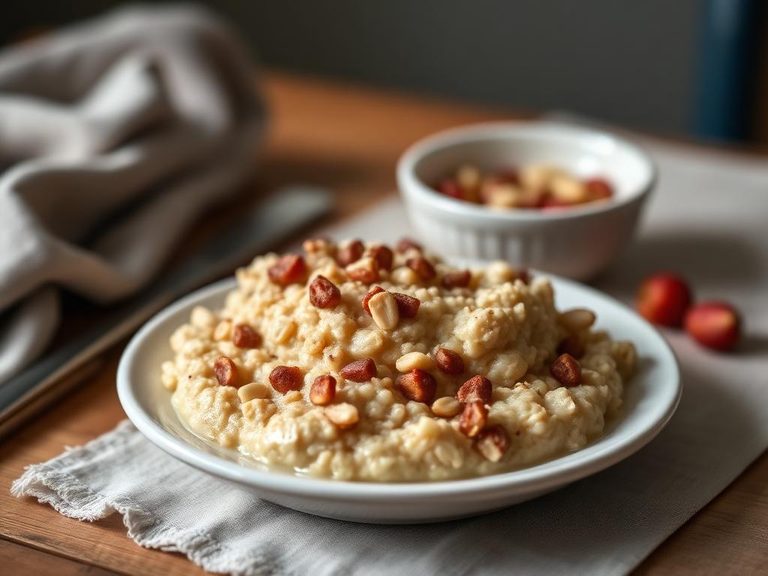
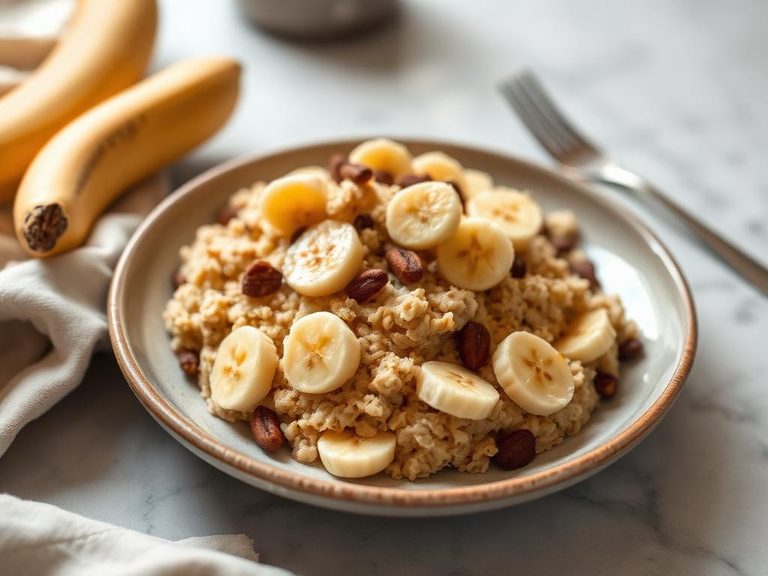
This is a smooth, creamy porridge made from finely milled oatmeal and whole milk, designed for infants transitioning to solid foods. It has a mild, naturally sweet oat flavor and a soft, spoonable texture that's easy for little mouths to manage. Nutritionally, it's a balanced starter, providing a good mix of energy-dense carbohydrates, quality protein from both oats and milk, and healthy fats.
Calorie split: 17% protein · 52% carbs · 31% fat
↓ Full nutrition💚 Why it's loved
Parents love it for its simplicity, nutritional completeness, and the comforting, familiar taste of oatmeal that babies often accept readily. Its smooth consistency is perfect for early spoon-feeding practice.
⚠️ Watch-outs & how to enjoy it better
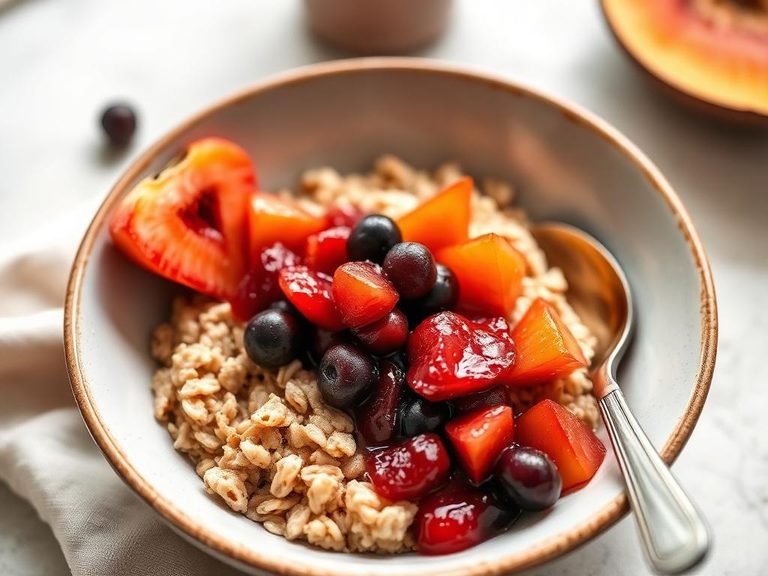
While nutritious, it can cause blood sugar spikes if served plain in large portions, as it's low in fiber relative to its carbohydrate content. To counteract this, always pair it with a source of protein or fat (like a smear of nut butter for older babies or mixing in fruit puree) and practice appropriate portion control for the child's age.
Key benefits
- Provides balanced energy from complex carbs, protein, and fat.
- Excellent source of soluble fiber (beta-glucan) from oats for digestive health.
- Contains naturally occurring calcium and vitamin D from whole milk for bone development.
- Iron-fortified in many commercial versions to support cognitive growth.
- A hypoallergenic and gentle first food for most infants.
🍽️ Popular dishes

🌍 Where it's eaten
💡 Did you know?
The beta-glucan fiber in oats forms a gel-like substance in the digestive tract, which not only aids digestion but also helps slow the absorption of sugars, making this a more sustained-energy breakfast than many other cereals.
Full nutrition (USDA data · scales with serving)
| Water | 74.5 g |
| Energy | 116 kcal |
| Energy | 485 kj |
| Protein | 5.0 g |
| Total lipid (fat) | 4.1 g |
| Ash | 1.1 g |
| Carbohydrate, by difference | 15.3 g |
| Fiber, total dietary | 1.1 g |
| Calcium, Ca | 220 mg |
| Iron, Fe | 12.1 mg |
| Magnesium, Mg | 35.0 mg |
| Phosphorus, P | 160 mg |
| Potassium, K | 204 mg |
| Sodium, Na | 46.0 mg |
| Zinc, Zn | 0.92 mg |
| Copper, Cu | 0.09 mg |
| Vitamin C, total ascorbic acid | 1.3 mg |
| Thiamin | 0.51 mg |
| Riboflavin | 0.56 mg |
| Niacin | 6.0 mg |
| Pantothenic acid | 0.51 mg |
| Vitamin B-6 | 0.06 mg |
| Folate, total | 10.0 ug |
| Folic acid | 0.00 ug |
| Folate, food | 10.0 ug |
| Folate, DFE | 10.0 ug |
| Vitamin B-12 | 0.30 ug |
| Vitamin A, RAE | 22.0 ug |
| Retinol | 19.0 ug |
| Vitamin A, IU | 105 iu |
Fat & fatty acid profile (per 100g)
| Fatty acids, total saturated | 2.3 g |
| Cholesterol | 11.0 mg |
Amino acid profile (per 100g)
| Tryptophan | 0.07 g |
| Threonine | 0.20 g |
| Isoleucine | 0.26 g |
| Leucine | 0.45 g |
| Lysine | 0.31 g |
| Methionine | 0.11 g |
| Cystine | 0.10 g |
| Phenylalanine | 0.22 g |
| Tyrosine | 0.22 g |
| Valine | 0.31 g |
| Arginine | 0.27 g |
| Histidine | 0.11 g |
| Alanine | 0.20 g |
| Aspartic acid | 0.40 g |
| Glutamic acid | 1.1 g |
| Glycine | 0.18 g |
| Proline | 0.38 g |
| Serine | 0.26 g |
FAQ
Is this the same as regular oatmeal I eat?
Not exactly. Baby cereal oatmeal is typically more finely milled for a smoother texture and is often fortified with extra iron and other nutrients crucial for infant development. It's also prepared with milk instead of water for added nutrition.
Can I make this at home instead of buying it?
Yes. You can grind rolled oats into a fine powder, cook them thoroughly with whole milk until very soft, and then blend to a smooth consistency. Ensure it's completely smooth for young babies and consider adding iron-rich foods separately if not using a fortified cereal.
At what age can I introduce this?
Most pediatricians recommend introducing single-grain cereals like oatmeal around 6 months of age, when the baby shows signs of readiness for solids. Always consult with a healthcare provider first.
Nutrient density (calculated · NRF9.3)
Nutrient Rich Foods index: beneficial nutrients (protein, fiber, vitamins, minerals) minus saturated fat, added sugar & sodium, per 100 kcal.
NRF9.3 index — Fulgoni, Keast & Drewnowski, 2009. Computed from USDA nutrients.
Weight-loss friendliness (composite index)
Energy density 1.16 kcal/g · 17% calories from protein · 1.1 g fiber · 0.0 g sugar per 100 g.
Composite of energy density (Rolls et al., 1999), protein & fiber satiety, minus sugar. A calculated heuristic — ranks satiety-per-calorie, not a clinical measure.
Dietary load (calculated from USDA values)
Potential renal acid load. Positive = acid-forming, negative = alkaline-forming.
Sodium-to-potassium ratio: 0.23 (lower is better — aim for ≤ 1)
Sodium:potassium per WHO potassium guidance. Computed from USDA nutrients.