

Mushroom, maitake
Whole food · Vegetables and Vegetable Products

Photo: Wikipedia
Maitake, also known as 'hen of the woods,' is a large, feathery mushroom with a ruffled, fan-like appearance. Its flavor is robust and earthy with a peppery, umami-rich depth, and its texture is tender yet meaty when cooked. Nutritionally, it's a standout for being very low in calories and fat while providing a solid dose of dietary fiber and protein.
Calorie split: 23% protein · 70% carbs · 6% fat
↓ Full nutrition💚 Why it's loved
People love maitake for its intensely savory, woodsy flavor that adds a luxurious depth to dishes without overpowering other ingredients. Its beautiful, ruffled shape makes it a visually appealing centerpiece in stir-fries, roasts, and soups.
⚠️ Watch-outs & how to enjoy it better
Maitake can have a strong, earthy flavor that some may find too intense if not cooked properly. For those new to it, the taste can be an acquired one. To balance its robustness, pair it with milder ingredients like rice, eggs, or cream-based sauces, and cook it with aromatics like garlic and thyme to round out the flavor.
Key benefits
- Excellent source of dietary fiber (3.1g per 100g)
- High in protein relative to its calorie count
- Very low in fat and contains no sugar
- Rich in B vitamins like niacin and riboflavin
- Contains unique beta-glucans, a type of soluble fiber
🍽️ Popular dishes
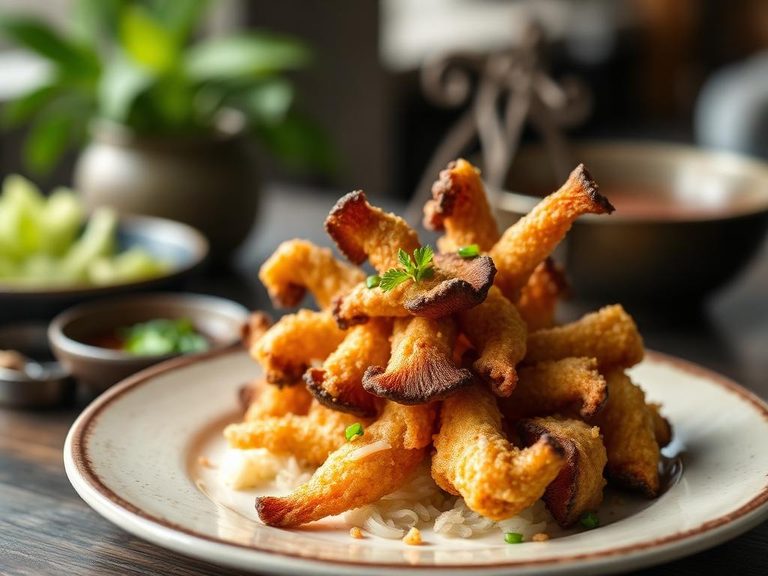
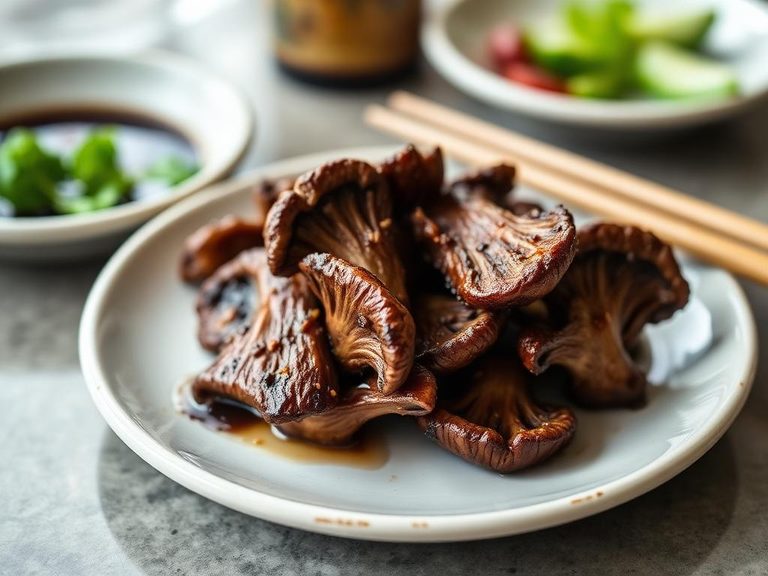
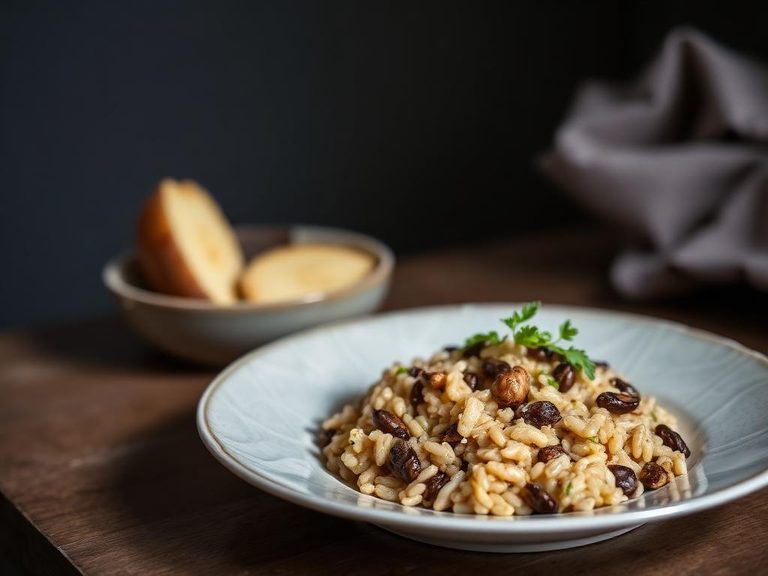
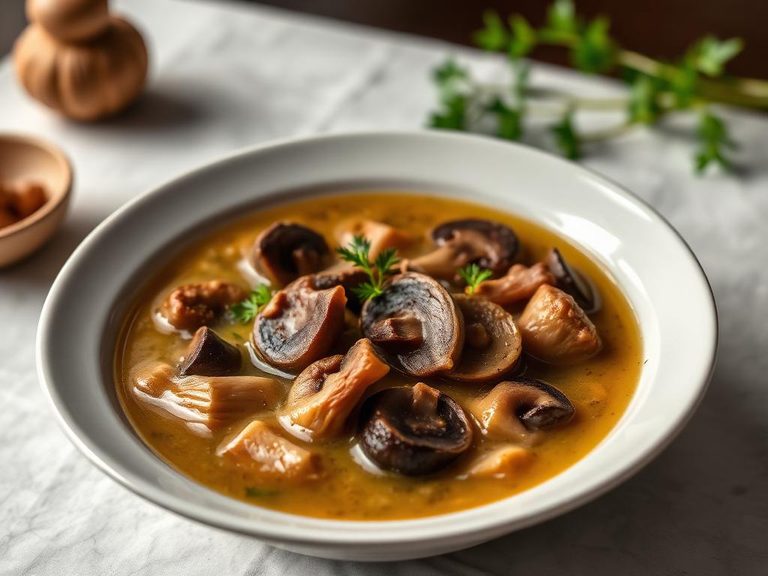
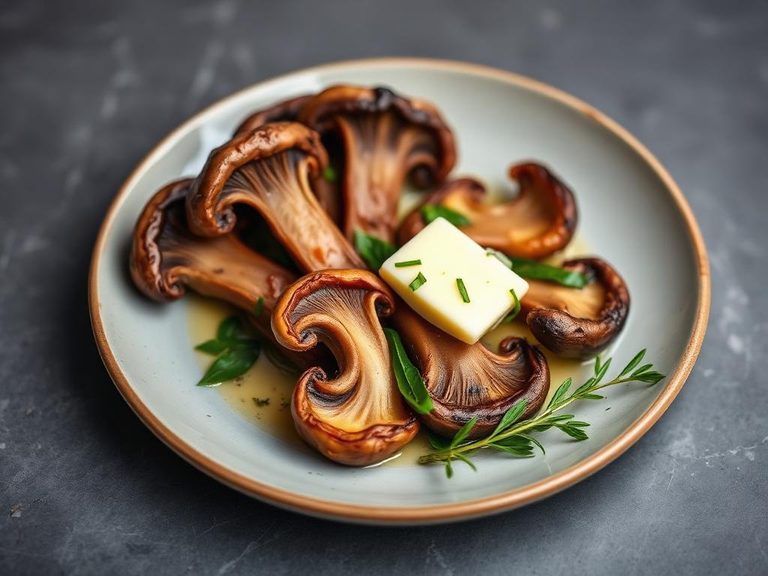
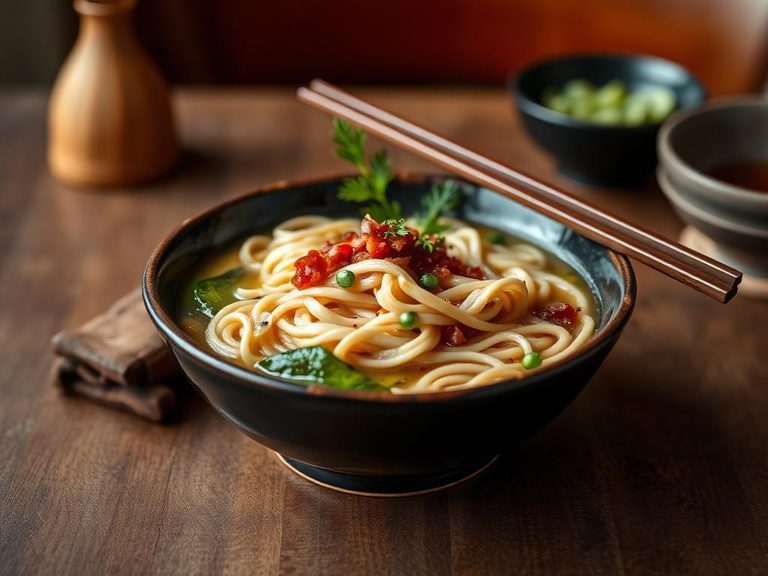
🌍 Where it's eaten
💡 Did you know?
The name 'maitake' in Japanese means 'dancing mushroom,' as legend says people danced with joy upon finding this prized fungus in the wild.
Full nutrition (USDA data · scales with serving)
| Water | 90.4 g |
| Energy (Atwater General Factors) | 37.6 kcal |
| Energy (Atwater Specific Factors) | 31.0 kcal |
| Nitrogen | 0.35 g |
| Protein | 2.2 g |
| Total lipid (fat) | 0.27 g |
| Ash | 0.56 g |
| Carbohydrate, by difference | 6.6 g |
| Fiber, total dietary | 3.1 g |
| Beta-glucan | 2.3 g |
| Calcium, Ca | 0.00 mg |
| Iron, Fe | 0.21 mg |
| Magnesium, Mg | 11.0 mg |
| Phosphorus, P | 72.4 mg |
| Potassium, K | 260 mg |
| Sodium, Na | 0.34 mg |
| Zinc, Zn | 0.76 mg |
| Copper, Cu | 0.27 mg |
| Manganese, Mn | 0.06 mg |
| Selenium, Se | 3.3 ug |
| Thiamin | 0.01 mg |
| Riboflavin | 0.27 mg |
| Niacin | 6.8 mg |
| Vitamin B-6 | 0.07 mg |
| Biotin | 32.6 ug |
| Vitamin D (D2 + D3), International Units | 64.0 iu |
| Vitamin D (D2 + D3) | 1.6 ug |
| Vitamin D2 (ergocalciferol) | 1.6 ug |
| Vitamin D4 | 0.14 ug |
| Glutathione | 26.0 mg |
| Ergosta-7-enol | 1.4 mg |
| Ergosta-5,7-dienol | 2.9 mg |
| Ergosta-7,22-dienol | 1.2 mg |
| Delta-7-Stigmastenol | 0.00 mg |
| Ergothioneine | 2.3 mg |
Fat & fatty acid profile (per 100g)
| Stigmasterol | 0.00 mg |
| Campesterol | 0.00 mg |
| Beta-sitosterol | 0.00 mg |
| Ergosterol | 59.3 mg |
| Beta-sitostanol | 0.00 mg |
| Delta-5-avenasterol | 0.00 mg |
Amino acid profile (per 100g)
| Tryptophan | 0.37 g |
| Threonine | 1.8 g |
| Isoleucine | 1.6 g |
| Leucine | 2.5 g |
| Lysine | 2.2 g |
| Methionine | 0.31 g |
| Phenylalanine | 1.6 g |
| Valine | 2.8 g |
| Histidine | 0.91 g |
FAQ
How do I clean maitake mushrooms?
Gently shake off any dirt, or wipe with a damp paper towel. Avoid soaking, as they are porous and can become waterlogged. Trim any tough, woody base before cooking.
What's the best way to cook maitake to bring out its flavor?
Dry-sautéing is excellent: cook in a hot, dry skillet until they release moisture and begin to brown, then add a bit of fat. Roasting at high heat also caramelizes their edges, intensifying their savory, umami taste.
Can I eat maitake raw?
While not toxic, it's not recommended. Cooking breaks down its tough cell walls, making nutrients more available and developing its full, rich flavor. Raw maitake can be tough and bitter.
Nutrient density (calculated · NRF9.3)
Nutrient Rich Foods index: beneficial nutrients (protein, fiber, vitamins, minerals) minus saturated fat, added sugar & sodium, per 100 kcal.
NRF9.3 index — Fulgoni, Keast & Drewnowski, 2009. Computed from USDA nutrients.
Weight-loss friendliness (composite index)
Energy density 0.38 kcal/g · 23% calories from protein · 3.1 g fiber · 0.0 g sugar per 100 g.
Composite of energy density (Rolls et al., 1999), protein & fiber satiety, minus sugar. A calculated heuristic — ranks satiety-per-calorie, not a clinical measure.
Dietary load (calculated from USDA values)
Potential renal acid load. Positive = acid-forming, negative = alkaline-forming.
Sodium-to-potassium ratio: 0.00 (lower is better — aim for ≤ 1)
Sodium:potassium per WHO potassium guidance. Computed from USDA nutrients.