Kale, raw
Whole food · Vegetables and Vegetable Products

Photo: Wikipedia
Raw kale is a sturdy, dark leafy green from the cabbage family, known for its deep green, often curly leaves. Its taste is distinctly earthy and slightly bitter with a peppery, cruciferous bite, and its texture is tough and fibrous when uncooked. Nutritionally, it's a powerhouse, delivering an impressive 4.1 grams of fiber and over 2.9 grams of protein per 100g for just 35 calories.
💚 Why it's loved
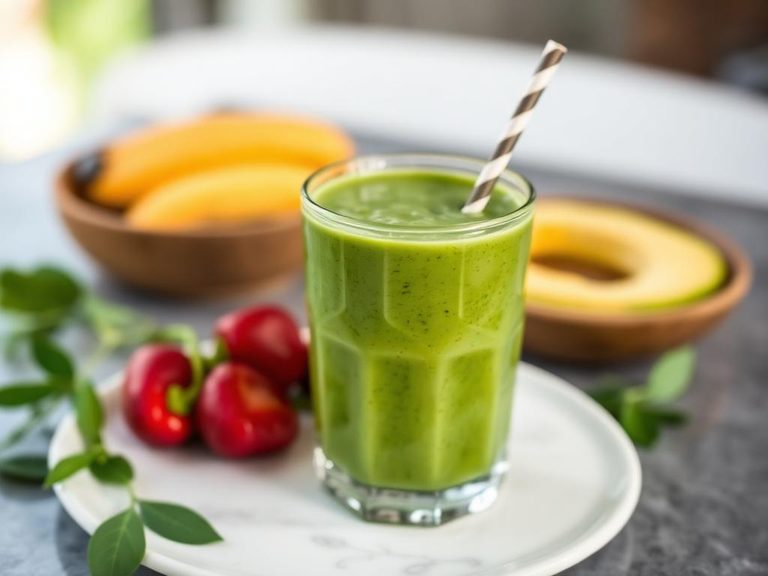
People love kale for its robust, peppery flavor that holds up in hearty salads and smoothies, and its reputation as a nutrient-dense superfood that fits into health-conscious and plant-based diets.
⚠️ Watch-outs & how to enjoy it better
Its raw toughness and pronounced bitterness can be off-putting, and it contains oxalates which can affect mineral absorption. To counteract, massage raw kale with a bit of oil or acid (like lemon juice) to soften it and mellow the flavor, or lightly sauté it to reduce bitterness. Those concerned about oxalates can opt for cooked kale or rotate it with other greens.
Key benefits
- Exceptionally high in fiber for digestive health.
- Rich in vitamins K, A, and C (though not listed in macros).
- Contains antioxidants like lutein and zeaxanthin.
- Provides plant-based protein and is low in calories.
- Source of minerals like calcium and manganese.
🍽️ Popular dishes
🌍 Where it's eaten
💡 Did you know?
The word 'kale' comes from the Scottish 'kail,' a term for the plant and also for a type of broth made from it.
Full nutrition (scales with serving)
| Water | 89.6 g |
| Energy (Atwater General Factors) | 43.0 kcal |
| Energy (Atwater Specific Factors) | 35.0 kcal |
| Energy | 35.0 kcal |
| Energy | 148 kj |
| Nitrogen | 0.47 g |
| Protein | 2.9 g |
| Total lipid (fat) | 1.5 g |
| Ash | 1.5 g |
| Carbohydrate, by difference | 4.4 g |
| Fiber, total dietary | 4.1 g |
| Sugars, Total | 0.80 g |
| Sucrose | 0.00 g |
| Glucose | 0.40 g |
| Fructose | 0.40 g |
| Lactose | 0.00 g |
| Maltose | 0.00 g |
| Galactose | 0.00 g |
| Calcium, Ca | 254 mg |
| Iron, Fe | 1.6 mg |
| Magnesium, Mg | 32.7 mg |
| Phosphorus, P | 55.0 mg |
| Potassium, K | 348 mg |
| Sodium, Na | 53.0 mg |
| Zinc, Zn | 0.39 mg |
| Copper, Cu | 0.05 mg |
| Manganese, Mn | 0.92 mg |
| Vitamin C, total ascorbic acid | 93.4 mg |
| Thiamin | 0.11 mg |
| Riboflavin | 0.35 mg |
| Niacin | 1.2 mg |
| Pantothenic acid | 0.37 mg |
| Vitamin B-6 | 0.15 mg |
| Folate, total | 62.0 ug |
| Vitamin A, RAE | 241 ug |
| Carotene, beta | 2870 ug |
| Carotene, alpha | 0.00 ug |
| Cryptoxanthin, beta | 27.0 ug |
| Lycopene | 0.00 ug |
| Lutein + zeaxanthin | 6260 ug |
| Vitamin E (alpha-tocopherol) | 0.66 mg |
| Tocopherol, beta | 0.00 mg |
| Tocopherol, gamma | 0.14 mg |
| Tocopherol, delta | 0.00 mg |
| Tocotrienol, alpha | 0.00 mg |
| Tocotrienol, beta | 0.00 mg |
| Tocotrienol, gamma | 0.00 mg |
| Tocotrienol, delta | 0.00 mg |
| Vitamin K (phylloquinone) | 390 ug |
| Vitamin K (Dihydrophylloquinone) | 0.00 ug |
| Vitamin K (Menaquinone-4) | 0.00 ug |
FAQ
How do I make raw kale less tough and bitter?
Remove the tough stems, chop the leaves, then 'massage' them with a little olive oil, lemon juice, or vinegar for a few minutes until they soften and darken in color. This breaks down the fibrous cell walls.
Is raw kale better than cooked kale?
It depends on your goal. Raw kale retains more heat-sensitive vitamins like vitamin C. Cooking kale can reduce its volume, making it easier to eat more, and can make some nutrients (like beta-carotene) more bioavailable while also reducing oxalate content.
Can I eat the stems?
Yes, but they are very fibrous and tough. For raw preparations, it's best to remove them. If cooking, you can finely chop the stems and cook them a bit longer than the leaves to soften them.