

Candies, HERSHEY'S, ALMOND JOY BITES
Whole food · Sweets

Photo: Wikipedia
These are bite-sized, chocolate-covered morsels that pack the classic ALMOND JOY experience—sweet coconut, crunchy almonds, and rich milk chocolate—into a convenient, shareable form. Each bite delivers a satisfying textural contrast between the chewy coconut center, the firm almond, and the smooth chocolate coating. Nutritionally, they are a high-energy treat, with a substantial portion of their calories coming from fat and sugar.
Calorie split: 4% protein · 41% carbs · 55% fat
↓ Full nutrition💚 Why it's loved
People love them for the iconic, nostalgic flavor combination of tropical coconut, nutty crunch, and creamy chocolate in a perfectly poppable size. They are a beloved candy for movie nights, office drawers, and as a quick dessert fix.
⚠️ Watch-outs & how to enjoy it better
The high sugar and fat content can lead to blood sugar spikes and is not ideal for those monitoring calorie intake or with diabetes. They also contain common allergens like tree nuts (almonds) and milk. To mitigate, pair a few bites with a source of protein or fiber (like a handful of plain nuts or a piece of fruit) and practice strict portion control.
Key benefits
- Provides a quick source of energy from carbohydrates and fats
- Contains some dietary fiber from coconut and almonds
- Offers plant-based protein from almonds
- Convenient, pre-portioned format for controlled indulgence
- Can serve as a morale-boosting sweet treat
🍽️ Popular dishes
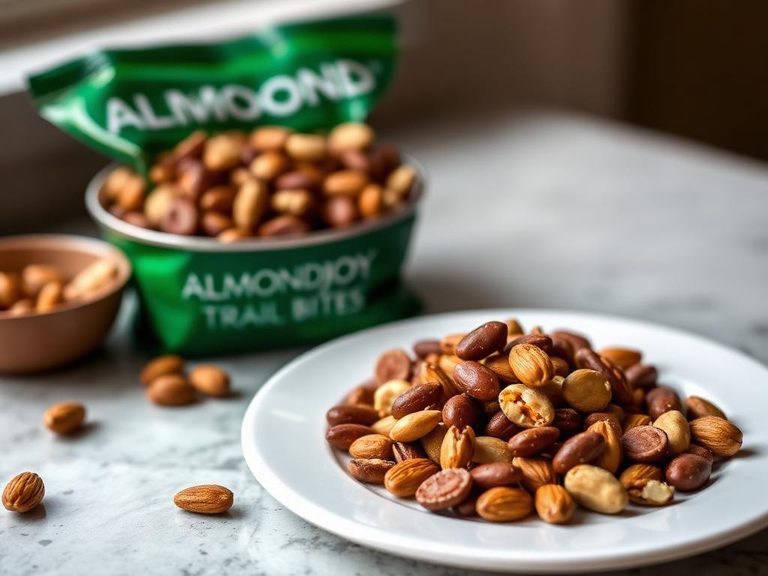
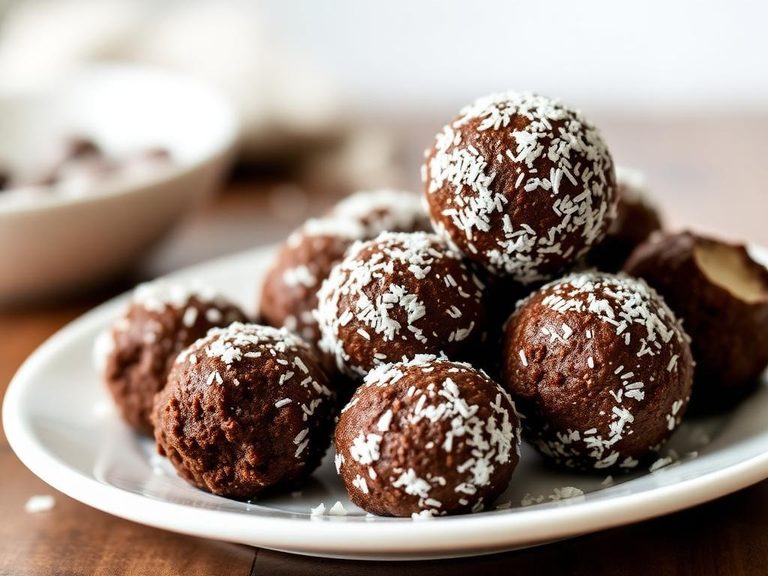

🌍 Where it's eaten
💡 Did you know?
The ALMOND JOY candy bar was created in 1946 as a rebranding of the earlier 'Dream Bar,' which was introduced during World War II when rationing made certain ingredients scarce.
Full nutrition (USDA data · scales with serving)
| Water | 1.3 g |
| Energy | 563 kcal |
| Energy | 2356 kj |
| Protein | 5.6 g |
| Total lipid (fat) | 34.5 g |
| Ash | 1.1 g |
| Carbohydrate, by difference | 57.5 g |
| Fiber, total dietary | 4.3 g |
| Total Sugars | 51.7 g |
| Calcium, Ca | 109 mg |
| Iron, Fe | 1.3 mg |
| Magnesium, Mg | 38.0 mg |
| Phosphorus, P | 129 mg |
| Potassium, K | 306 mg |
| Sodium, Na | 39.0 mg |
| Zinc, Zn | 0.79 mg |
| Copper, Cu | 0.18 mg |
| Manganese, Mn | 0.00 mg |
| Selenium, Se | 0.00 ug |
| Vitamin C, total ascorbic acid | 1.0 mg |
| Thiamin | 0.04 mg |
| Riboflavin | 0.16 mg |
| Niacin | 0.33 mg |
| Pantothenic acid | 0.25 mg |
| Vitamin B-6 | 0.06 mg |
| Folate, total | 8.0 ug |
| Vitamin A, IU | 117 iu |
| Alcohol, ethyl | 0.00 g |
Fat & fatty acid profile (per 100g)
| Fatty acids, total saturated | 20.6 g |
| Fatty acids, total monounsaturated | 8.8 g |
| Fatty acids, total polyunsaturated | 1.5 g |
| Cholesterol | 11.0 mg |
Amino acid profile (per 100g)
Estimated from Candies, honey-combed, with peanut butter — USDA does not publish this profile for Candies.
| Tryptophan | 0.09 g |
| Threonine | 0.21 g |
| Isoleucine | 0.24 g |
| Leucine | 0.61 g |
| Lysine | 0.27 g |
| Methionine | 0.10 g |
| Cystine | 0.09 g |
| Phenylalanine | 0.47 g |
| Tyrosine | 0.33 g |
| Valine | 0.31 g |
| Arginine | 1.1 g |
| Histidine | 0.22 g |
| Alanine | 0.36 g |
| Aspartic acid | 1.2 g |
| Glutamic acid | 2.0 g |
| Glycine | 0.56 g |
| Proline | 0.55 g |
| Serine | 0.58 g |
FAQ
Are ALMOND JOY Bites gluten-free?
According to The Hershey Company, ALMOND JOY Bites are considered gluten-free, as they do not contain wheat, barley, or rye ingredients. However, they are produced in a facility that handles wheat, so there is a risk of cross-contamination.
Do they contain peanuts?
No, the primary nut in ALMOND JOY Bites is almond. However, they are manufactured on equipment that also processes peanuts, so they are not recommended for those with severe peanut allergies.
What is the main source of fat in these bites?
The majority of the fat comes from coconut and the milk chocolate coating, with additional fat from the almonds.
Nutrient density (calculated · NRF9.3)
Nutrient Rich Foods index: beneficial nutrients (protein, fiber, vitamins, minerals) minus saturated fat, added sugar & sodium, per 100 kcal.
NRF9.3 index — Fulgoni, Keast & Drewnowski, 2009. Computed from USDA nutrients.
Weight-loss friendliness (composite index)
Energy density 5.63 kcal/g · 4% calories from protein · 4.3 g fiber · 51.7 g sugar per 100 g.
Composite of energy density (Rolls et al., 1999), protein & fiber satiety, minus sugar. A calculated heuristic — ranks satiety-per-calorie, not a clinical measure.
Dietary load (calculated from USDA values)
Potential renal acid load. Positive = acid-forming, negative = alkaline-forming.
Sodium-to-potassium ratio: 0.13 (lower is better — aim for ≤ 1)
Sodium:potassium per WHO potassium guidance. Computed from USDA nutrients.