

Beef, chuck, roast, boneless, choice, raw
Whole food · Beef Products

Photo: Wikipedia
This is a lean, boneless cut from the beef shoulder, prized for its deep, beefy flavor and a texture that transforms from firm to meltingly tender with proper cooking. Nutritionally, it's a powerhouse of high-quality protein with a moderate amount of fat, offering substantial energy and essential amino acids without any carbohydrates.
Calorie split: 31% protein · 0% carbs · 69% fat
↓ Full nutrition💚 Why it's loved
People love chuck roast for its robust, meaty flavor that forms the soul of comfort dishes like pot roast and beef stew. Its connective tissue breaks down into rich gelatin during slow cooking, creating a luscious, self-saucing meal that's deeply satisfying and culturally synonymous with home cooking in many traditions.
⚠️ Watch-outs & how to enjoy it better
If cooked quickly (like grilling), it can be tough and chewy due to its dense muscle fibers and collagen. To counteract this, always use moist-heat methods (braising, stewing) or a very slow roast; this converts the collagen to gelatin, tenderizing the meat. As a red meat, it should be consumed in moderation as part of a balanced diet.
Key benefits
- Excellent source of complete protein for muscle maintenance and repair.
- Rich in iron, zinc, and B vitamins, especially B12, crucial for energy and nerve function.
- Provides conjugated linoleic acid (CLA), a fatty acid linked to potential health benefits.
- A versatile, budget-friendly cut that yields generous portions when braised or slow-roasted.
🍽️ Popular dishes
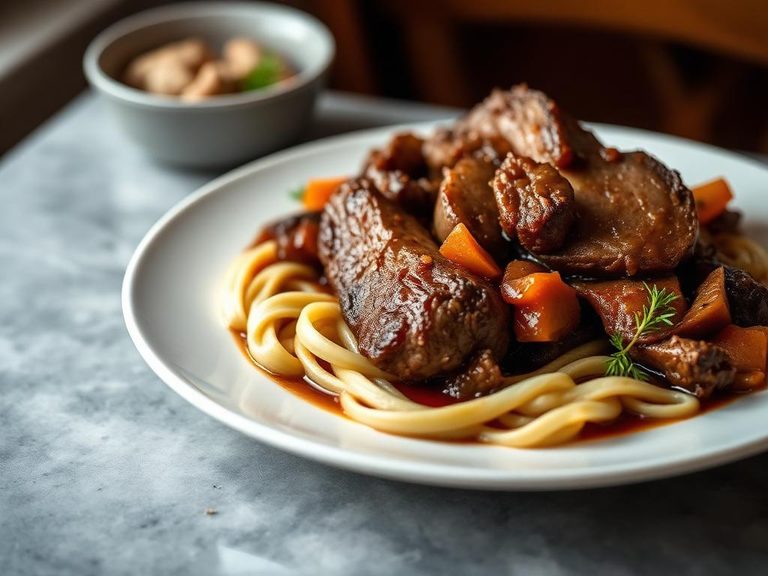
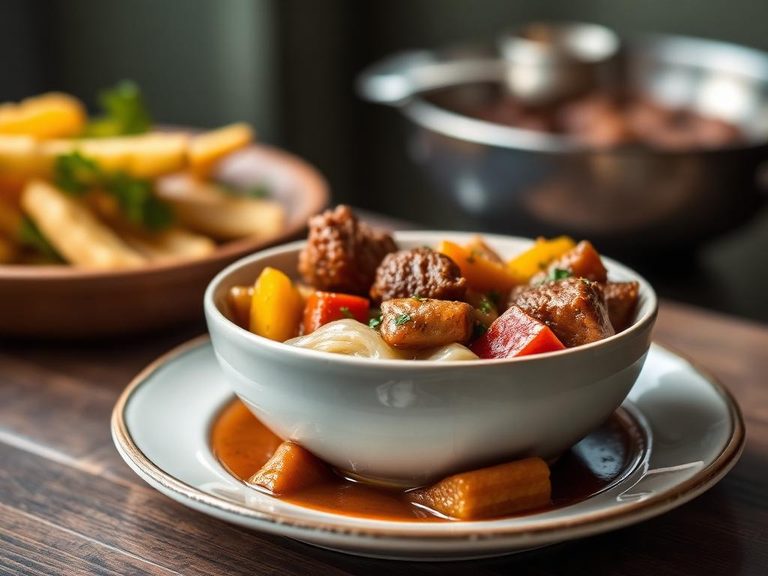
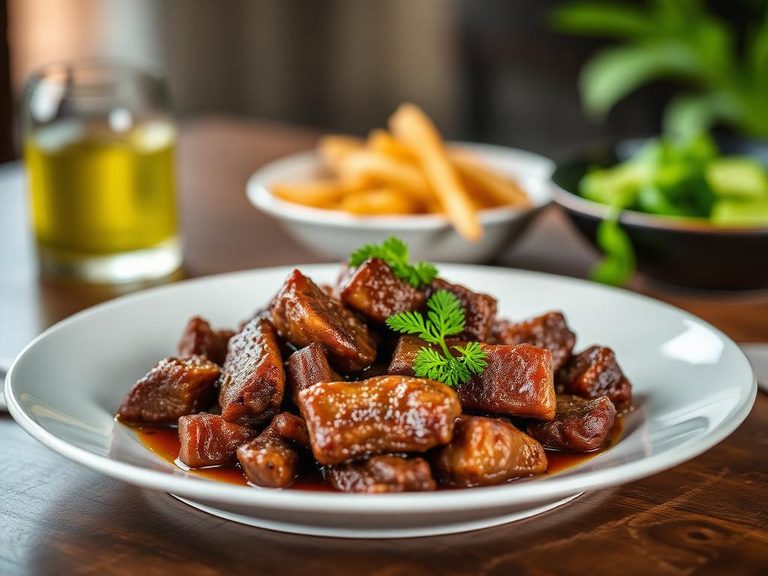
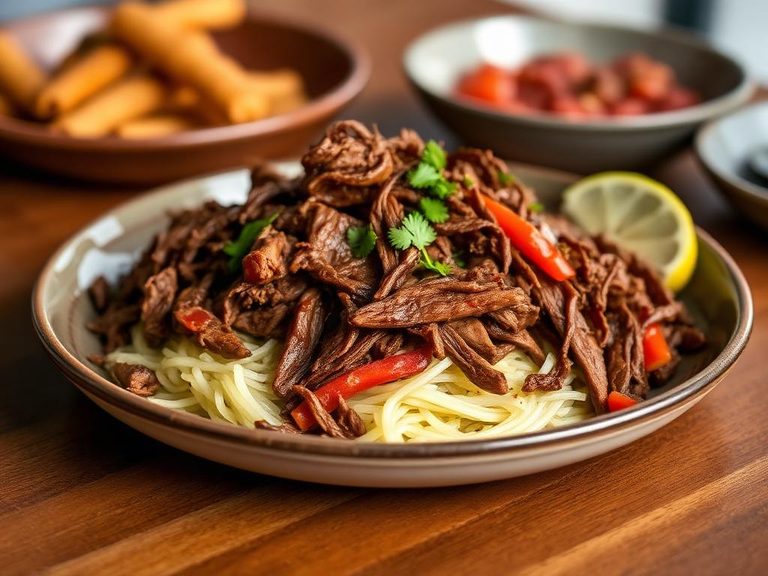
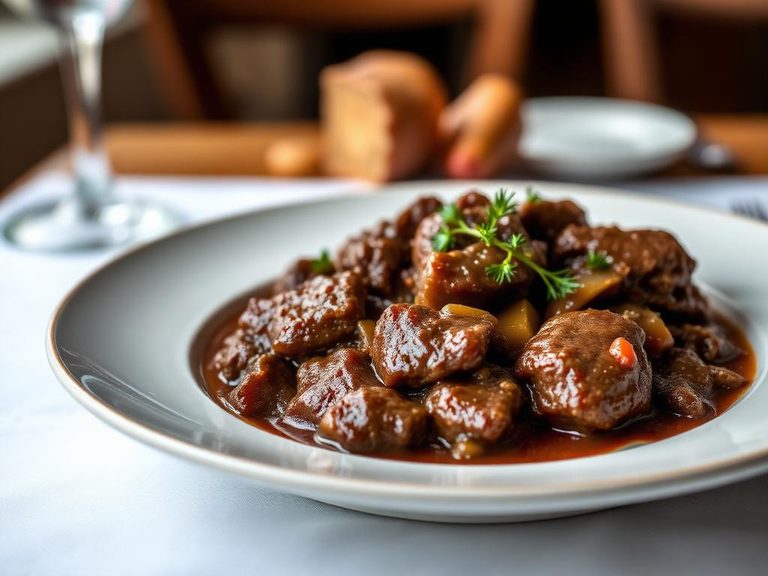
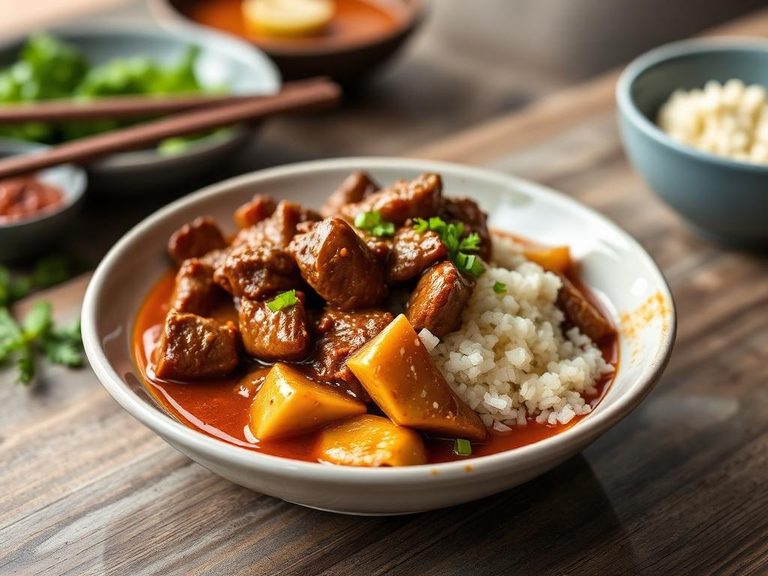
🌍 Where it's eaten
💡 Did you know?
The 'chuck' refers to the shoulder section of the cow, and this specific boneless roast is often called a 'chuck eye roast' because it comes from the area near the ribeye, giving it slightly more marbling and tenderness than other chuck cuts.
Full nutrition (USDA data · scales with serving)
| Water | 63.4 g |
| Energy (Atwater General Factors) | 232 kcal |
| Energy (Atwater Specific Factors) | 237 kcal |
| Nitrogen | 2.9 g |
| Protein | 18.4 g |
| Total lipid (fat) | 17.8 g |
| Ash | 0.89 g |
| Carbohydrate, by difference | 0.00 g |
| Calcium, Ca | 4.6 mg |
| Iron, Fe | 2.1 mg |
| Magnesium, Mg | 17.0 mg |
| Phosphorus, P | 151 mg |
| Potassium, K | 281 mg |
| Sodium, Na | 48.4 mg |
| Zinc, Zn | 5.4 mg |
| Copper, Cu | 0.05 mg |
| Manganese, Mn | 0.00 mg |
Fat & fatty acid profile (per 100g)
| Fatty acids, total saturated | 6.3 g |
| Fatty acids, total monounsaturated | 7.0 g |
| Fatty acids, total polyunsaturated | 0.56 g |
| Fatty acids, total trans | 0.67 g |
| Cholesterol | 66.8 mg |
Amino acid profile (per 100g)
Estimated from Beef, variety meats and by-products, mechanically separated beef, raw — USDA does not publish this profile for Beef.
| Tryptophan | 0.17 g |
| Threonine | 0.47 g |
| Isoleucine | 0.58 g |
| Leucine | 1.2 g |
| Lysine | 1.2 g |
| Methionine | 0.43 g |
| Cystine | 0.23 g |
| Phenylalanine | 0.64 g |
| Tyrosine | 0.38 g |
| Valine | 0.92 g |
| Arginine | 1.2 g |
| Histidine | 0.44 g |
| Alanine | 1.0 g |
| Aspartic acid | 1.3 g |
| Glutamic acid | 2.1 g |
| Glycine | 1.2 g |
| Proline | 0.92 g |
| Serine | 0.57 g |
FAQ
What's the best way to cook boneless chuck roast to make it tender?
The key is low and slow cooking with moisture. Braise it in liquid (like broth, wine, or tomatoes) in a covered pot or Dutch oven at around 300-325°F (150-160°C) for 2-3 hours, or until it falls apart easily with a fork.
Is chuck roast a fatty cut of meat?
It has moderate fat content, which is essential for flavor and tenderness during slow cooking. You can trim excess external fat before cooking, but the intramuscular fat (marbling) will melt and baste the meat, making it juicy.
Can I use chuck roast for steak or quick-cooking methods?
It's not ideal for grilling or pan-searing like a steak because it will be tough. However, if sliced very thinly against the grain, it can be used in stir-fries or for dishes like Philly cheesesteaks, where a quick, high-heat cook is used.
Nutrient density (calculated · NRF9.3)
Nutrient Rich Foods index: beneficial nutrients (protein, fiber, vitamins, minerals) minus saturated fat, added sugar & sodium, per 100 kcal.
NRF9.3 index — Fulgoni, Keast & Drewnowski, 2009. Computed from USDA nutrients.
Weight-loss friendliness (composite index)
Energy density 2.32 kcal/g · 32% calories from protein · 0.0 g fiber · 0.0 g sugar per 100 g.
Composite of energy density (Rolls et al., 1999), protein & fiber satiety, minus sugar. A calculated heuristic — ranks satiety-per-calorie, not a clinical measure.
Dietary load (calculated from USDA values)
Potential renal acid load. Positive = acid-forming, negative = alkaline-forming.
Sodium-to-potassium ratio: 0.17 (lower is better — aim for ≤ 1)
Sodium:potassium per WHO potassium guidance. Computed from USDA nutrients.