

Balsam-pear (bitter gourd), pods, cooked, boiled, drained, with salt
Whole food · Vegetables and Vegetable Products

Photo: Wikipedia
Balsam-pear, or bitter gourd, is a ridged, cucumber-like pod whose cooked flesh offers a distinctive, assertive bitterness. When boiled and drained, its texture softens to a tender, slightly chewy bite, and its nutritional profile is remarkably lean, providing only 19 calories per 100g. It's a standout source of dietary fiber and contains a notable amount of natural sugars, contributing to its complex flavor.
Calorie split: 15% protein · 78% carbs · 7% fat
↓ Full nutrition💚 Why it's loved
People love it for its bold, polarizing flavor that is prized in many cuisines for its ability to cut through richness and add a complex, savory depth. It's a versatile ingredient that can be stir-fried, stuffed, or added to soups, and is deeply embedded in cultural dishes from Asia to the Caribbean.
⚠️ Watch-outs & how to enjoy it better
The intense bitterness is a major drawback for many, and its sodium content from boiling with salt can be a concern for those monitoring intake. To counteract bitterness, you can salt and rinse the pods before cooking, or pair them with fatty or acidic ingredients like coconut milk or tamarind to balance the flavor. For sodium, use minimal salt during boiling or rinse the cooked pods briefly.
Key benefits
- Extremely low in calories and fat
- Good source of dietary fiber
- Contains vitamin C and folate
- Rich in plant compounds like charantin and polypeptide-p
- May support healthy blood sugar levels
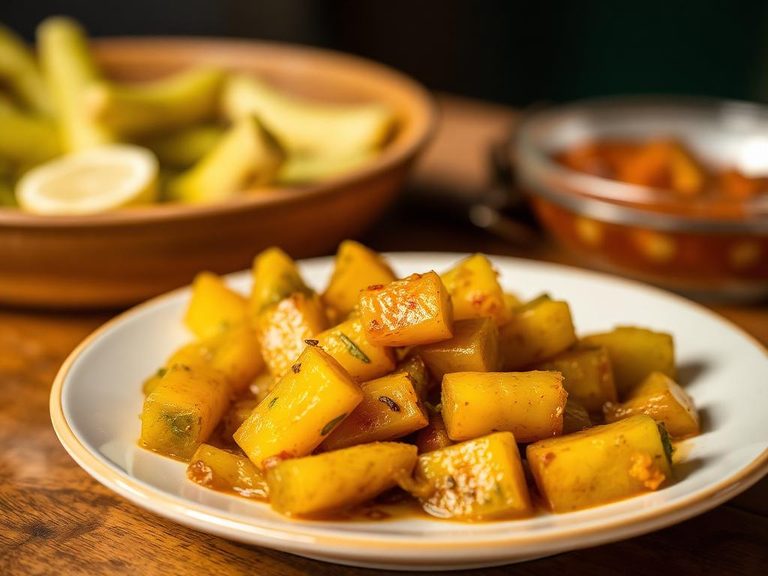
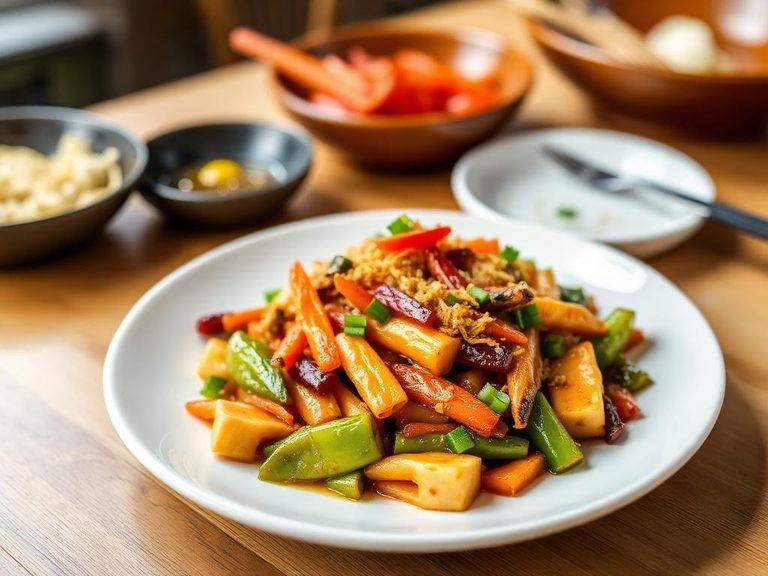
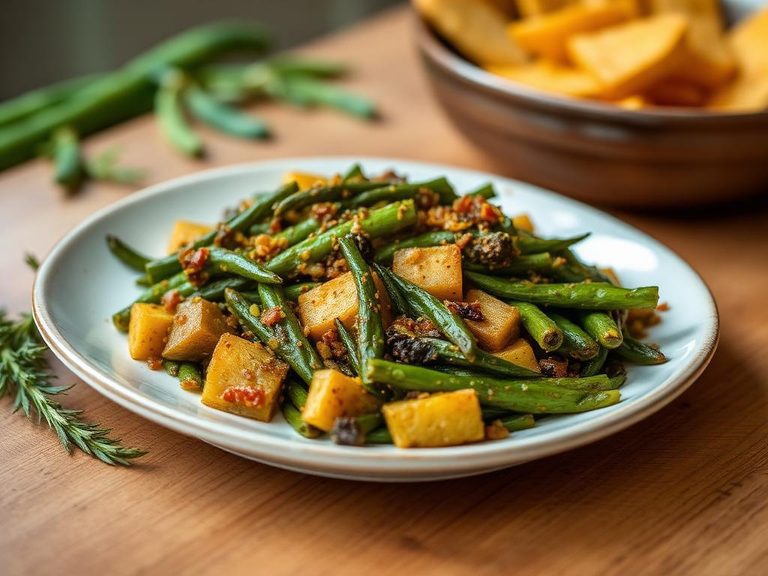
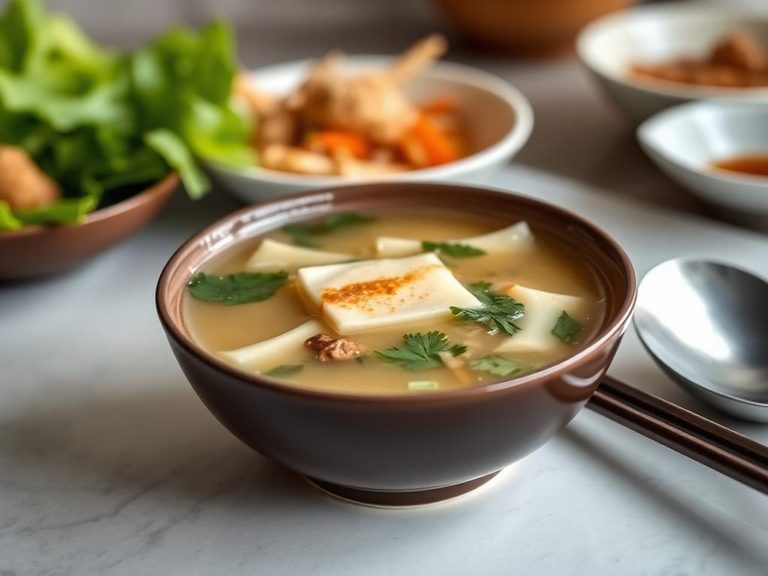
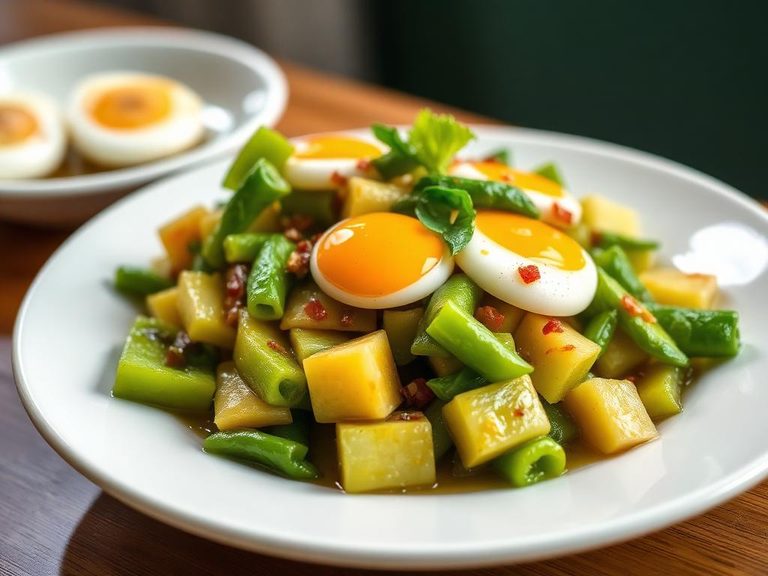
🍽️ Popular dishes
🌍 Where it's eaten
💡 Did you know?
Bitter gourd is one of the few foods that contains a compound called charantin, which has been studied for its potential blood sugar-lowering effects, making it a subject of interest in both traditional medicine and modern nutrition research.
Full nutrition (USDA data · scales with serving)
| Water | 94.0 g |
| Energy | 19.0 kcal |
| Energy | 79.0 kj |
| Protein | 0.84 g |
| Total lipid (fat) | 0.18 g |
| Ash | 0.71 g |
| Carbohydrate, by difference | 4.3 g |
| Fiber, total dietary | 2.0 g |
| Total Sugars | 1.9 g |
| Calcium, Ca | 9.0 mg |
| Iron, Fe | 0.38 mg |
| Magnesium, Mg | 16.0 mg |
| Phosphorus, P | 36.0 mg |
| Potassium, K | 319 mg |
| Sodium, Na | 242 mg |
| Zinc, Zn | 0.77 mg |
| Copper, Cu | 0.03 mg |
| Manganese, Mn | 0.09 mg |
| Selenium, Se | 0.20 ug |
| Vitamin C, total ascorbic acid | 33.0 mg |
| Thiamin | 0.05 mg |
| Riboflavin | 0.05 mg |
| Niacin | 0.28 mg |
| Pantothenic acid | 0.19 mg |
| Vitamin B-6 | 0.04 mg |
| Folate, total | 51.0 ug |
| Folic acid | 0.00 ug |
| Folate, food | 51.0 ug |
| Folate, DFE | 51.0 ug |
| Choline, total | 10.8 mg |
| Vitamin B-12 | 0.00 ug |
| Vitamin B-12, added | 0.00 ug |
| Vitamin A, RAE | 6.0 ug |
| Retinol | 0.00 ug |
| Carotene, beta | 68.0 ug |
| Carotene, alpha | 0.00 ug |
| Cryptoxanthin, beta | 0.00 ug |
| Vitamin A, IU | 113 iu |
| Lycopene | 0.00 ug |
| Lutein + zeaxanthin | 1323 ug |
| Vitamin E (alpha-tocopherol) | 0.14 mg |
| Vitamin E, added | 0.00 mg |
| Vitamin D (D2 + D3), International Units | 0.00 iu |
| Vitamin D (D2 + D3) | 0.00 ug |
| Vitamin K (phylloquinone) | 4.8 ug |
| Caffeine | 0.00 mg |
| Theobromine | 0.00 mg |
Fat & fatty acid profile (per 100g)
| Fatty acids, total trans | 0.00 g |
| Cholesterol | 0.00 mg |
FAQ
How can I reduce the bitterness of cooked bitter gourd?
You can reduce bitterness by salting the sliced pods and letting them sit for 15-30 minutes, then rinsing thoroughly. Cooking with acidic ingredients like tamarind or pairing with fatty components like coconut milk can also help balance the flavor.
Is bitter gourd safe for people with diabetes?
Bitter gourd is often included in diabetic diets due to compounds that may help regulate blood sugar, but it should be consumed in moderation and as part of a balanced diet. Always consult a healthcare provider for personalized advice.
What is the best way to cook bitter gourd to preserve its nutrients?
Boiling, steaming, or stir-frying are good methods to retain nutrients. Avoid overcooking, as it can reduce the content of heat-sensitive vitamins like vitamin C. Draining well after boiling can also help reduce sodium if salt was used.
Nutrient density (calculated · NRF9.3)
Nutrient Rich Foods index: beneficial nutrients (protein, fiber, vitamins, minerals) minus saturated fat, added sugar & sodium, per 100 kcal.
NRF9.3 index — Fulgoni, Keast & Drewnowski, 2009. Computed from USDA nutrients.
Weight-loss friendliness (composite index)
Energy density 0.19 kcal/g · 18% calories from protein · 2.0 g fiber · 1.9 g sugar per 100 g.
Composite of energy density (Rolls et al., 1999), protein & fiber satiety, minus sugar. A calculated heuristic — ranks satiety-per-calorie, not a clinical measure.
Dietary load (calculated from USDA values)
Potential renal acid load. Positive = acid-forming, negative = alkaline-forming.
Sodium-to-potassium ratio: 0.76 (lower is better — aim for ≤ 1)
Sodium:potassium per WHO potassium guidance. Computed from USDA nutrients.