

Kielbasa, Polish, turkey and beef, smoked
Whole food · Sausages and Luncheon Meats

Photo: Wikipedia
This is a robust, smoked sausage made from a blend of turkey and beef, offering a leaner twist on the traditional pork kielbasa. It has a firm, snappy casing with a juicy, coarsely ground interior and a pronounced smoky, garlicky flavor. Nutritionally, it's a protein-rich option with a moderate fat content, providing a satisfying, savory base for many meals.
Calorie split: 23% protein · 7% carbs · 70% fat
↓ Full nutrition💚 Why it's loved
People love its deep, smoky savoriness and satisfying texture that elevates simple dishes like cabbage or beans. It's a beloved staple in Polish and Central European cuisine, carrying a sense of hearty, comforting tradition.
⚠️ Watch-outs & how to enjoy it better
As a processed meat, it can be high in sodium, which may concern those monitoring salt intake. To counteract, look for low-sodium varieties, rinse slices before cooking, and pair it with potassium-rich foods like steamed broccoli or a fresh salad to help balance electrolytes.
Key benefits
- High-quality protein source for muscle maintenance
- Smoked flavor adds depth without added sugar
- Versatile ingredient for quick weeknight meals
- Provides B vitamins like B12 and niacin
- Can be a lower-fat alternative to all-pork versions
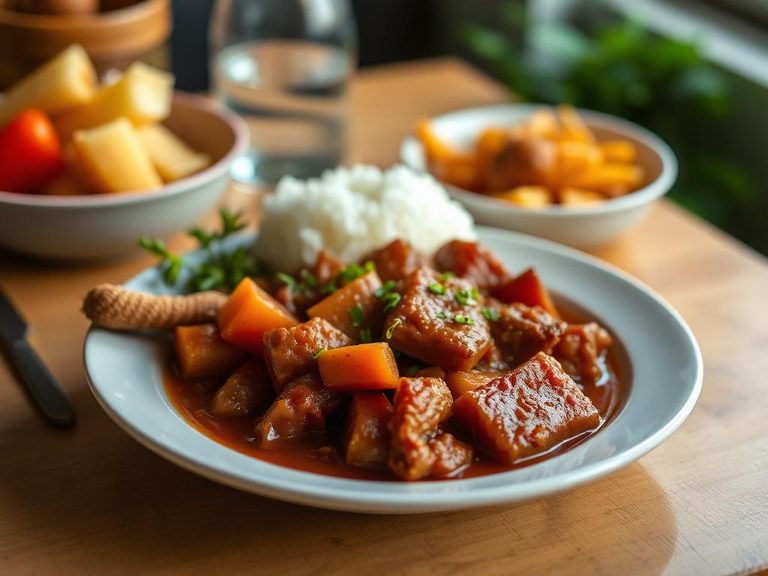
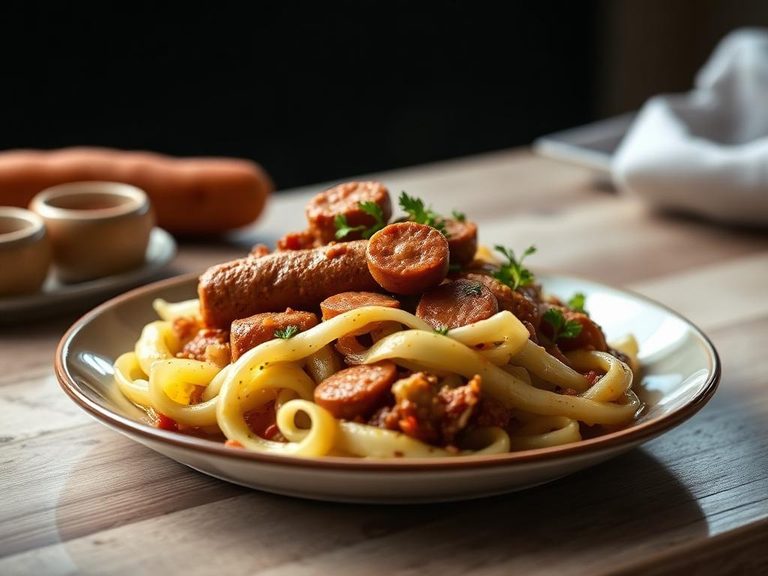
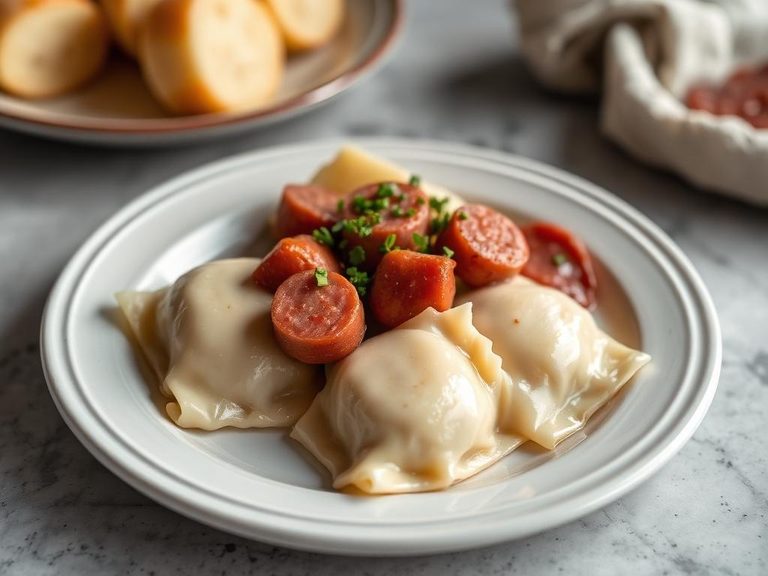
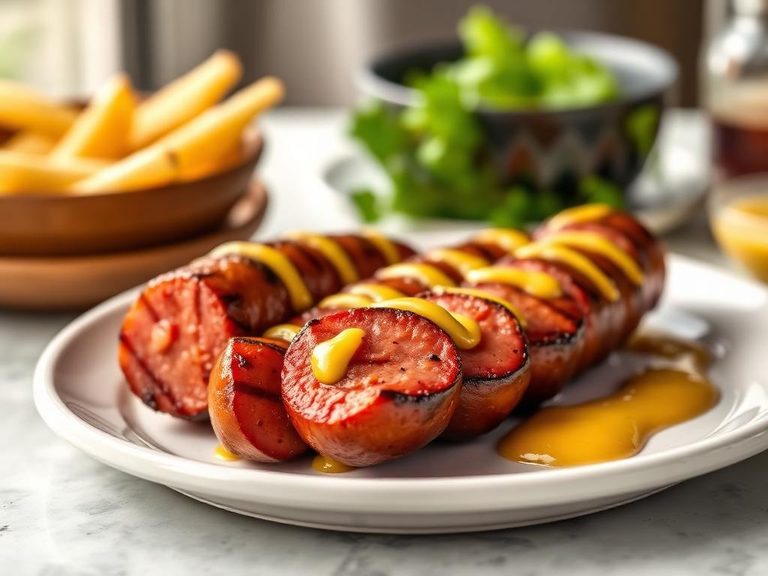
🍽️ Popular dishes

🌍 Where it's eaten
💡 Did you know?
The word 'kielbasa' is simply the Polish word for sausage, but it has become synonymous worldwide with this specific U-shaped, smoked variety.
Full nutrition (USDA data · scales with serving)
| Water | 62.0 g |
| Energy | 226 kcal |
| Energy | 947 kj |
| Protein | 13.1 g |
| Total lipid (fat) | 17.6 g |
| Ash | 3.4 g |
| Carbohydrate, by difference | 3.9 g |
| Fiber, total dietary | 0.00 g |
| Total Sugars | 0.00 g |
| Iron, Fe | 1.2 mg |
| Sodium, Na | 1200 mg |
| Vitamin C, total ascorbic acid | 14.8 mg |
| Vitamin A, RAE | 0.00 ug |
| Carotene, beta | 0.00 ug |
| Carotene, alpha | 0.00 ug |
| Cryptoxanthin, beta | 0.00 ug |
| Vitamin A, IU | 0.00 iu |
| Lycopene | 0.00 ug |
| Lutein + zeaxanthin | 0.00 ug |
| Alcohol, ethyl | 0.00 g |
| Caffeine | 0.00 mg |
| Theobromine | 0.00 mg |
Fat & fatty acid profile (per 100g)
| Fatty acids, total saturated | 6.2 g |
| Fatty acids, total monounsaturated | 8.3 g |
| Fatty acids, total polyunsaturated | 2.3 g |
| Cholesterol | 70.0 mg |
Amino acid profile (per 100g)
Estimated from Kielbasa, fully cooked, grilled — USDA does not publish this profile for Kielbasa.
| Tryptophan | 0.12 g |
| Threonine | 0.41 g |
| Isoleucine | 0.50 g |
| Leucine | 0.91 g |
| Lysine | 0.83 g |
| Methionine | 0.29 g |
| Cystine | 0.16 g |
| Phenylalanine | 0.45 g |
| Tyrosine | 0.35 g |
| Valine | 0.59 g |
| Arginine | 0.77 g |
| Histidine | 0.36 g |
| Alanine | 0.77 g |
| Aspartic acid | 1.1 g |
| Glutamic acid | 1.9 g |
| Glycine | 0.85 g |
| Proline | 0.84 g |
| Serine | 0.51 g |
| Hydroxyproline | 0.12 g |
FAQ
How is turkey and beef kielbasa different from traditional pork kielbasa?
It's typically leaner with less total fat and saturated fat than the all-pork version. The flavor is still smoky and garlicky but can be slightly milder, with the beef adding richness and the turkey lightening the texture.
Is this kielbasa pre-cooked?
Yes, smoked kielbasa is fully cooked during the smoking process. It's safe to eat cold, but it's most flavorful when heated—grilled, pan-fried, or simmered in a dish to render some fat and crisp the casing.
What's the best way to store leftover cooked kielbasa?
Store sliced or whole leftovers in an airtight container in the refrigerator for up to 4 days. For longer storage, wrap tightly and freeze for up to 2 months; slice before freezing for easier portioning.
Nutrient density (calculated · NRF9.3)
Nutrient Rich Foods index: beneficial nutrients (protein, fiber, vitamins, minerals) minus saturated fat, added sugar & sodium, per 100 kcal.
NRF9.3 index — Fulgoni, Keast & Drewnowski, 2009. Computed from USDA nutrients.
Weight-loss friendliness (composite index)
Energy density 2.26 kcal/g · 23% calories from protein · 0.0 g fiber · 0.0 g sugar per 100 g.
Composite of energy density (Rolls et al., 1999), protein & fiber satiety, minus sugar. A calculated heuristic — ranks satiety-per-calorie, not a clinical measure.