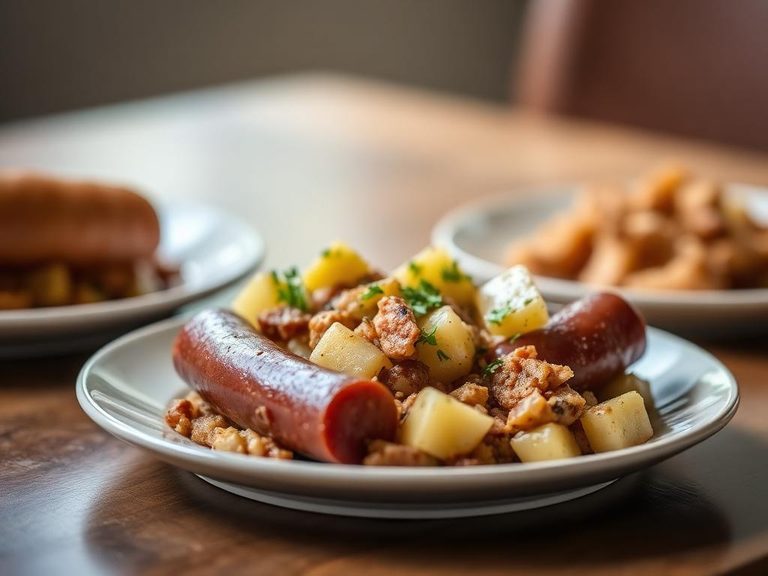
Pierogi with Kielbasa
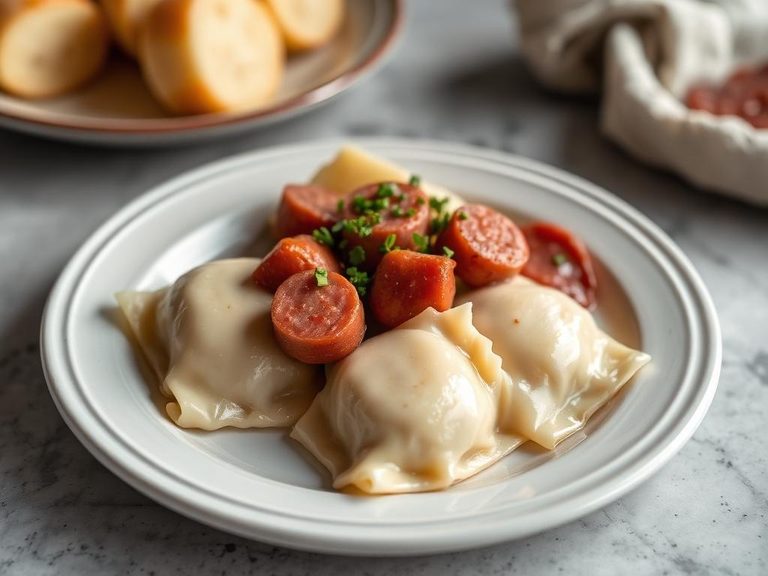
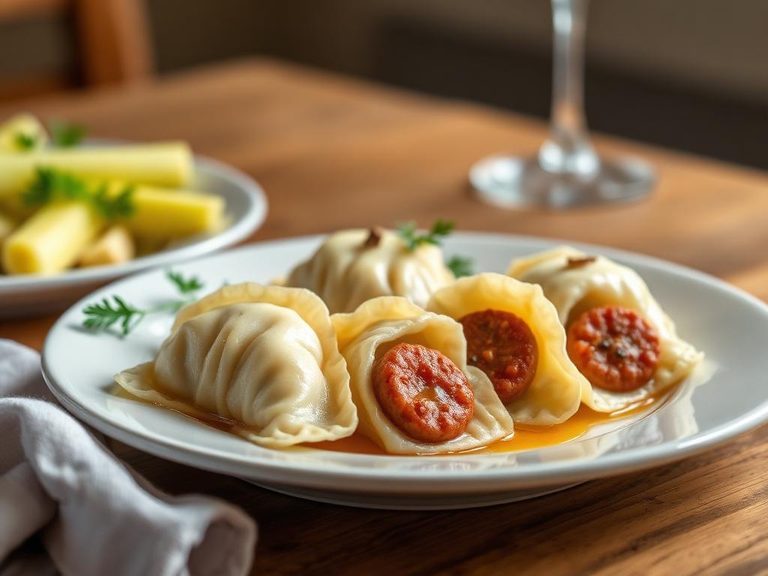
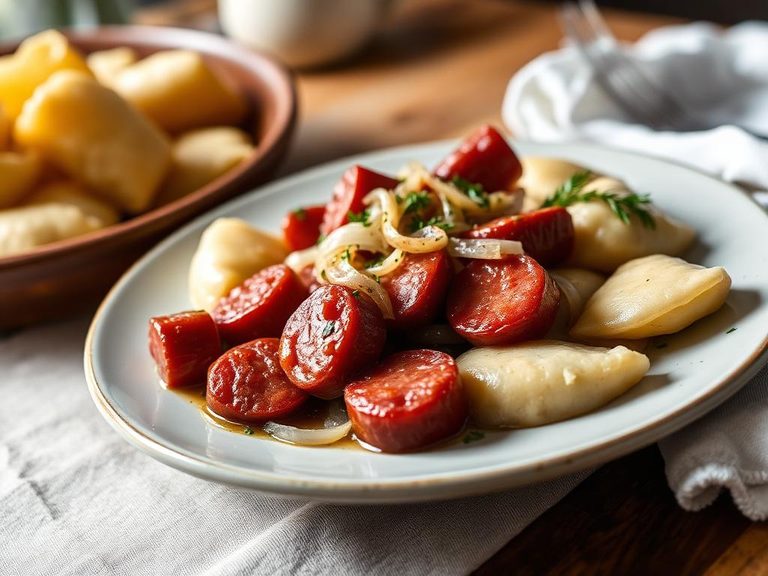
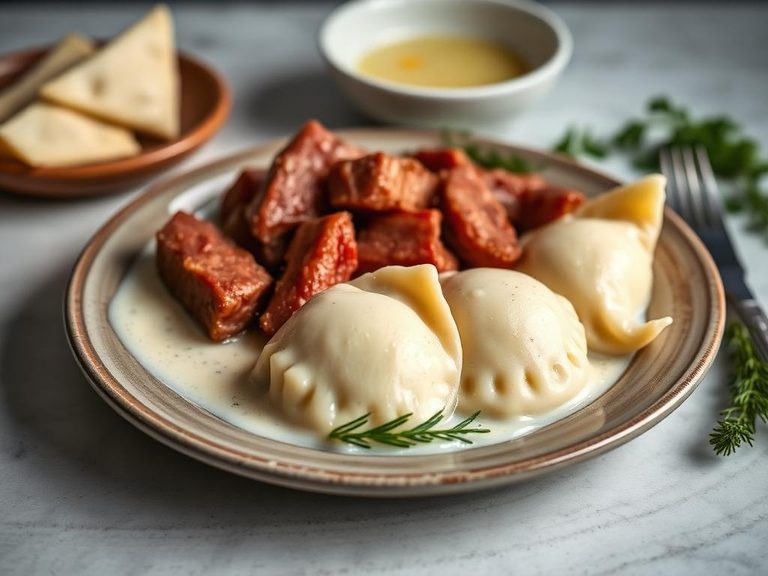
Pierogi with Kielbasa is a hearty Polish dish featuring tender, crescent-shaped dumplings (pierogi) typically filled with potato, cheese, or sauerkraut, served alongside savory, smoky Polish sausage (kielbasa). The pierogi are usually boiled and then pan-fried in butter, often with onions, creating a comforting, rustic meal. It's a staple in Polish cuisine and popular in many Eastern European and American households.
🍽️ Nutrition at a glance
This dish is high in carbohydrates from the dough and potato filling, and provides a good amount of protein from the kielbasa and cheese. It's also a source of fat, particularly from the sausage and butter used in cooking, and offers key nutrients like iron, B vitamins, and potassium. A typical serving can range from 500 to 700 calories, depending on portion size and preparation.
Nutrition breakdown
| Calories | 680 kcal |
| Protein | 28 g |
| Carbs | 65 g |
| Fat | 34 g |
| Fiber | 4 g |
| Sugar | 6 g |
| Sodium | 1350 mg |
| Potassium | 480 mg |
| Iron | 4.5 mg |
| Calcium | 120 mg |
| Vitamin C | 15 mg |
| Niacin (B3) | 6.2 mg |
| Vitamin B12 | 1.8 mcg |
| Phosphorus | 350 mg |
| Zinc | 3.8 mg |
Per 1 plate (350 g) · estimated, varies by recipe
💡 What's interesting
Culturally, pierogi are a symbol of Polish heritage and family gatherings, often made by hand for holidays and celebrations. Nutritionally, the combination of starchy dumplings and protein-rich sausage creates a very satiating meal, historically providing sustained energy for laborers in colder climates.