

Duck, young duckling, domesticated, White Pekin, leg, meat only, bone in, cooked without skin, braised
Whole food · Poultry Products

Photo: Wikipedia
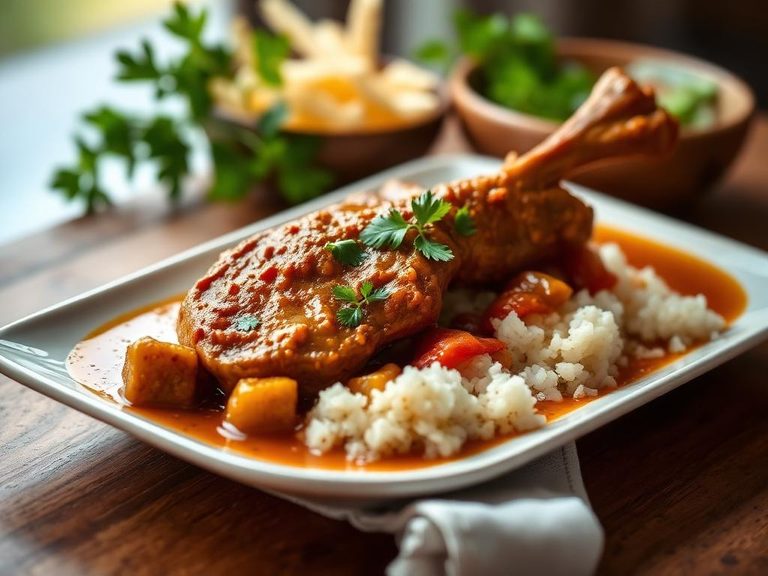
This is a lean, bone-in cut of young domesticated duck, specifically the leg, braised to tender perfection without its skin. The slow-cooking method yields a rich, savory flavor and a succulent, pull-apart texture, while the absence of skin significantly reduces its fat content. It's a protein powerhouse, offering nearly 30 grams per 100-gram serving with minimal fat.
Calorie split: 68% protein · 0% carbs · 32% fat
↓ Full nutrition💚 Why it's loved
People love this cut for its deep, savory flavor and the satisfying, tender texture that braising achieves. It's a versatile centerpiece in many cuisines, offering a more robust taste than chicken while remaining lean when prepared without skin.
⚠️ Watch-outs & how to enjoy it better
As a red meat, it contains purines, which individuals with gout or certain kidney conditions may need to limit. The braising process often involves sodium-rich stocks or sauces, which can be a concern for those monitoring salt intake. To counteract, use low-sodium broth, rinse after cooking if needed, and pair with potassium-rich vegetables like leafy greens or potatoes to help balance sodium levels.
Key benefits
- High-quality protein source for muscle maintenance
- Rich in iron and zinc, essential minerals
- Low in carbohydrates, suitable for low-carb diets
- Bone-in cut adds flavor and minerals during cooking
- Braising method retains moisture and tenderness
🍽️ Popular dishes
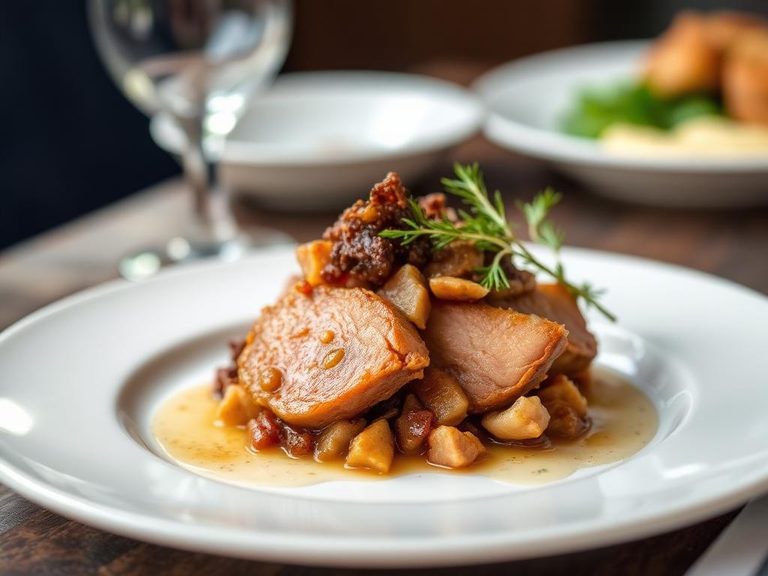
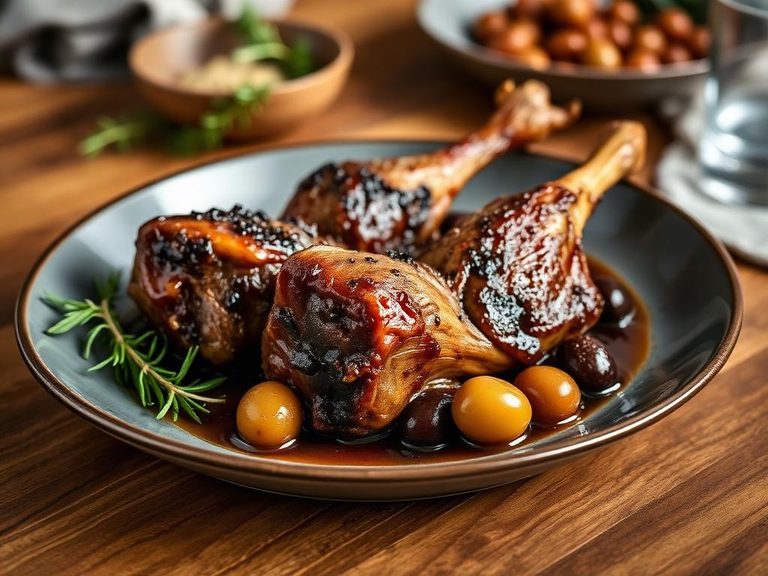
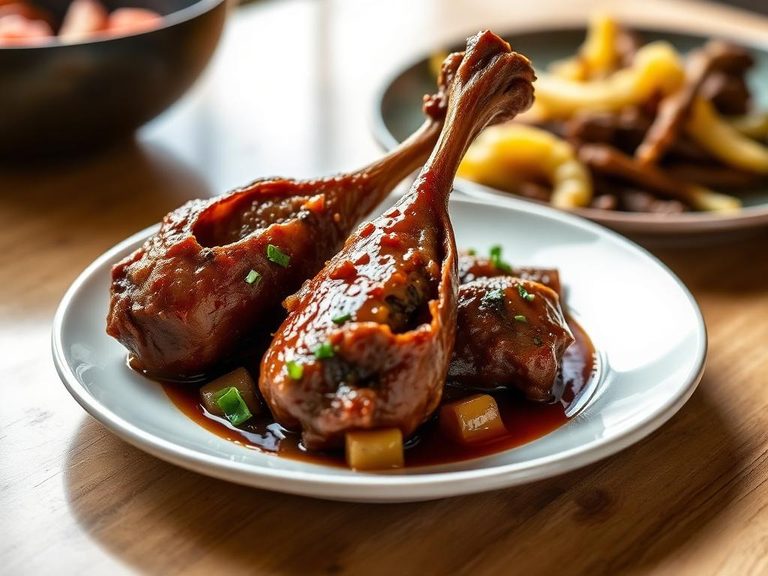
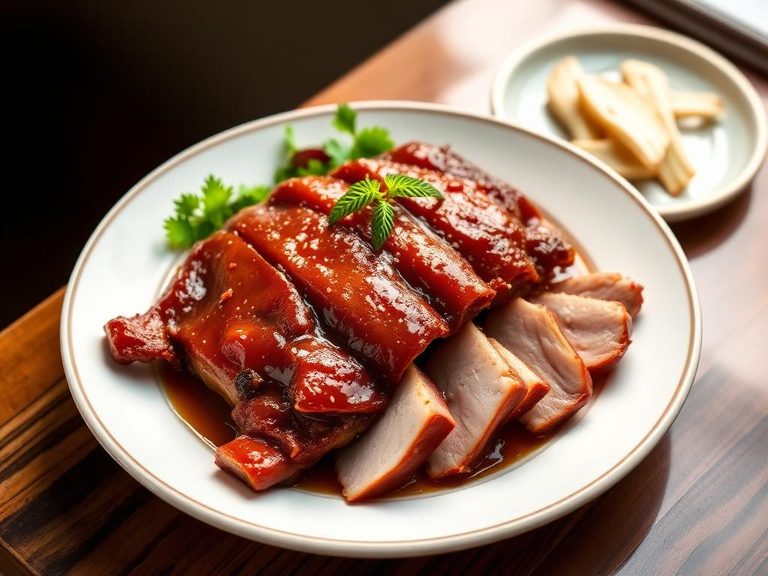
🌍 Where it's eaten
💡 Did you know?
The White Pekin duck, the breed specified, was brought to the United States from China in 1873 and is the breed most commonly used in American duck production.
Full nutrition (USDA data · scales with serving)
| Water | 64.6 g |
| Energy | 178 kcal |
| Energy | 745 kj |
| Protein | 29.1 g |
| Total lipid (fat) | 6.0 g |
| Ash | 1.1 g |
| Carbohydrate, by difference | 0.00 g |
| Calcium, Ca | 10.0 mg |
| Iron, Fe | 2.3 mg |
| Sodium, Na | 108 mg |
| Selenium, Se | 21.6 ug |
| Vitamin C, total ascorbic acid | 2.3 mg |
| Niacin | 5.3 mg |
Fat & fatty acid profile (per 100g)
| Fatty acids, total saturated | 1.3 g |
| SFA 14:0 | 0.03 g |
| SFA 16:0 | 1.0 g |
| SFA 18:0 | 0.29 g |
| Fatty acids, total monounsaturated | 2.6 g |
| MUFA 16:1 | 0.22 g |
| MUFA 18:1 | 2.4 g |
| MUFA 20:1 | 0.02 g |
| Fatty acids, total polyunsaturated | 0.91 g |
| PUFA 18:2 | 0.82 g |
| PUFA 18:3 | 0.04 g |
| PUFA 20:4 | 0.05 g |
| Cholesterol | 105 mg |
Amino acid profile (per 100g)
| Tryptophan | 0.40 g |
| Threonine | 1.2 g |
| Isoleucine | 1.5 g |
| Leucine | 2.4 g |
| Lysine | 2.5 g |
| Methionine | 0.78 g |
| Cystine | 0.44 g |
| Phenylalanine | 1.2 g |
| Tyrosine | 1.1 g |
| Valine | 1.5 g |
| Arginine | 1.8 g |
| Histidine | 0.76 g |
| Alanine | 1.8 g |
| Aspartic acid | 2.8 g |
| Glutamic acid | 4.5 g |
| Glycine | 1.6 g |
| Proline | 1.4 g |
| Serine | 1.2 g |
FAQ
How is braised duck leg different from roasted duck leg?
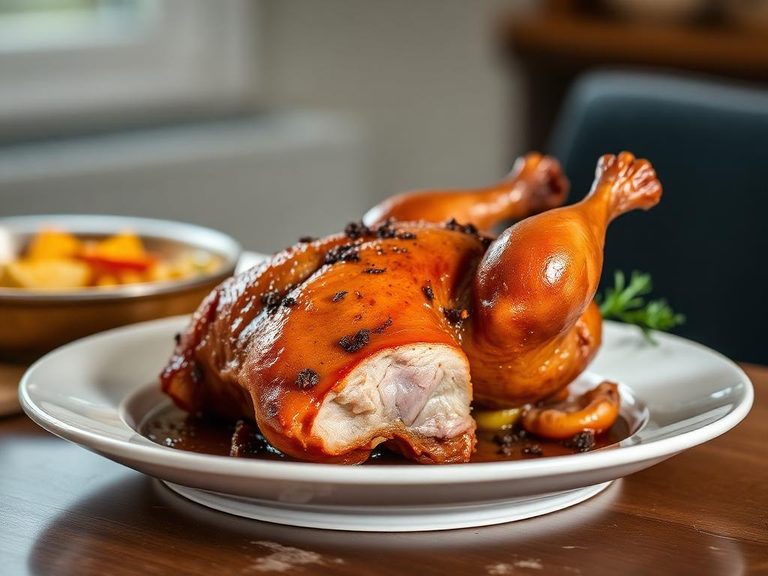
Braising involves slow-cooking the leg partially submerged in liquid (like stock or wine), resulting in very tender, fall-off-the-bone meat and a built-in sauce. Roasting uses dry heat in an oven, which crisps the skin (if left on) and concentrates the meat's flavor differently.
Is duck leg meat dark or white meat?
Duck leg meat is considered dark meat. Ducks are active birds, and their leg muscles are used frequently, which develops more myoglobin (the protein that stores oxygen in muscles) and gives the meat its darker color and richer flavor compared to breast meat.
Can I get a similar result without skin if I cook it myself?
Yes, but the skin is a major source of fat and flavor. To braise skinless duck legs successfully, ensure you use a flavorful braising liquid with aromatics (onion, garlic, herbs) and consider searing the meat first to develop a deep, savory crust before adding the liquid.
Weight-loss friendliness (composite index)
Energy density 1.78 kcal/g · 65% calories from protein · 0.0 g fiber · 0.0 g sugar per 100 g.
Composite of energy density (Rolls et al., 1999), protein & fiber satiety, minus sugar. A calculated heuristic — ranks satiety-per-calorie, not a clinical measure.