

Beef, ribeye, steak, boneless, choice, raw
Whole food · Beef Products

Photo: Wikipedia
A boneless ribeye steak is a premium cut from the rib section, prized for its rich marbling of intramuscular fat that bastes the meat from within during cooking. This marbling delivers a supremely juicy, tender bite with a robust, beefy flavor that intensifies with a good sear. Nutritionally, it's a dense source of high-quality protein and provides a significant amount of monounsaturated fats, the heart-healthy type found in olive oil.
Calorie split: 29% protein · 0% carbs · 71% fat
↓ Full nutrition💚 Why it's loved
People adore the ribeye for its unparalleled balance of intense beef flavor and luxurious, melt-in-your-mouth tenderness from its signature fat marbling. It's a celebratory centerpiece that requires minimal seasoning to shine, making it a favorite for both simple home grilling and high-end steakhouse menus.
⚠️ Watch-outs & how to enjoy it better
Its high fat content makes it a calorie-dense choice, and the saturated fat portion should be considered by those monitoring heart health or cholesterol. For a leaner option, trim external fat before cooking and pair with fiber-rich vegetables like roasted broccoli or a leafy salad to balance the meal. Choosing a smaller portion size (e.g., 118g) also helps manage intake.
Key benefits
- Excellent source of complete, high-quality protein for muscle maintenance.
- Rich in bioavailable heme iron, crucial for oxygen transport in blood.
- Provides zinc, essential for immune function and wound healing.
- Contains B vitamins like B12, niacin, and B6 for energy metabolism.
- Marbling offers monounsaturated fats, which can support heart health.
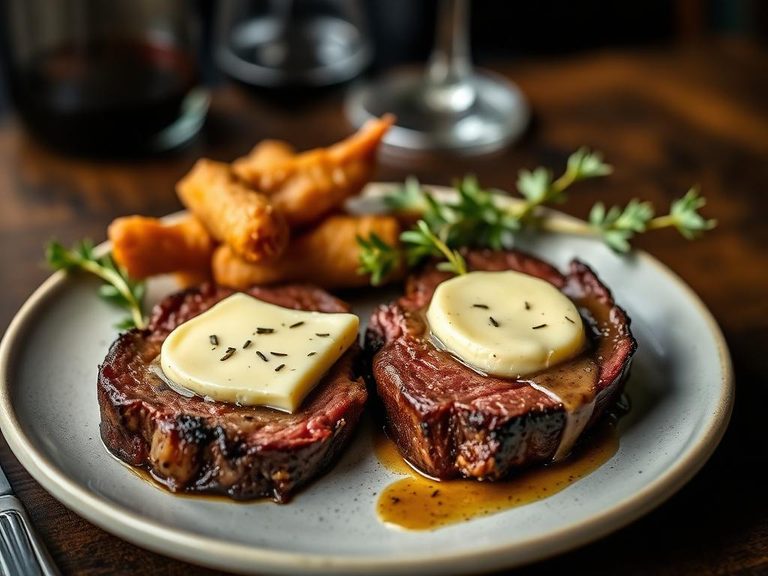
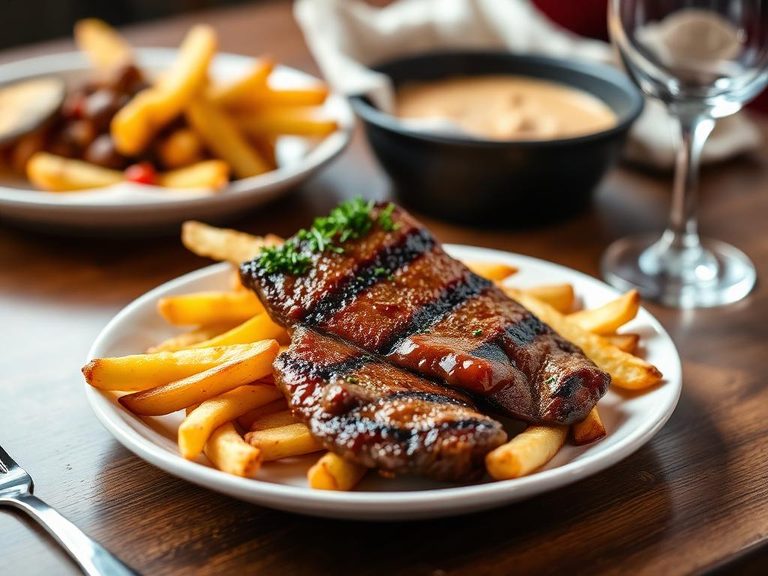
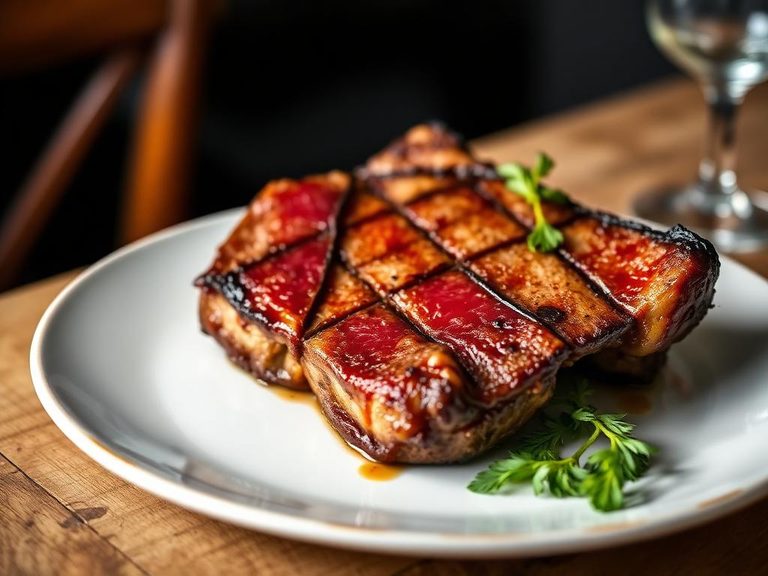
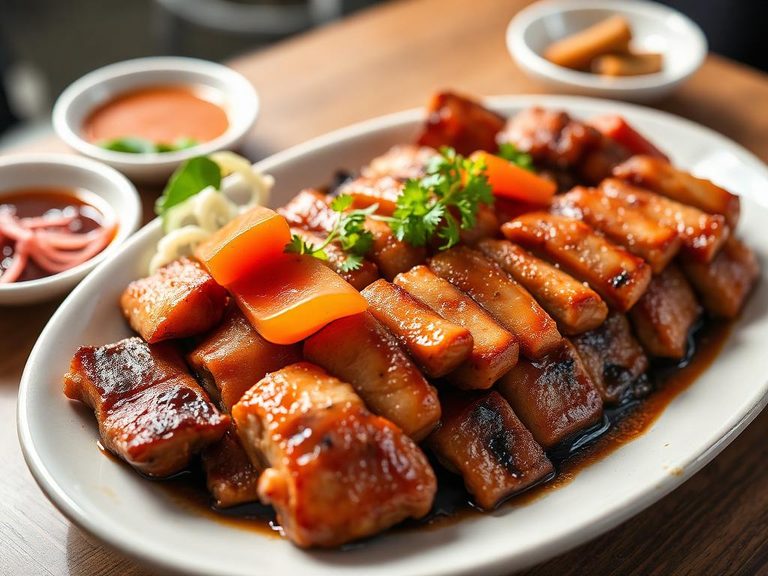
🍽️ Popular dishes

🌍 Where it's eaten
💡 Did you know?
The 'ribeye' name comes from the cut's location in the rib section and the visible 'eye' of meat in the center of the spinalis dorsi muscle, which is often considered the most flavorful part.
Full nutrition (USDA data · scales with serving)
| Water | 60.6 g |
| Energy (Atwater General Factors) | 254 kcal |
| Energy (Atwater Specific Factors) | 260 kcal |
| Nitrogen | 3.0 g |
| Protein | 18.7 g |
| Total lipid (fat) | 20.0 g |
| Ash | 0.89 g |
| Carbohydrate, by difference | 0.00 g |
| Calcium, Ca | 4.2 mg |
| Iron, Fe | 1.6 mg |
| Magnesium, Mg | 16.7 mg |
| Phosphorus, P | 150 mg |
| Potassium, K | 288 mg |
| Sodium, Na | 42.5 mg |
| Zinc, Zn | 4.1 mg |
| Copper, Cu | 0.04 mg |
| Manganese, Mn | 0.00 mg |
Fat & fatty acid profile (per 100g)
| Fatty acids, total saturated | 8.0 g |
| Fatty acids, total monounsaturated | 7.7 g |
| Fatty acids, total polyunsaturated | 0.63 g |
| Fatty acids, total trans | 0.97 g |
| Cholesterol | 62.7 mg |
Amino acid profile (per 100g)
Estimated from Beef, variety meats and by-products, mechanically separated beef, raw — USDA does not publish this profile for Beef.
| Tryptophan | 0.17 g |
| Threonine | 0.47 g |
| Isoleucine | 0.58 g |
| Leucine | 1.2 g |
| Lysine | 1.2 g |
| Methionine | 0.43 g |
| Cystine | 0.23 g |
| Phenylalanine | 0.64 g |
| Tyrosine | 0.38 g |
| Valine | 0.92 g |
| Arginine | 1.2 g |
| Histidine | 0.44 g |
| Alanine | 1.0 g |
| Aspartic acid | 1.3 g |
| Glutamic acid | 2.1 g |
| Glycine | 1.2 g |
| Proline | 0.92 g |
| Serine | 0.57 g |
FAQ
What's the best way to cook a boneless ribeye?
For optimal flavor and texture, bring the steak to room temperature, pat it dry, and season generously with salt and pepper. Sear it in a very hot cast-iron skillet or on a grill for 3-4 minutes per side for medium-rare (130-135°F internal temp), then let it rest for 5-10 minutes before slicing.
How does 'choice' grade affect the steak?
The USDA 'choice' grade indicates good marbling, offering a tender and juicy steak at a more accessible price than the top 'prime' grade. It's an excellent balance of quality and value for everyday enjoyment.
Is ribeye steak a good source of iron?
Yes, it's an excellent source of heme iron, the type most easily absorbed by the body. A 100g serving can provide a significant portion of your daily iron needs, making it beneficial for preventing iron deficiency.
Nutrient density (calculated · NRF9.3)
Nutrient Rich Foods index: beneficial nutrients (protein, fiber, vitamins, minerals) minus saturated fat, added sugar & sodium, per 100 kcal.
NRF9.3 index — Fulgoni, Keast & Drewnowski, 2009. Computed from USDA nutrients.
Weight-loss friendliness (composite index)
Energy density 2.54 kcal/g · 30% calories from protein · 0.0 g fiber · 0.0 g sugar per 100 g.
Composite of energy density (Rolls et al., 1999), protein & fiber satiety, minus sugar. A calculated heuristic — ranks satiety-per-calorie, not a clinical measure.
Dietary load (calculated from USDA values)
Potential renal acid load. Positive = acid-forming, negative = alkaline-forming.
Sodium-to-potassium ratio: 0.15 (lower is better — aim for ≤ 1)
Sodium:potassium per WHO potassium guidance. Computed from USDA nutrients.