

Balsam-pear (bitter gourd), leafy tips, cooked, boiled, drained, with salt
Whole food · Vegetables and Vegetable Products

Photo: Wikipedia
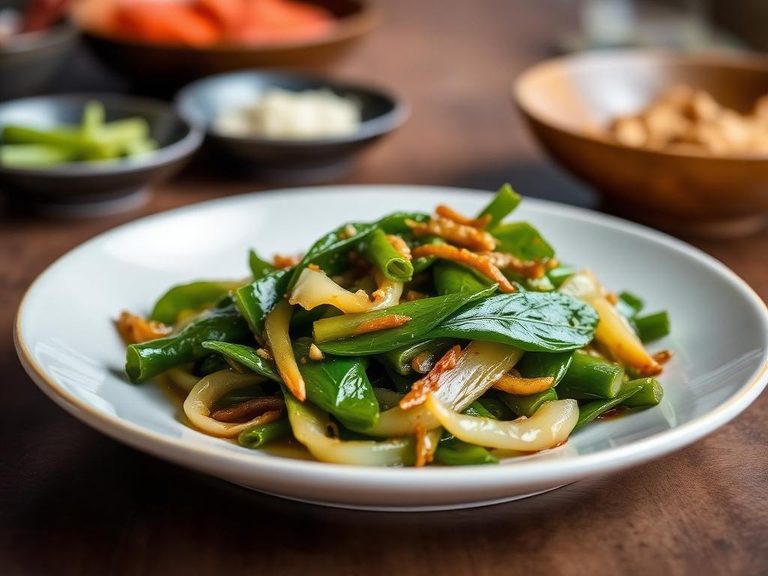
The tender leafy tips of the bitter gourd vine, boiled and lightly salted, offer a surprisingly delicate texture and a milder, earthy bitterness compared to the fruit itself. At just 32 calories per 100g, these greens are a nutritional powerhouse, delivering a notable 3.6g of protein and nearly 2g of fiber, making them a light yet satisfying addition to any meal. Their flavor is a subtle, grassy green with a hint of the characteristic bitter melon tang, which softens beautifully with cooking.
Calorie split: 35% protein · 60% carbs · 4% fat
↓ Full nutrition💚 Why it's loved
People love these greens for their unique, complex flavor that balances earthiness with a gentle bitterness, and for their incredible versatility in stir-fries, soups, and stews. They are a cherished ingredient in many Asian cuisines, often evoking a sense of home-cooked comfort and seasonal freshness.
⚠️ Watch-outs & how to enjoy it better
The inherent bitterness can be off-putting to some, and the added salt increases sodium content, which may be a concern for those monitoring intake. To counteract bitterness, blanch the leaves in salted water first or pair them with a savory, fatty component like coconut milk or a fried egg to balance the flavor and add satiety.
Key benefits
- Excellent low-calorie source of plant-based protein.
- High in dietary fiber, supporting digestive health.
- Rich in vitamins A and C, essential for immunity and vision.
- Contains antioxidants like flavonoids and phenolic compounds.
- A good source of minerals such as iron and calcium.
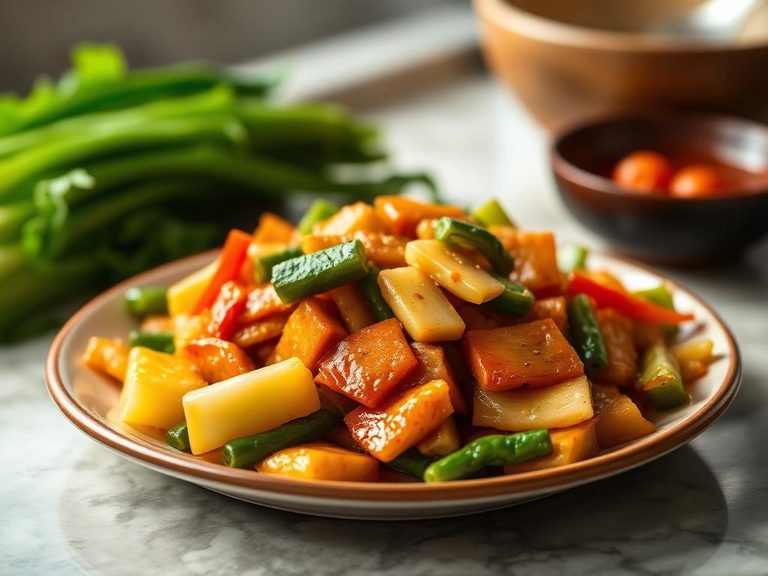
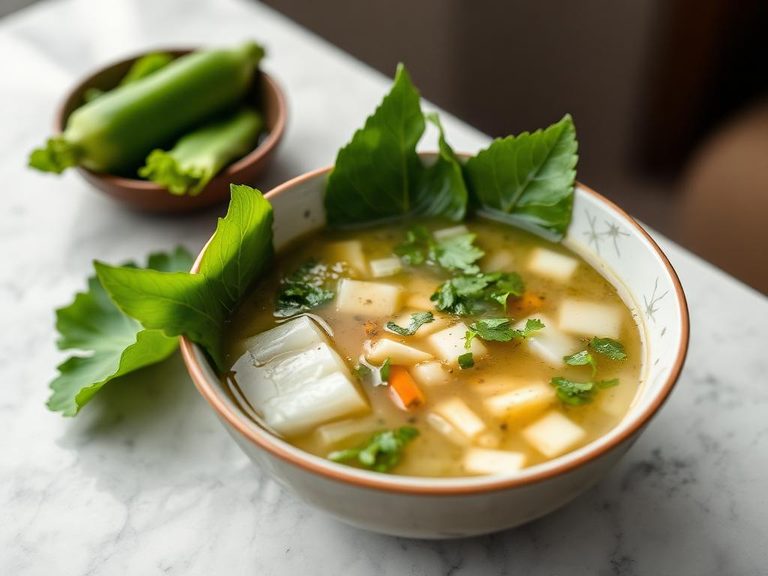
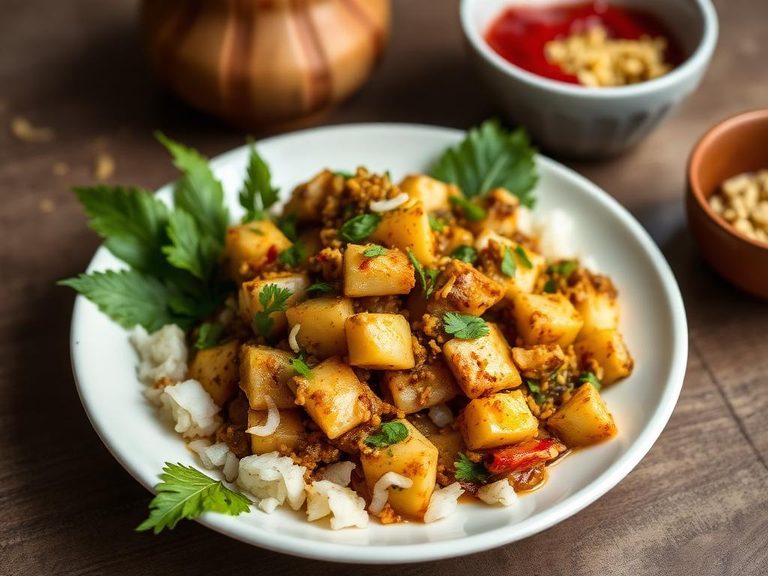
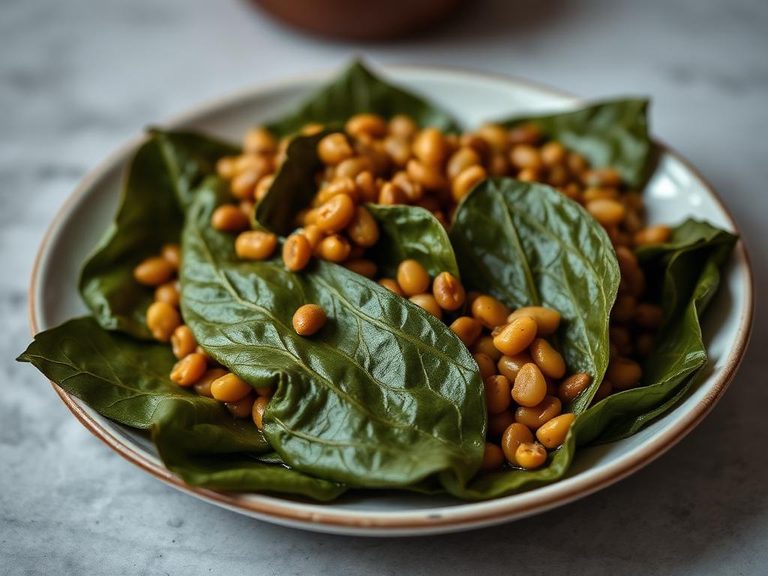
🍽️ Popular dishes
🌍 Where it's eaten
💡 Did you know?
Bitter gourd leaves are often more nutritious than the fruit itself, containing higher concentrations of certain vitamins and antioxidants, making them a hidden gem in the vegetable world.
Full nutrition (USDA data · scales with serving)
| Water | 88.7 g |
| Energy | 32.0 kcal |
| Energy | 136 kj |
| Protein | 3.6 g |
| Total lipid (fat) | 0.20 g |
| Ash | 1.4 g |
| Carbohydrate, by difference | 6.2 g |
| Fiber, total dietary | 1.9 g |
| Total Sugars | 1.0 g |
| Calcium, Ca | 42.0 mg |
| Iron, Fe | 1.0 mg |
| Magnesium, Mg | 94.0 mg |
| Phosphorus, P | 77.0 mg |
| Potassium, K | 602 mg |
| Sodium, Na | 249 mg |
| Zinc, Zn | 0.30 mg |
| Copper, Cu | 0.20 mg |
| Manganese, Mn | 0.54 mg |
| Selenium, Se | 0.90 ug |
| Vitamin C, total ascorbic acid | 55.6 mg |
| Thiamin | 0.15 mg |
| Riboflavin | 0.28 mg |
| Niacin | 0.99 mg |
| Pantothenic acid | 0.06 mg |
| Vitamin B-6 | 0.76 mg |
| Folate, total | 88.0 ug |
| Folic acid | 0.00 ug |
| Folate, food | 88.0 ug |
| Folate, DFE | 88.0 ug |
| Choline, total | 21.0 mg |
| Vitamin B-12 | 0.00 ug |
| Vitamin B-12, added | 0.00 ug |
| Vitamin A, RAE | 121 ug |
| Retinol | 0.00 ug |
| Carotene, beta | 1450 ug |
| Carotene, alpha | 0.00 ug |
| Cryptoxanthin, beta | 0.00 ug |
| Vitamin A, IU | 2416 iu |
| Lycopene | 0.00 ug |
| Lutein + zeaxanthin | 2638 ug |
| Vitamin E (alpha-tocopherol) | 1.4 mg |
| Vitamin E, added | 0.00 mg |
| Vitamin D (D2 + D3), International Units | 0.00 iu |
| Vitamin D (D2 + D3) | 0.00 ug |
| Vitamin K (phylloquinone) | 163 ug |
| Caffeine | 0.00 mg |
| Theobromine | 0.00 mg |
Fat & fatty acid profile (per 100g)
| Fatty acids, total trans | 0.00 g |
| Cholesterol | 0.00 mg |
FAQ
How do I reduce the bitterness of bitter gourd leaves?
You can reduce bitterness by blanching the leaves in boiling water for a minute before cooking, or by salting them and letting them sit for 10-15 minutes to draw out bitter juices. Pairing with fatty ingredients like coconut milk or a fried egg also helps balance the flavor.
Are bitter gourd leaves safe for everyone to eat?
While generally safe, those with low blood sugar or on diabetes medication should be cautious, as bitter gourd can lower blood sugar levels. The added salt in this preparation also means it may not be ideal for individuals on low-sodium diets.
What's the best way to cook bitter gourd leaves to preserve nutrients?
Quick stir-frying or steaming are excellent methods to retain vitamins and antioxidants. Boiling, as in this preparation, can leach some water-soluble nutrients, but it effectively reduces bitterness and makes the leaves tender.
Nutrient density (calculated · NRF9.3)
Nutrient Rich Foods index: beneficial nutrients (protein, fiber, vitamins, minerals) minus saturated fat, added sugar & sodium, per 100 kcal.
NRF9.3 index — Fulgoni, Keast & Drewnowski, 2009. Computed from USDA nutrients.
Weight-loss friendliness (composite index)
Energy density 0.32 kcal/g · 45% calories from protein · 1.9 g fiber · 1.0 g sugar per 100 g.
Composite of energy density (Rolls et al., 1999), protein & fiber satiety, minus sugar. A calculated heuristic — ranks satiety-per-calorie, not a clinical measure.
Dietary load (calculated from USDA values)
Potential renal acid load. Positive = acid-forming, negative = alkaline-forming.
Sodium-to-potassium ratio: 0.41 (lower is better — aim for ≤ 1)
Sodium:potassium per WHO potassium guidance. Computed from USDA nutrients.