

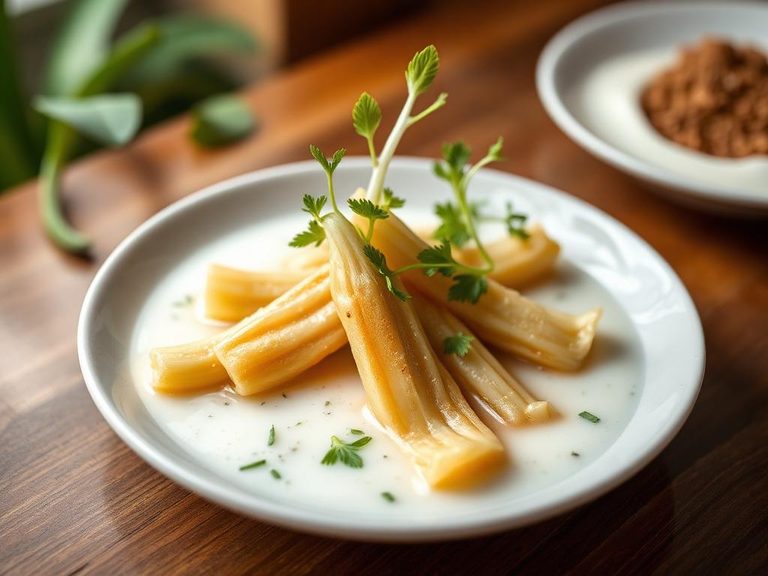
Taro shoots, cooked, without salt
Whole food · Vegetables and Vegetable Products

Photo: Wikipedia
Taro shoots, also known as 'eddoe' stems or 'aro' leaves, are the tender, edible stalks of the taro plant. When cooked, they have a mild, slightly earthy flavor and a soft, somewhat spongy texture that readily absorbs sauces. Nutritionally, they are an exceptionally low-calorie, low-fat vegetable, making them a light yet satisfying addition to many dishes.
Calorie split: 18% protein · 78% carbs · 4% fat
↓ Full nutrition💚 Why it's loved
People love taro shoots for their unique, delicate texture that becomes tender and flavorful when braised or stewed. They are a beloved staple in many Asian and tropical cuisines, prized for their ability to soak up rich broths and coconut milk.
⚠️ Watch-outs & how to enjoy it better
Raw taro shoots contain calcium oxalate crystals, which can cause intense mouth and throat irritation (a 'scratchy' or 'stinging' sensation). This is completely neutralized by proper cooking—always boil, steam, or thoroughly stew them. Those with a history of kidney stones may wish to moderate intake due to oxalate content.
Key benefits
- Very low in calories (14 kcal per 100g)
- Naturally virtually fat-free
- Good source of plant-based carbohydrates for energy
- Contains essential minerals like potassium and manganese
- Provides dietary variety in tropical cuisines
🍽️ Popular dishes
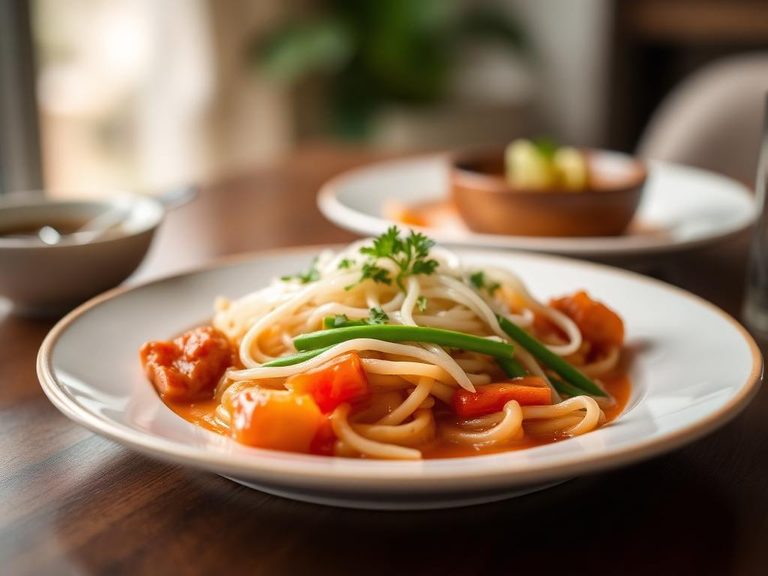
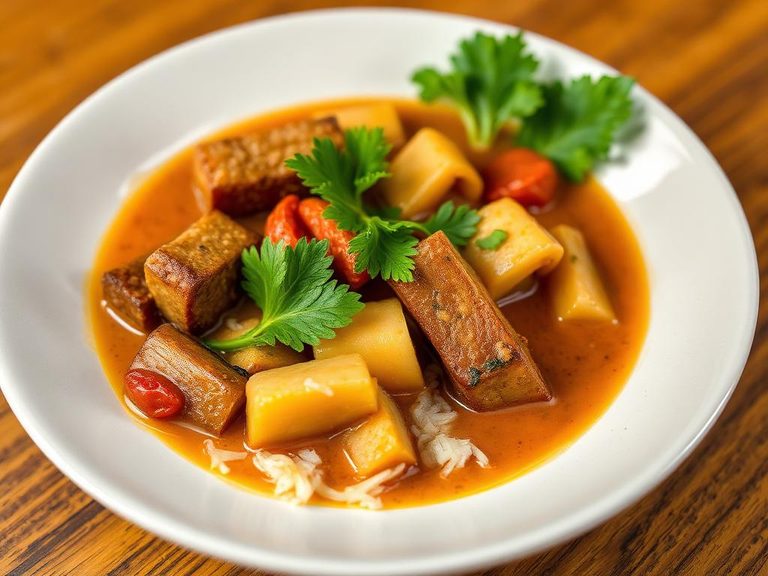
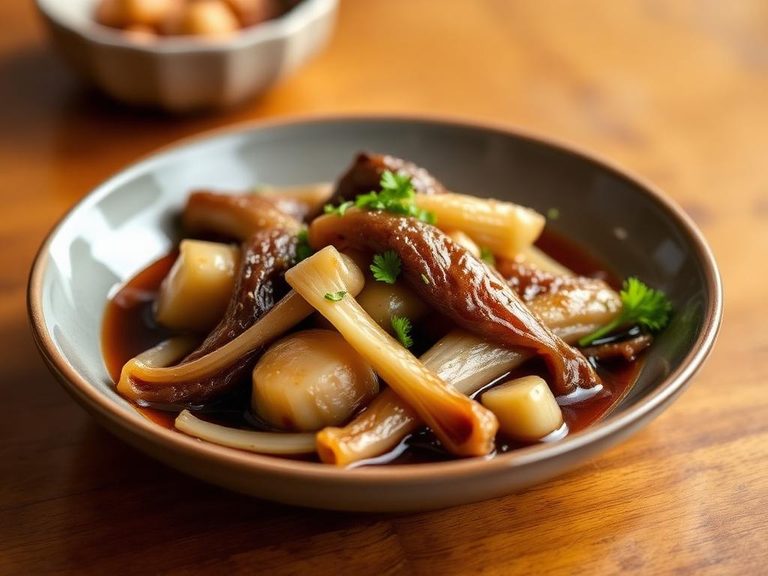
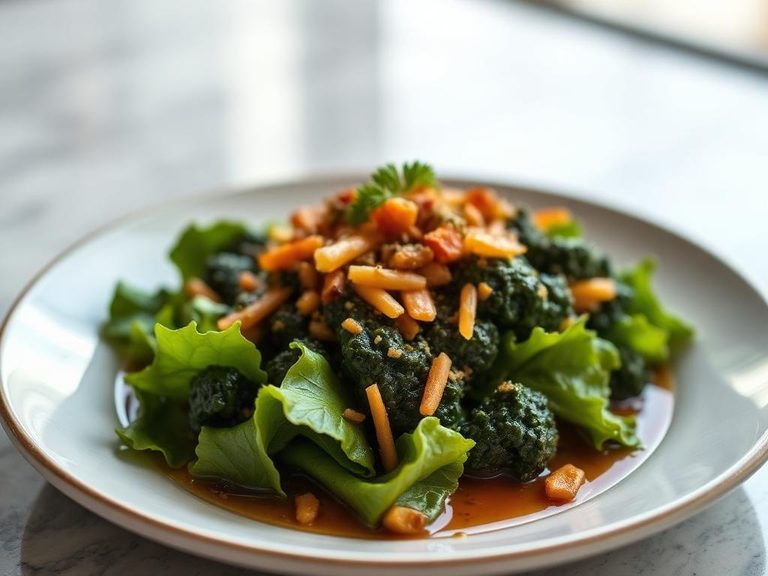
🌍 Where it's eaten
💡 Did you know?
The entire taro plant—root, stem, and leaf—is edible, but the stem requires the most careful preparation to neutralize the irritating calcium oxalate before consumption.
Full nutrition (USDA data · scales with serving)
| Water | 95.3 g |
| Energy | 14.0 kcal |
| Energy | 59.0 kj |
| Protein | 0.73 g |
| Total lipid (fat) | 0.08 g |
| Ash | 0.70 g |
| Carbohydrate, by difference | 3.2 g |
| Calcium, Ca | 14.0 mg |
| Iron, Fe | 0.41 mg |
| Magnesium, Mg | 8.0 mg |
| Phosphorus, P | 26.0 mg |
| Potassium, K | 344 mg |
| Sodium, Na | 2.0 mg |
| Zinc, Zn | 0.54 mg |
| Copper, Cu | 0.09 mg |
| Manganese, Mn | 0.13 mg |
| Selenium, Se | 1.0 ug |
| Vitamin C, total ascorbic acid | 18.9 mg |
| Thiamin | 0.04 mg |
| Riboflavin | 0.05 mg |
| Niacin | 0.81 mg |
| Pantothenic acid | 0.08 mg |
| Vitamin B-6 | 0.11 mg |
| Folate, total | 3.0 ug |
| Folic acid | 0.00 ug |
| Folate, food | 3.0 ug |
| Folate, DFE | 3.0 ug |
| Vitamin B-12 | 0.00 ug |
| Vitamin A, RAE | 3.0 ug |
| Retinol | 0.00 ug |
| Vitamin A, IU | 51.0 iu |
| Vitamin D (D2 + D3), International Units | 0.00 iu |
| Vitamin D (D2 + D3) | 0.00 ug |
Fat & fatty acid profile (per 100g)
| Fatty acids, total saturated | 0.02 g |
| SFA 16:0 | 0.01 g |
| SFA 18:0 | 0.00 g |
| Fatty acids, total monounsaturated | 0.01 g |
| MUFA 18:1 | 0.01 g |
| Fatty acids, total polyunsaturated | 0.03 g |
| PUFA 18:2 | 0.02 g |
| PUFA 18:3 | 0.01 g |
| Fatty acids, total trans | 0.00 g |
| Cholesterol | 0.00 mg |
FAQ
Are taro shoots the same as taro root?
No. They are different parts of the same plant. The root is the starchy, underground corm (like a potato), while the shoots are the above-ground stalks or stems.
How do I prepare them to avoid irritation?
You must cook them thoroughly. Boiling them in water for at least 10-15 minutes before adding to a dish is a common and effective method to break down the oxalate crystals.
What do they taste like?
They have a very mild, slightly earthy flavor similar to a cross between a mushroom and a mild green bean. Their main appeal is their soft, absorbent texture.
Nutrient density (calculated · NRF9.3)
Nutrient Rich Foods index: beneficial nutrients (protein, fiber, vitamins, minerals) minus saturated fat, added sugar & sodium, per 100 kcal.
NRF9.3 index — Fulgoni, Keast & Drewnowski, 2009. Computed from USDA nutrients.
Weight-loss friendliness (composite index)
Energy density 0.14 kcal/g · 21% calories from protein · 0.0 g fiber · 0.0 g sugar per 100 g.
Composite of energy density (Rolls et al., 1999), protein & fiber satiety, minus sugar. A calculated heuristic — ranks satiety-per-calorie, not a clinical measure.
Dietary load (calculated from USDA values)
Potential renal acid load. Positive = acid-forming, negative = alkaline-forming.
Sodium-to-potassium ratio: 0.01 (lower is better — aim for ≤ 1)
Sodium:potassium per WHO potassium guidance. Computed from USDA nutrients.