

Fish, salmon, king, chinook, smoked, brined (Alaska Native)
Whole food · American Indian/Alaska Native Foods

Photo: Wikipedia
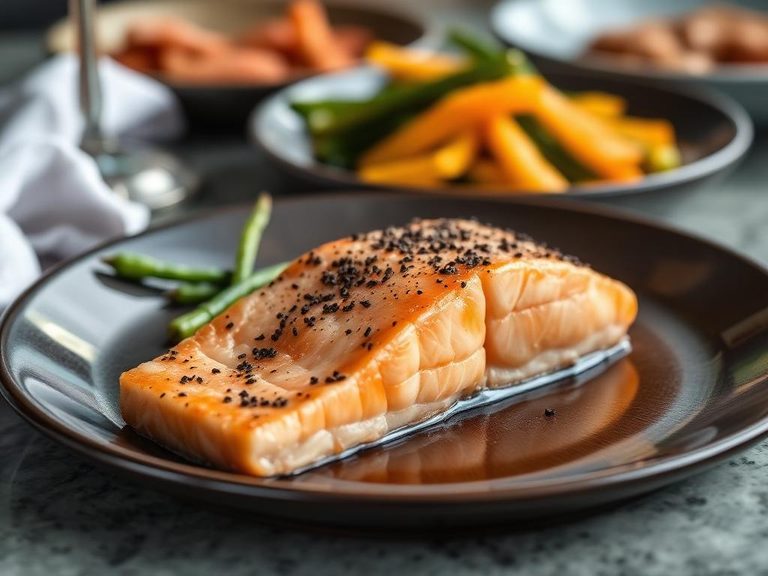
King salmon (Chinook) smoked using a traditional brine is a culinary jewel of Alaska Native cuisine. The process yields a deep, amber-hued fillet with a silky, melt-in-your-mouth texture and a rich, savory-sweet smokiness. Nutritionally, it's a powerhouse, delivering nearly 40g of protein and heart-healthy omega-3 fats per 100g with zero carbohydrates.
Calorie split: 37% protein · 0% carbs · 63% fat
↓ Full nutrition💚 Why it's loved
People love it for its unparalleled, buttery richness and the complex, aromatic depth that cold-smoking imparts. It's a versatile staple, enjoyed simply on its own or as a luxurious centerpiece in both traditional and modern dishes.
⚠️ Watch-outs & how to enjoy it better
The smoking and brining process can result in a high sodium content, which is a consideration for those monitoring salt intake. As a fatty fish, it is also a common allergen. To manage sodium, you can pair it with potassium-rich foods like avocado or fresh greens, and practice portion control.
Key benefits
- Exceptionally high in protein for muscle maintenance and satiety.
- Rich source of long-chain omega-3 fatty acids (EPA & DHA).
- Provides significant vitamin D, crucial for bone health.
- Contains astaxanthin, a potent antioxidant responsible for its color.
- Zero carbohydrates, making it ideal for ketogenic and low-carb diets.
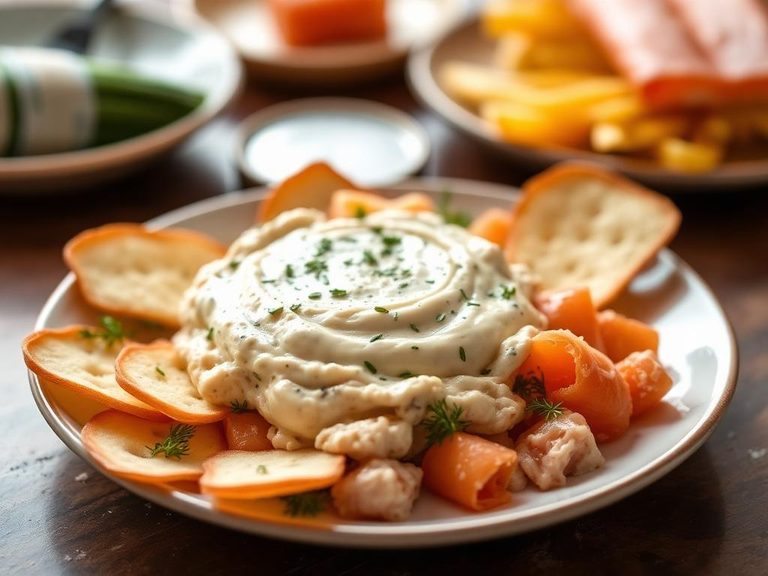
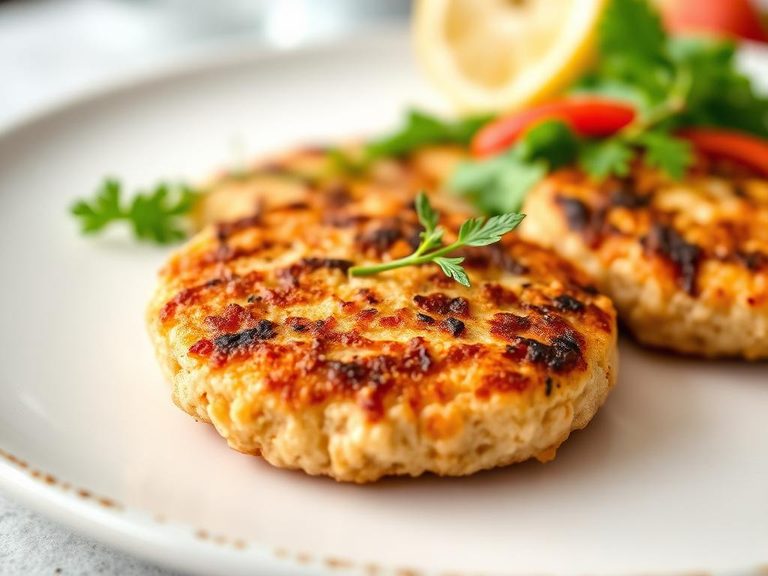
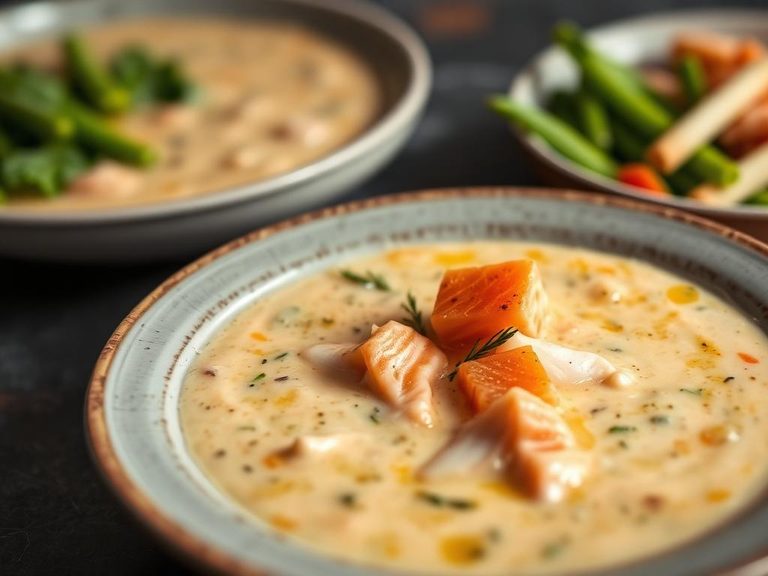
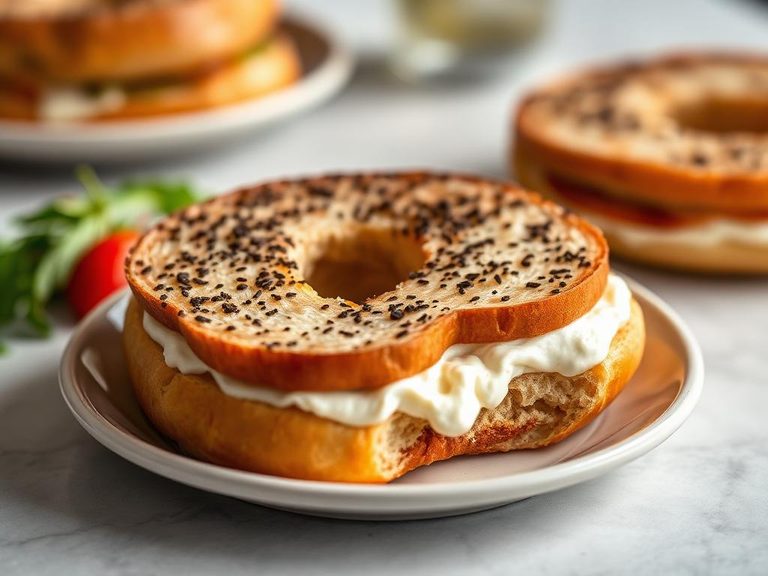
🍽️ Popular dishes
🌍 Where it's eaten
💡 Did you know?
King salmon gets its official name, Chinook, from the Chinook people of the Pacific Northwest, who have harvested this prized fish for millennia.
Full nutrition (USDA data · scales with serving)
| Water | 23.6 g |
| Energy | 430 kcal |
| Energy | 1797 kj |
| Protein | 39.9 g |
| Total lipid (fat) | 30.0 g |
| Ash | 3.6 g |
| Carbohydrate, by difference | 0.00 g |
| Fiber, total dietary | 0.00 g |
| Calcium, Ca | 23.0 mg |
| Iron, Fe | 4.5 mg |
| Potassium, K | 700 mg |
| Sodium, Na | 693 mg |
| Thiamin | 0.06 mg |
| Riboflavin | 0.28 mg |
| Niacin | 11.8 mg |
| Vitamin A, IU | 527 iu |
Fat & fatty acid profile (per 100g)
| Fatty acids, total saturated | 7.0 g |
| Fatty acids, total monounsaturated | 16.9 g |
| Fatty acids, total polyunsaturated | 0.35 g |
| PUFA 18:2 | 0.35 g |
| PUFA 18:3 | 0.00 g |
| Cholesterol | 107 mg |
Amino acid profile (per 100g)
Estimated from Fish, halibut, raw, with skin (Alaska Native) — USDA does not publish this profile for Fish.
| Tryptophan | 0.31 g |
| Threonine | 0.95 g |
| Isoleucine | 0.94 g |
| Leucine | 1.6 g |
| Lysine | 1.8 g |
| Methionine | 0.80 g |
| Cystine | 0.35 g |
| Phenylalanine | 0.82 g |
| Tyrosine | 0.70 g |
| Valine | 1.0 g |
| Arginine | 1.2 g |
| Histidine | 0.50 g |
| Alanine | 1.2 g |
| Aspartic acid | 2.8 g |
| Glutamic acid | 3.2 g |
| Glycine | 0.93 g |
| Proline | 0.73 g |
| Serine | 0.91 g |
| Hydroxyproline | 0.18 g |
FAQ
Is smoked salmon cooked?
Traditionally, cold-smoked salmon like this is not cooked by heat. The preservation comes from the combination of salt brining and the antimicrobial properties of smoke. It is safe to eat as-is but can be gently heated in dishes.
What's the difference between hot-smoked and cold-smoked salmon?
Cold-smoking (like this product) is done at low temperatures (below 80°F/27°C) and relies on salt and smoke for preservation, yielding a silky texture. Hot-smoking cooks the fish at higher temperatures (120-180°F/49-82°C), resulting in a flaky, cooked texture.
How should I store it?
Keep it refrigerated at all times, tightly wrapped. Once opened, consume within 3-5 days. For longer storage, it can be frozen for up to 3 months, though the texture may soften slightly upon thawing.
Nutrient density (calculated · NRF9.3)
Nutrient Rich Foods index: beneficial nutrients (protein, fiber, vitamins, minerals) minus saturated fat, added sugar & sodium, per 100 kcal.
NRF9.3 index — Fulgoni, Keast & Drewnowski, 2009. Computed from USDA nutrients.
Weight-loss friendliness (composite index)
Energy density 4.30 kcal/g · 37% calories from protein · 0.0 g fiber · 0.0 g sugar per 100 g.
Composite of energy density (Rolls et al., 1999), protein & fiber satiety, minus sugar. A calculated heuristic — ranks satiety-per-calorie, not a clinical measure.
Dietary load (calculated from USDA values)
Sodium-to-potassium ratio: 0.99 (lower is better — aim for ≤ 1)
Sodium:potassium per WHO potassium guidance. Computed from USDA nutrients.