

Alcoholic beverage, beer, light, BUD LIGHT
Whole food · Beverages
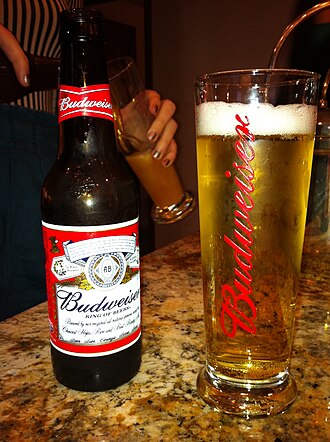
Photo: Wikipedia
Bud Light is a crisp, pale American lager known for its exceptionally light body and clean, subtle hop finish. With a mere 29 calories and 1.3g of carbohydrates per 100g, it's engineered for high drinkability and sessioning without heaviness. Its golden hue and persistent white head are hallmarks of its adjunct-lager style.
Calorie split: 16% protein · 84% carbs · 0% fat
↓ Full nutrition💚 Why it's loved
People love Bud Light for its unpretentious, easy-drinking nature that pairs effortlessly with casual food and social gatherings. Its mild flavor and light profile make it a versatile, crowd-pleasing choice for backyard barbecues, sporting events, and long summer days.
⚠️ Watch-outs & how to enjoy it better
As an alcoholic beverage, it should be avoided by those abstaining for health, religious, or personal reasons, and consumed in moderation by others. The carbonation and alcohol can contribute to bloating and may aggravate acid reflux; pairing it with salty snacks can increase thirst. Tip: Alternate with water and choose lower-sodium appetizers like grilled vegetables or lean proteins.
Key benefits
- Very low in calories (29 kcal/100g)
- Extremely low carbohydrate content (1.3g/100g)
- Fat-free and sugar-free
- High water content for hydration
- Provides a source of silicon for bone health
🍽️ Popular dishes


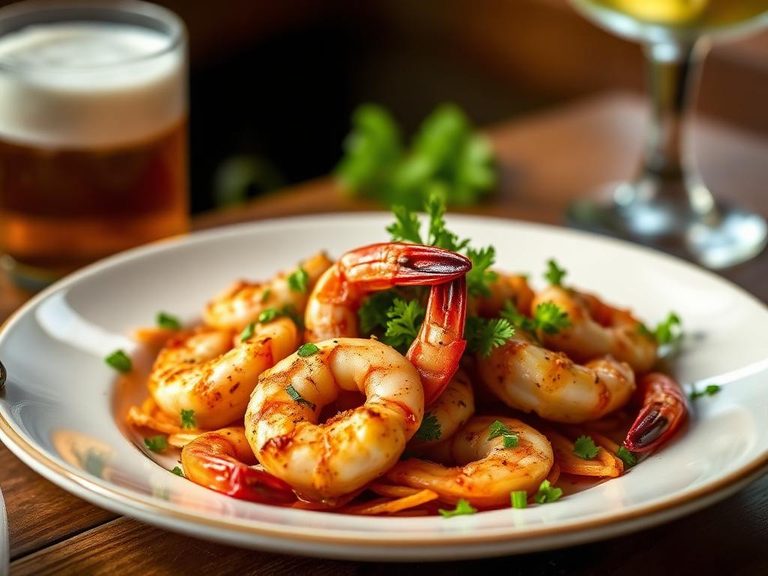
🌍 Where it's eaten
💡 Did you know?
Bud Light's iconic 'Dilly Dilly' marketing campaign, which began in 2017, became a massive cultural catchphrase and even inspired a Super Bowl commercial.
Full nutrition (USDA data · scales with serving)
| Water | 95.0 g |
| Energy | 29.0 kcal |
| Energy | 123 kj |
| Protein | 0.25 g |
| Total lipid (fat) | 0.00 g |
| Ash | 0.11 g |
| Carbohydrate, by difference | 1.3 g |
| Fiber, total dietary | 0.00 g |
| Glucose | 0.00 g |
| Fructose | 0.00 g |
| Maltose | 0.00 g |
| Starch | 0.00 g |
| Calcium, Ca | 3.0 mg |
| Iron, Fe | 0.00 mg |
| Magnesium, Mg | 7.0 mg |
| Phosphorus, P | 11.0 mg |
| Potassium, K | 26.0 mg |
| Sodium, Na | 3.0 mg |
| Zinc, Zn | 0.00 mg |
| Copper, Cu | 0.00 mg |
| Manganese, Mn | 0.01 mg |
| Alcohol, ethyl | 3.3 g |
Fat & fatty acid profile (per 100g)
| Fatty acids, total trans | 0.00 g |
| Cholesterol | 0.00 mg |
Amino acid profile (per 100g)
Estimated from Alcoholic beverage, distilled, vodka, 80 proof — USDA does not publish this profile for Alcoholic beverage.
| Tryptophan | 0.00 g |
| Threonine | 0.00 g |
| Isoleucine | 0.00 g |
| Leucine | 0.00 g |
| Lysine | 0.00 g |
| Methionine | 0.00 g |
| Cystine | 0.00 g |
| Phenylalanine | 0.00 g |
| Tyrosine | 0.00 g |
| Valine | 0.00 g |
| Arginine | 0.00 g |
| Histidine | 0.00 g |
| Alanine | 0.00 g |
| Aspartic acid | 0.00 g |
| Glutamic acid | 0.00 g |
| Glycine | 0.00 g |
| Proline | 0.00 g |
| Serine | 0.00 g |
FAQ
Is Bud Light gluten-free?
No. It is brewed with barley malt and is not suitable for individuals with celiac disease or gluten sensitivity.
How does its nutrition compare to a regular beer?
Bud Light has significantly fewer calories (29 vs. ~43 kcal/100g) and carbohydrates (1.3g vs. ~3.6g/100g) than a standard American lager.
What gives it such a light flavor?
It uses a larger proportion of adjuncts (like rice) to lighten the body and flavor, resulting in a less malty, less hoppy profile than traditional all-malt beers.
Nutrient density (calculated · NRF9.3)
Nutrient Rich Foods index: beneficial nutrients (protein, fiber, vitamins, minerals) minus saturated fat, added sugar & sodium, per 100 kcal.
NRF9.3 index — Fulgoni, Keast & Drewnowski, 2009. Computed from USDA nutrients.
Weight-loss friendliness (composite index)
Energy density 0.29 kcal/g · 3% calories from protein · 0.0 g fiber · 0.0 g sugar per 100 g.
Composite of energy density (Rolls et al., 1999), protein & fiber satiety, minus sugar. A calculated heuristic — ranks satiety-per-calorie, not a clinical measure.
Dietary load (calculated from USDA values)
Potential renal acid load. Positive = acid-forming, negative = alkaline-forming.
Sodium-to-potassium ratio: 0.12 (lower is better — aim for ≤ 1)
Sodium:potassium per WHO potassium guidance. Computed from USDA nutrients.