

Kanpyo, (dried gourd strips)
Whole food · Vegetables and Vegetable Products

Photo: Wikipedia
Kanpyo is the sun-dried flesh of the calabash gourd, sliced into long, chewy strips that transform into a savory, umami-rich ingredient when simmered. Its neutral, slightly sweet flavor acts like a sponge, absorbing the rich broths and sauces it's cooked in. Nutritionally, it's a standout for its exceptionally high fiber content and very low fat, making it a light yet satisfying addition to meals.
Calorie split: 11% protein · 87% carbs · 2% fat
↓ Full nutrition💚 Why it's loved
People love kanpyo for its unique, pleasantly chewy texture that holds up beautifully in stews and braises. It's a beloved staple in Japanese home cooking, valued for its ability to stretch a meal and absorb the deep, savory flavors of dashi, soy sauce, and mirin.
⚠️ Watch-outs & how to enjoy it better
As a dried product, kanpyo is often packed with sodium, which can be a concern for those monitoring salt intake. To mitigate this, always rinse it well after soaking and consider using a low-sodium broth for cooking. Its high fiber content, while beneficial, may cause digestive discomfort if introduced too quickly or in very large portions.
Key benefits
- Excellent source of dietary fiber (9.8g per 100g)
- Very low in fat (0.56g per 100g)
- Good source of plant-based protein (8.58g per 100g)
- Provides essential minerals like potassium and calcium
- Low-calorie ingredient for adding volume and texture
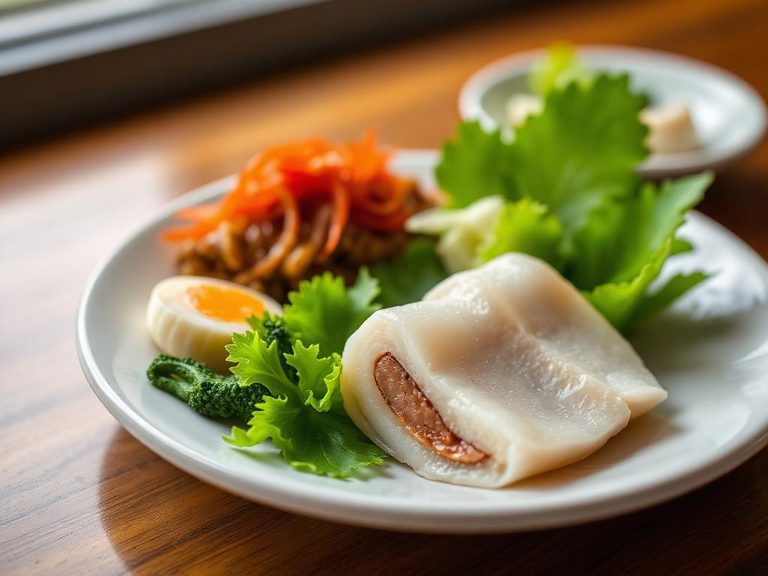
🍽️ Popular dishes
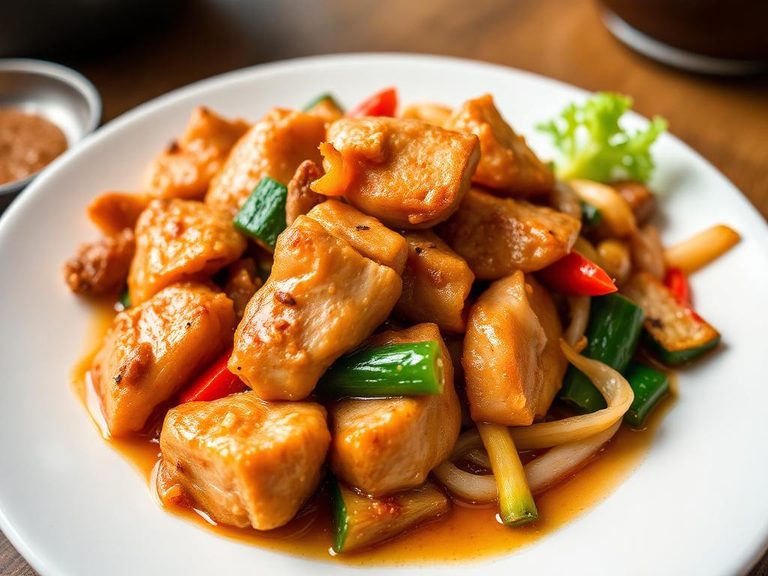
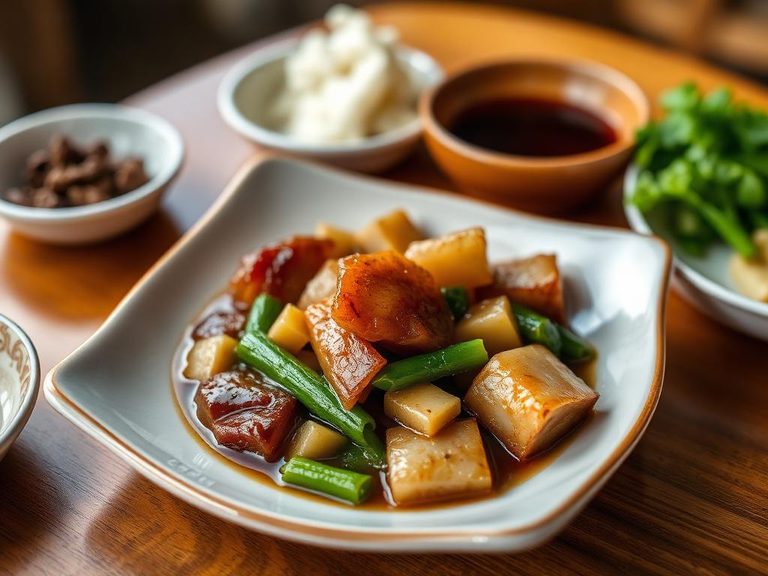
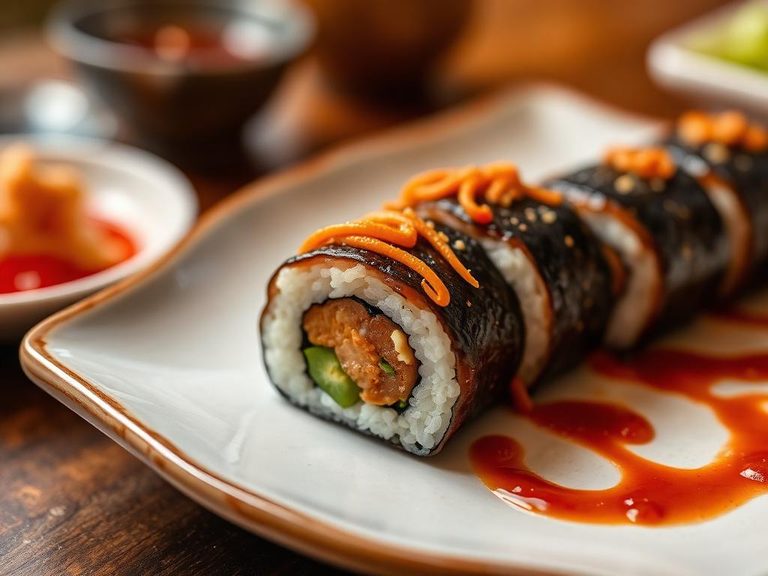
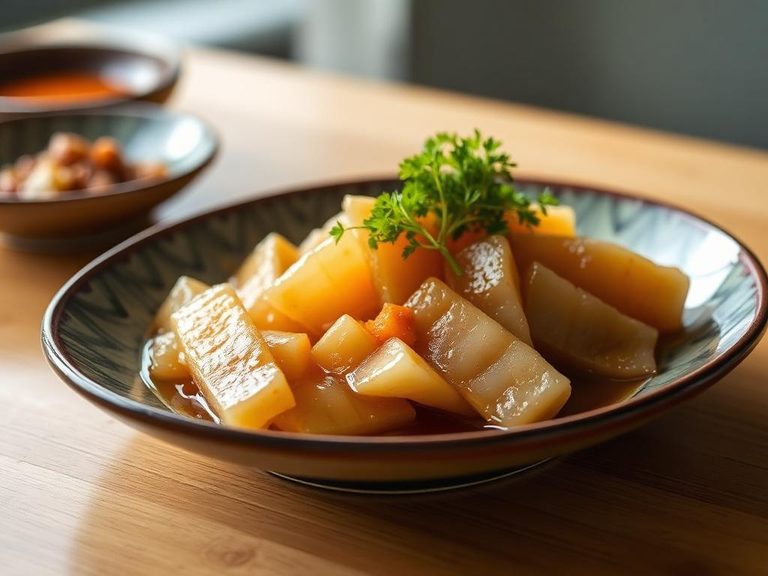
🌍 Where it's eaten
💡 Did you know?
The calabash gourd used for kanpyo is the same plant whose hard, hollowed-out shell has been used for centuries across Asia and Africa as a water container, musical instrument, and even a snuff box.
Full nutrition (USDA data · scales with serving)
| Water | 20.0 g |
| Energy | 258 kcal |
| Energy | 1079 kj |
| Protein | 8.6 g |
| Total lipid (fat) | 0.56 g |
| Ash | 5.9 g |
| Carbohydrate, by difference | 65.0 g |
| Fiber, total dietary | 9.8 g |
| Calcium, Ca | 280 mg |
| Iron, Fe | 5.1 mg |
| Magnesium, Mg | 125 mg |
| Phosphorus, P | 188 mg |
| Potassium, K | 1582 mg |
| Sodium, Na | 15.0 mg |
| Zinc, Zn | 5.9 mg |
| Copper, Cu | 0.43 mg |
| Manganese, Mn | 1.1 mg |
| Selenium, Se | 2.6 ug |
| Vitamin C, total ascorbic acid | 0.20 mg |
| Thiamin | 0.00 mg |
| Riboflavin | 0.04 mg |
| Niacin | 2.9 mg |
| Pantothenic acid | 2.6 mg |
| Vitamin B-6 | 0.53 mg |
| Folate, total | 61.0 ug |
| Folic acid | 0.00 ug |
| Folate, food | 61.0 ug |
| Folate, DFE | 61.0 ug |
| Vitamin B-12 | 0.00 ug |
| Retinol | 0.00 ug |
| Vitamin A, IU | 0.00 iu |
| Vitamin D (D2 + D3), International Units | 0.00 iu |
| Vitamin D (D2 + D3) | 0.00 ug |
| Alcohol, ethyl | 0.00 g |
| Caffeine | 0.00 mg |
| Theobromine | 0.00 mg |
Fat & fatty acid profile (per 100g)
| Fatty acids, total saturated | 0.04 g |
| SFA 16:0 | 0.03 g |
| SFA 18:0 | 0.01 g |
| Fatty acids, total monounsaturated | 0.10 g |
| MUFA 18:1 | 0.10 g |
| Fatty acids, total polyunsaturated | 0.24 g |
| PUFA 18:2 | 0.24 g |
| Fatty acids, total trans | 0.00 g |
| Cholesterol | 0.00 mg |
FAQ
How do I prepare dried kanpyo?
Rinse the dried strips, then soak them in water for 30-60 minutes until pliable. Trim off any hard ends, then gently squeeze out excess water before simmering in your dish.
What does kanpyo taste like?
On its own, it has a very mild, slightly sweet gourd flavor. Its main appeal is its chewy, meat-like texture and its ability to absorb the flavors of the broth or sauce it's cooked in.
Is kanpyo gluten-free?
The dried gourd itself is gluten-free. However, pre-packaged kanpyo or the dishes it's used in often contain soy sauce, which typically contains wheat. Check labels or use tamari for a gluten-free version.
Nutrient density (calculated · NRF9.3)
Nutrient Rich Foods index: beneficial nutrients (protein, fiber, vitamins, minerals) minus saturated fat, added sugar & sodium, per 100 kcal.
NRF9.3 index — Fulgoni, Keast & Drewnowski, 2009. Computed from USDA nutrients.
Weight-loss friendliness (composite index)
Energy density 2.58 kcal/g · 13% calories from protein · 9.8 g fiber · 0.0 g sugar per 100 g.
Composite of energy density (Rolls et al., 1999), protein & fiber satiety, minus sugar. A calculated heuristic — ranks satiety-per-calorie, not a clinical measure.
Dietary load (calculated from USDA values)
Potential renal acid load. Positive = acid-forming, negative = alkaline-forming.
Sodium-to-potassium ratio: 0.01 (lower is better — aim for ≤ 1)
Sodium:potassium per WHO potassium guidance. Computed from USDA nutrients.