

Flour, chestnut
Whole food · Nut and Seed Products
Chestnut flour is a finely milled, gluten-free flour made from dried, roasted chestnuts, offering a distinctively sweet, nutty aroma and a moist, slightly dense texture in baked goods. Nutritionally, it stands out for its high carbohydrate content, providing a substantial energy source, and a notable amount of dietary fiber, which is uncommon for many nut-based flours.
Calorie split: 5% protein · 84% carbs · 11% fat
↓ Full nutrition💚 Why it's loved
People cherish chestnut flour for its unique, sweet, and earthy flavor that evokes a rustic, autumnal essence, making it a beloved staple in traditional European and Asian desserts and breads. Its versatility allows it to create rich, moist cakes, pancakes, and pasta without the need for wheat.
⚠️ Watch-outs & how to enjoy it better
Due to its high carbohydrate content, it can cause a more significant blood sugar spike compared to lower-carb flours, so individuals monitoring glucose levels should practice portion control. To counteract this, pair dishes made with it with a source of protein (like eggs or cheese) or healthy fat (like olive oil) to slow digestion.
Key benefits
- Excellent source of dietary fiber, supporting digestive health.
- Naturally gluten-free, suitable for celiac or gluten-sensitive diets.
- Provides a good source of plant-based energy from complex carbohydrates.
- Contains minerals like manganese and copper, important for metabolism.
🍽️ Popular dishes



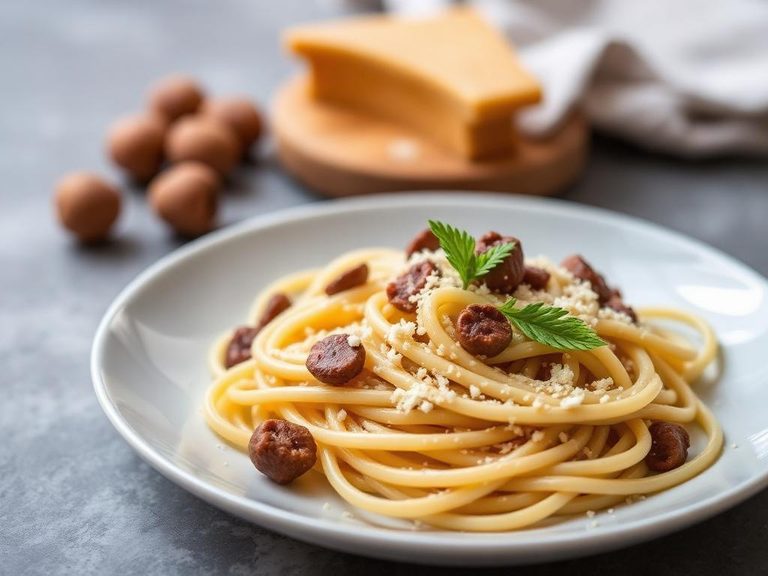
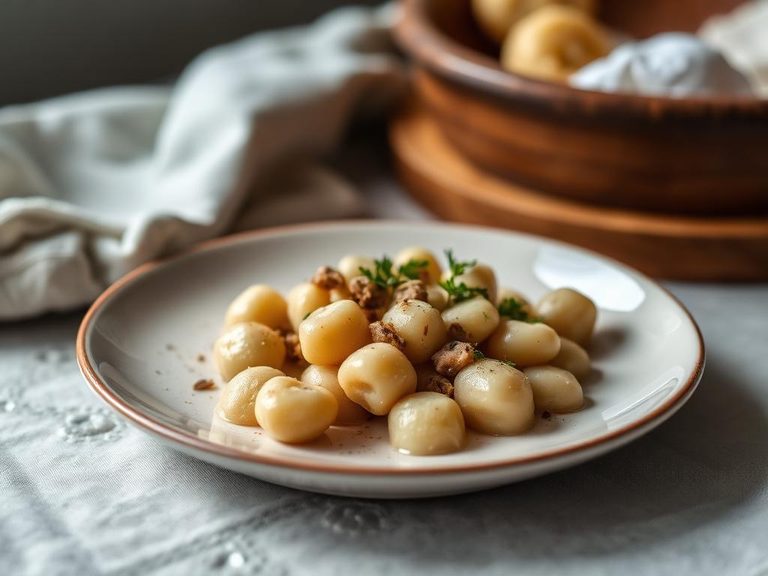

🌍 Where it's eaten
💡 Did you know?
In the mountainous regions of Italy, chestnut flour was historically so vital it was called 'farina di montagna' (mountain flour) and was sometimes used as a form of currency or tax payment.
Full nutrition (USDA data · scales with serving)
| Water | 7.3 g |
| Energy (Atwater General Factors) | 385 kcal |
| Energy (Atwater Specific Factors) | 385 kcal |
| Nitrogen | 1.00 g |
| Protein | 5.3 g |
| Total lipid (fat) | 4.6 g |
| Ash | 2.3 g |
| Carbohydrate, by difference | 80.5 g |
| Fiber, total dietary | 8.7 g |
| Calcium, Ca | 55.8 mg |
| Iron, Fe | 1.6 mg |
| Magnesium, Mg | 68.8 mg |
| Phosphorus, P | 134 mg |
| Potassium, K | 1032 mg |
| Sodium, Na | 0.00 mg |
| Zinc, Zn | 1.0 mg |
| Copper, Cu | 0.58 mg |
| Manganese, Mn | 2.9 mg |
| Selenium, Se | 0.00 ug |
| Vitamin C, total ascorbic acid | 4.0 mg |
Fat & fatty acid profile (per 100g)
| Fatty acids, total saturated | 0.69 g |
| Fatty acids, total monounsaturated | 1.3 g |
| Fatty acids, total polyunsaturated | 1.5 g |
Amino acid profile (per 100g)
Estimated from Seeds, cottonseed flour, low fat (glandless) — USDA does not publish this profile for Flour.
| Tryptophan | 0.75 g |
| Threonine | 1.8 g |
| Isoleucine | 1.8 g |
| Leucine | 3.4 g |
| Lysine | 2.5 g |
| Methionine | 0.81 g |
| Cystine | 1.3 g |
| Phenylalanine | 3.1 g |
| Tyrosine | 1.8 g |
| Valine | 2.6 g |
| Arginine | 6.7 g |
| Histidine | 1.6 g |
| Alanine | 2.3 g |
| Aspartic acid | 5.4 g |
| Glutamic acid | 12.5 g |
| Glycine | 2.4 g |
| Proline | 2.1 g |
| Serine | 2.5 g |
FAQ
Can I substitute chestnut flour 1:1 for all-purpose wheat flour?
Generally, no. Chestnut flour is denser, moister, and lacks gluten. It's best used in recipes specifically designed for it, or combined with other flours (like rice or wheat flour) for structure. Start by replacing 25-50% of the wheat flour in a recipe.
Is chestnut flour low-carb or keto-friendly?
No. With over 80g of carbohydrates per 100g, it is a high-carbohydrate flour and is not suitable for low-carb or ketogenic diets.
How should I store chestnut flour?
Due to its higher fat content compared to grain flours, it can go rancid. Store it in an airtight container in a cool, dark place, or preferably in the refrigerator or freezer to extend its shelf life.
Nutrient density (calculated · NRF9.3)
Nutrient Rich Foods index: beneficial nutrients (protein, fiber, vitamins, minerals) minus saturated fat, added sugar & sodium, per 100 kcal.
NRF9.3 index — Fulgoni, Keast & Drewnowski, 2009. Computed from USDA nutrients.
Weight-loss friendliness (composite index)
Energy density 3.85 kcal/g · 5% calories from protein · 8.7 g fiber · 0.0 g sugar per 100 g.
Composite of energy density (Rolls et al., 1999), protein & fiber satiety, minus sugar. A calculated heuristic — ranks satiety-per-calorie, not a clinical measure.
Dietary load (calculated from USDA values)
Potential renal acid load. Positive = acid-forming, negative = alkaline-forming.
Sodium-to-potassium ratio: 0.00 (lower is better — aim for ≤ 1)
Sodium:potassium per WHO potassium guidance. Computed from USDA nutrients.