

Castagnaccio
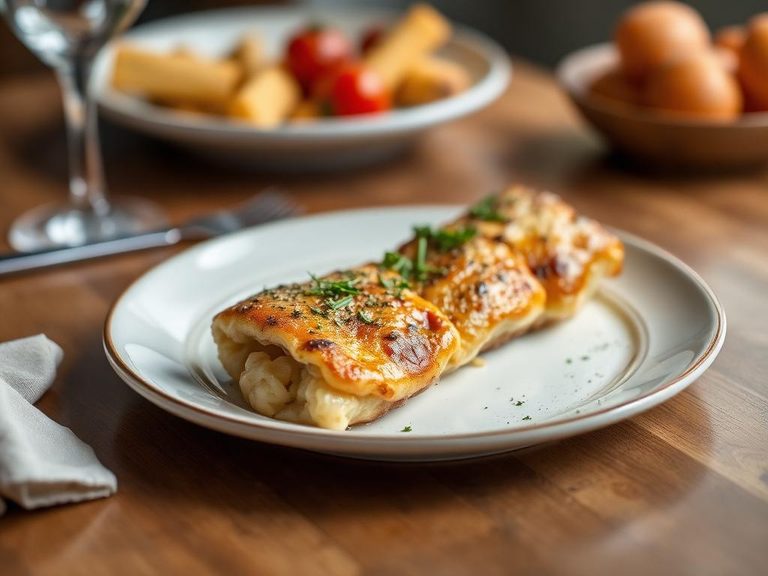
Castagnaccio is a traditional Tuscan chestnut flour cake, often described as a rustic, unleavened flatbread or dessert. Its simple, core ingredients are chestnut flour, water, olive oil, and rosemary, with common additions like pine nuts, walnuts, or raisins. It originates from the mountainous regions of Tuscany, particularly the Garfagnana and Lunigiana areas.
🍽️ Nutrition at a glance
This dish is primarily a source of complex carbohydrates from chestnut flour, with a moderate amount of healthy fats from olive oil and nuts. It provides a good amount of dietary fiber and minerals like potassium and magnesium, with a rough calorie estimate of 300-350 kcal per typical serving.
Nutrition breakdown
| Calories | 320 kcal |
| Protein | 4 g |
| Carbs | 42 g |
| Fat | 16 g |
| Fiber | 5 g |
| Sugar | 12 g |
| Sodium | 10 mg |
| Potassium | 350 mg |
| Magnesium | 55 mg |
| Iron | 2.5 mg |
| Phosphorus | 80 mg |
| Manganese | 1.2 mg |
| Vitamin B6 | 0.15 mg |
| Copper | 0.3 mg |
| Selenium | 2 µg |
Per 1 piece (120 g) · estimated, varies by recipe
💡 What's interesting
Castagnaccio is a fascinating example of 'cucina povera' (peasant cooking), transforming a simple, foraged staple into a flavorful dish. Its unique, slightly sweet and earthy flavor profile comes entirely from chestnuts, making it naturally gluten-free and distinct from most other cakes.
AI estimate may be inaccurate · Terms