

Fish, herring eggs, Pacific, plain (Alaska Native)
Whole food · American Indian/Alaska Native Foods

Photo: Wikipedia
Pacific herring eggs, or 'herring roe on kelp,' are tiny, translucent orange pearls harvested from seaweed in Alaska. They offer a unique, briny pop with a subtle oceanic sweetness and a texture that is both delicate and satisfyingly crunchy. This nutrient-dense food is an excellent source of high-quality protein with minimal fat.
Calorie split: 52% protein · 24% carbs · 24% fat
↓ Full nutrition💚 Why it's loved
People cherish herring eggs for their unique, oceanic flavor and the delightful 'pop' they provide in dishes. They are deeply valued in Alaska Native cultures as a seasonal delicacy and a connection to ancestral harvesting practices.
⚠️ Watch-outs & how to enjoy it better
The strong, briny taste and specific texture can be an acquired taste for some. As a seafood product, it is a common allergen and may be high in sodium depending on preparation; those with seafood allergies should avoid it. To balance sodium, pair with fresh vegetables or unsalted grains.
Key benefits
- Excellent source of complete protein
- Naturally low in fat
- Rich in omega-3 fatty acids
- Contains essential minerals like selenium and phosphorus
- Traditional, sustainable food source
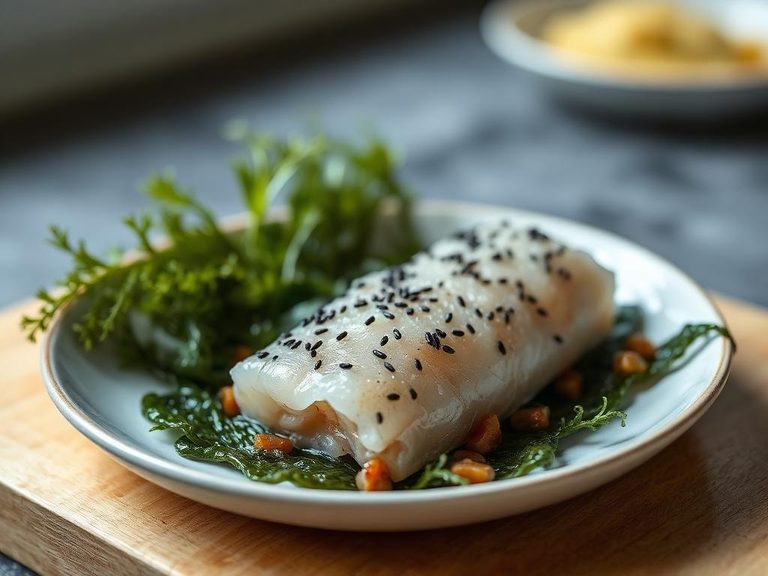
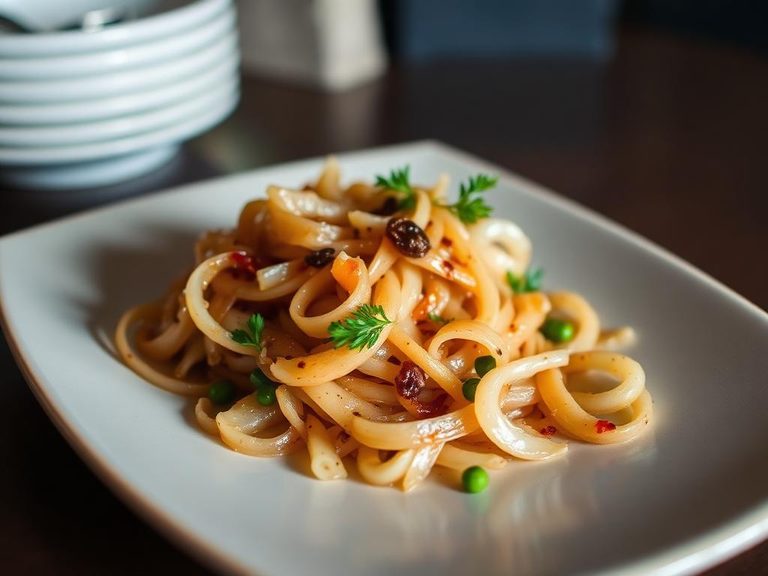
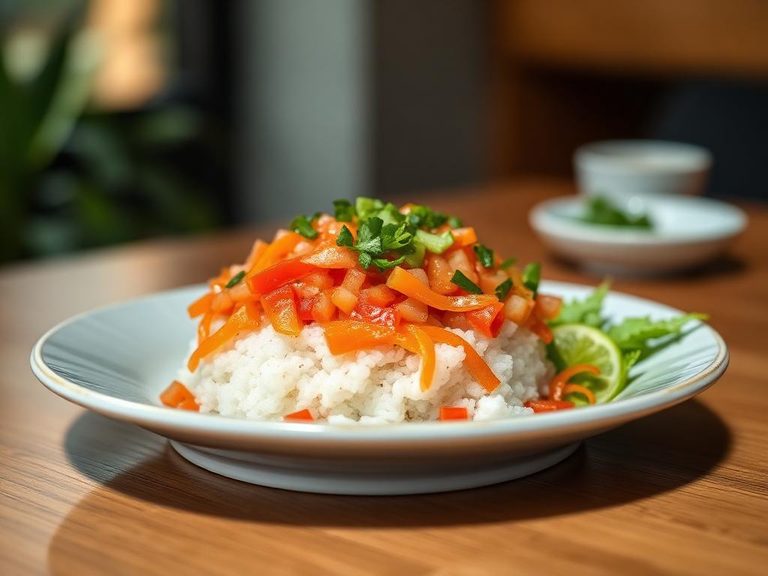
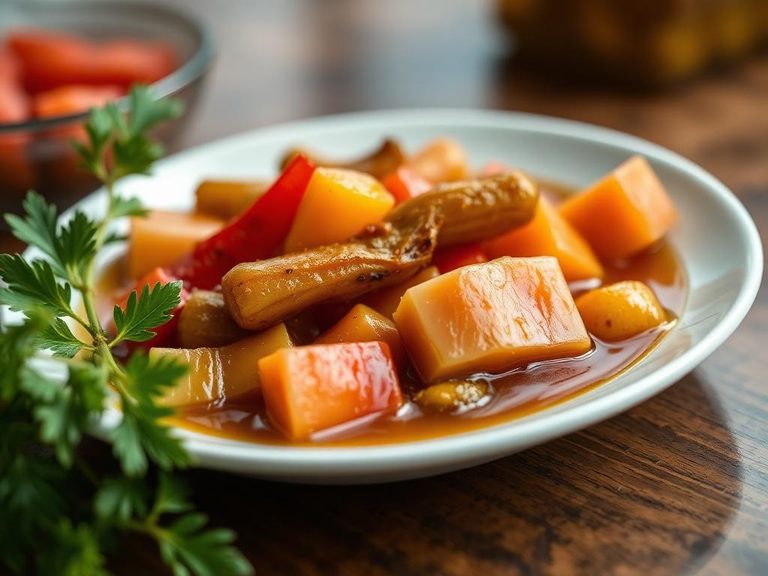
🍽️ Popular dishes

🌍 Where it's eaten
💡 Did you know?
The eggs are not harvested from the fish, but are collected from seaweed (like kelp) where the herring have spawned, creating a natural, edible garnish.
Full nutrition (USDA data · scales with serving)
| Water | 81.2 g |
| Energy | 74.0 kcal |
| Energy | 308 kj |
| Protein | 9.6 g |
| Total lipid (fat) | 1.9 g |
| Ash | 2.8 g |
| Carbohydrate, by difference | 4.5 g |
| Calcium, Ca | 19.0 mg |
| Iron, Fe | 2.7 mg |
| Sodium, Na | 61.0 mg |
| Vitamin C, total ascorbic acid | 0.60 mg |
| Thiamin | 0.10 mg |
| Riboflavin | 0.12 mg |
| Niacin | 1.8 mg |
| Vitamin A, IU | 57.0 iu |
Fat & fatty acid profile (per 100g)
| Fatty acids, total saturated | 0.43 g |
| Fatty acids, total monounsaturated | 0.42 g |
| Fatty acids, total polyunsaturated | 0.71 g |
| PUFA 18:2 | 0.03 g |
| PUFA 18:3 | 0.01 g |
| Cholesterol | 40.0 mg |
Amino acid profile (per 100g)
Estimated from Fish, halibut, raw, with skin (Alaska Native) — USDA does not publish this profile for Fish.
| Tryptophan | 0.31 g |
| Threonine | 0.95 g |
| Isoleucine | 0.94 g |
| Leucine | 1.6 g |
| Lysine | 1.8 g |
| Methionine | 0.80 g |
| Cystine | 0.35 g |
| Phenylalanine | 0.82 g |
| Tyrosine | 0.70 g |
| Valine | 1.0 g |
| Arginine | 1.2 g |
| Histidine | 0.50 g |
| Alanine | 1.2 g |
| Aspartic acid | 2.8 g |
| Glutamic acid | 3.2 g |
| Glycine | 0.93 g |
| Proline | 0.73 g |
| Serine | 0.91 g |
| Hydroxyproline | 0.18 g |
FAQ
What do herring eggs taste like?
They have a distinct, briny, oceanic flavor with a subtle sweetness and a unique popping texture when eaten.
How are they typically prepared?
They are often eaten raw or lightly cooked, stirred into hot dishes like soups or rice, or sautéed briefly with aromatics.
Are they nutritious?
Yes, they are a lean source of high-quality protein, contain omega-3s, and provide minerals like selenium and phosphorus.
Weight-loss friendliness (composite index)
Energy density 0.74 kcal/g · 52% calories from protein · 0.0 g fiber · 0.0 g sugar per 100 g.
Composite of energy density (Rolls et al., 1999), protein & fiber satiety, minus sugar. A calculated heuristic — ranks satiety-per-calorie, not a clinical measure.