Pickled or preserved in brine
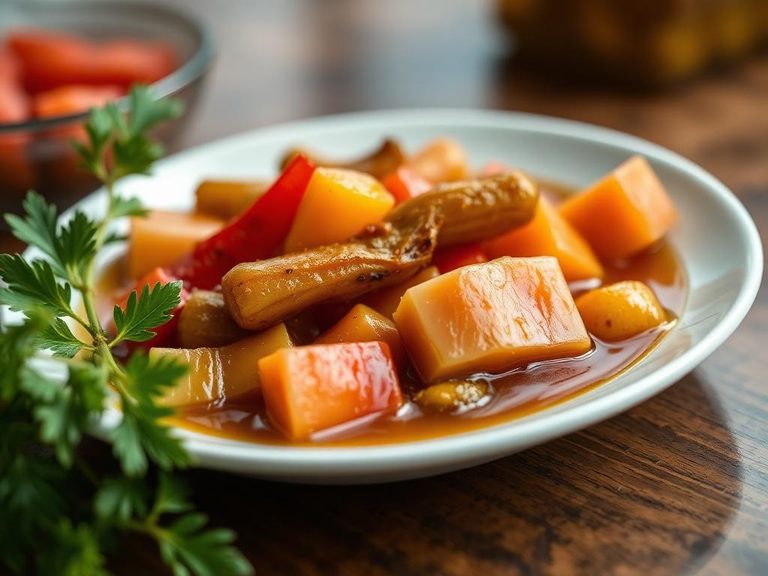
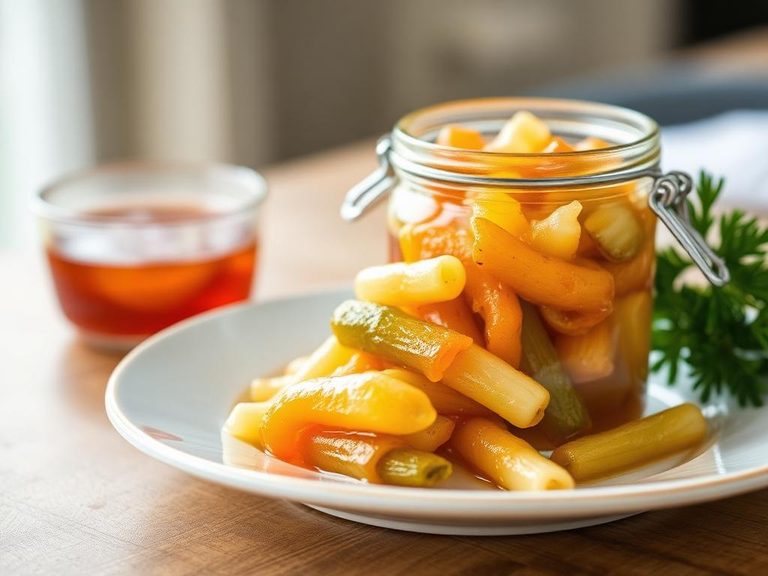
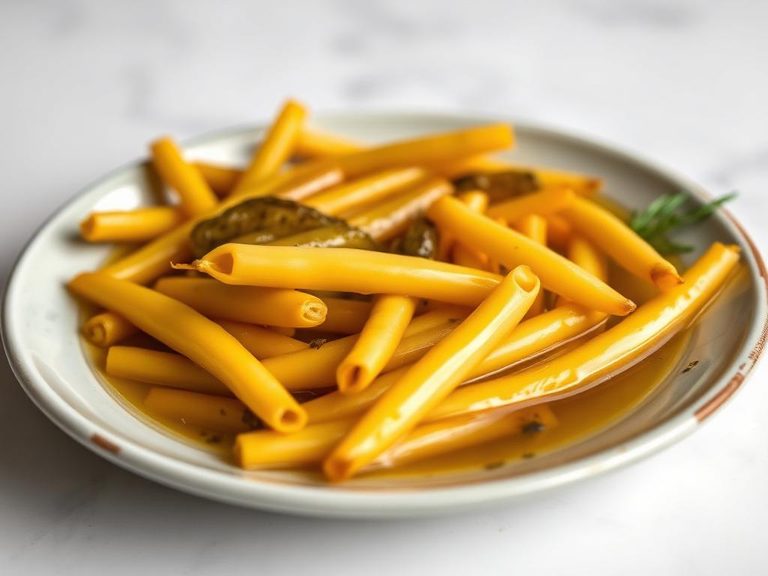
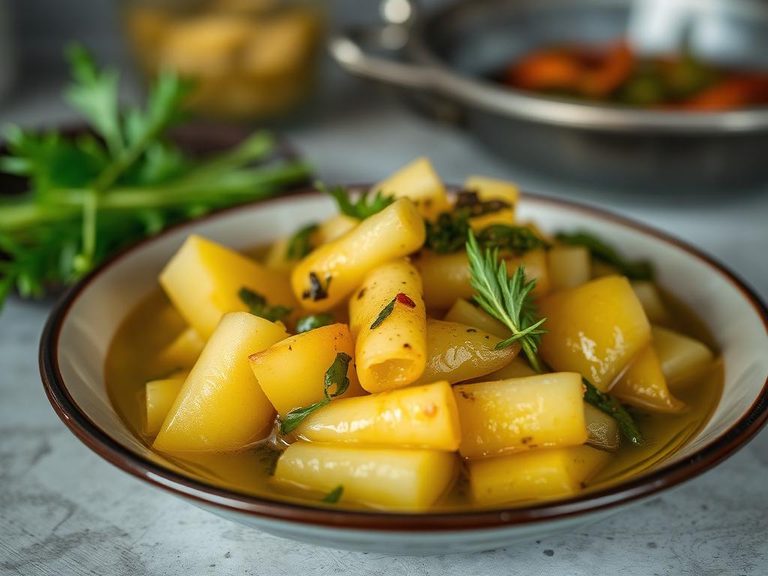
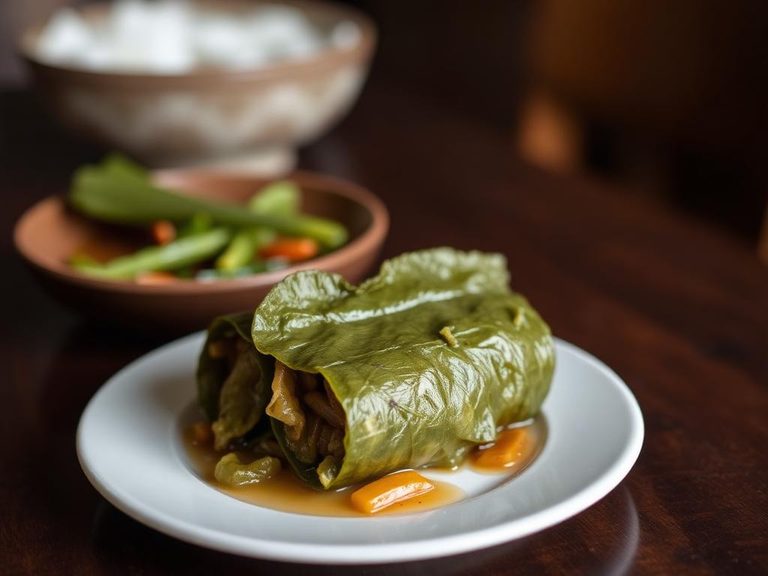
Pickled or preserved in brine refers to a wide variety of foods, most commonly vegetables like cucumbers, cabbage, or peppers, that have been preserved in a saltwater solution called brine. This ancient method of food preservation, originating in multiple cultures worldwide, uses fermentation or direct acidification to tangy, flavorful results.
🍽️ Nutrition at a glance
These dishes are typically very low in calories, fat, and protein, but can be extremely high in sodium due to the brine. They are a good source of certain vitamins (like Vitamin K from leafy greens) and minerals, and fermented versions provide beneficial probiotics.
Nutrition breakdown
| Calories | 15 kcal |
| Protein | 0.5 g |
| Carbs | 3 g |
| Fat | 0 g |
| Fiber | 1 g |
| Sugar | 1 g |
| Sodium | 1200 mg |
| Vitamin K | 15 mcg |
| Potassium | 120 mg |
| Sodium | 1200 mg |
| Iron | 0.5 mg |
| Calcium | 30 mg |
| Vitamin C | 2 mg |
Per 1 cup (150 g) · estimated, varies by recipe
💡 What's interesting
The brining process can create a unique umami flavor through fermentation, and in many cultures, these preserved foods are a dietary staple that provides crunch and acidity to balance rich meals.