Pickled in vinegar brine
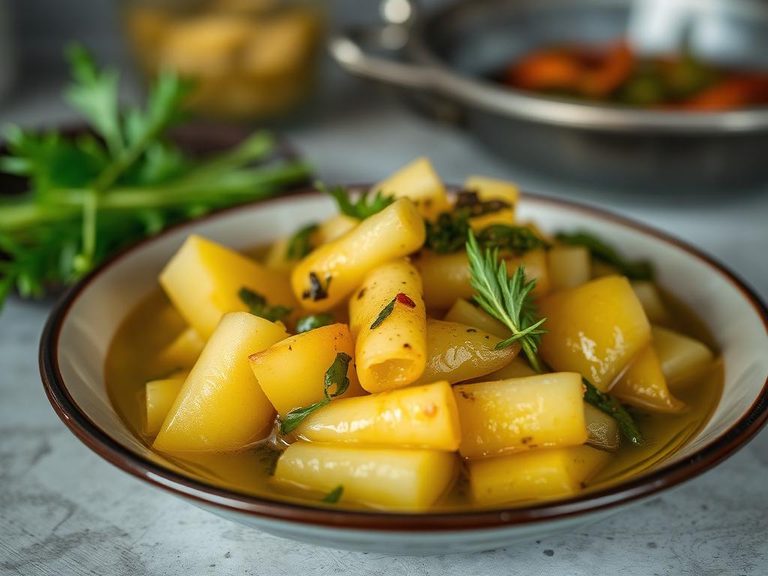
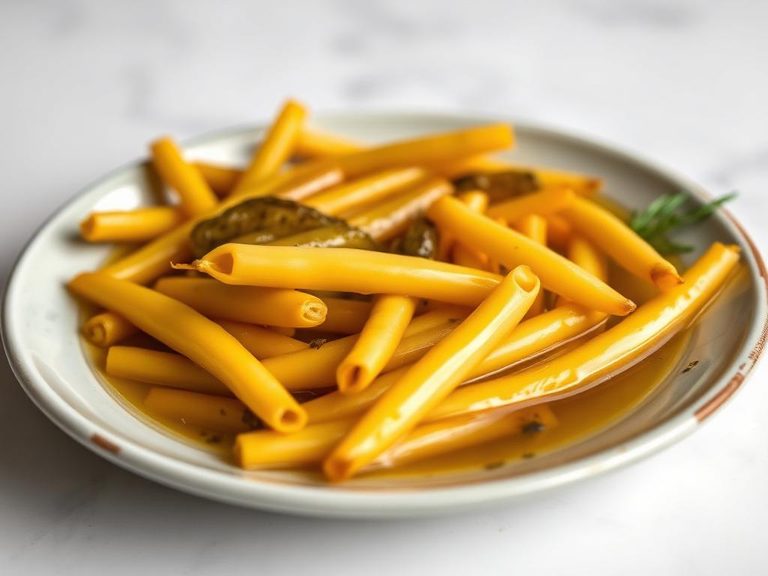
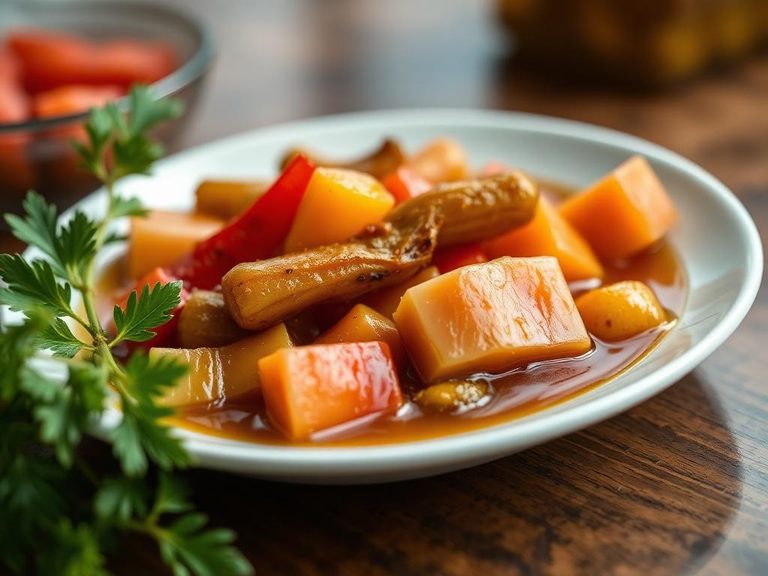
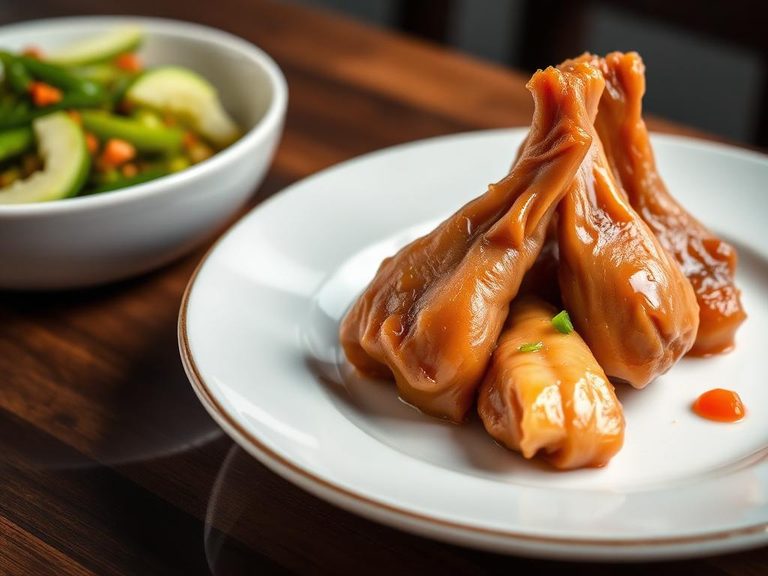
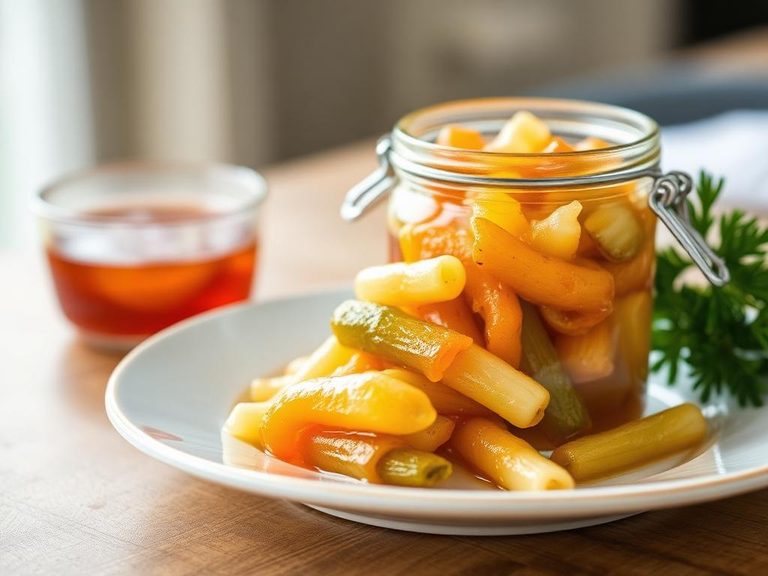
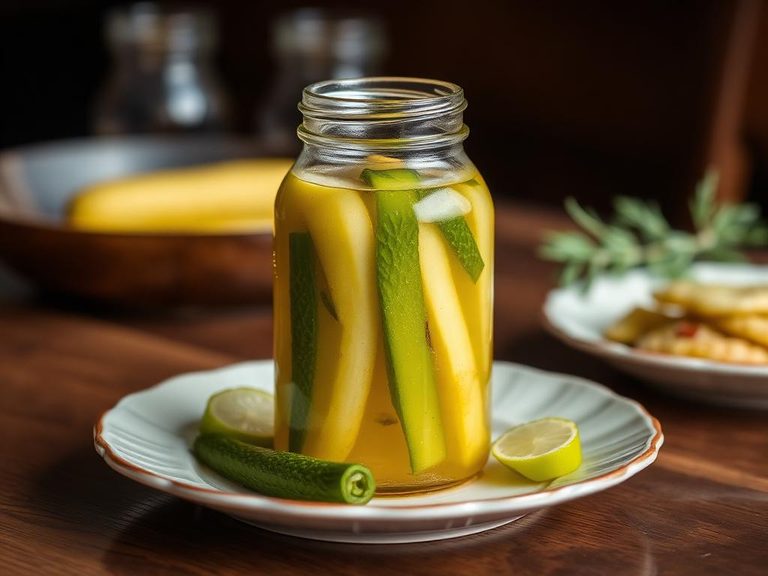
Pickled in vinegar brine is a method of preserving various vegetables, most commonly cucumbers, in a solution of vinegar, water, salt, and often spices like dill, garlic, or mustard seeds. This technique is used globally to create tangy, crunchy condiments and snacks, with popular versions including German sauerbraten-style pickles, American dill pickles, and Asian-style quick pickles.
🍽️ Nutrition at a glance
This dish is very low in calories and contains virtually no fat or protein, with most of its minimal calories coming from trace carbohydrates. It provides a small amount of dietary fiber and is a notable source of sodium from the brine, while offering some vitamins like Vitamin K and minerals like potassium from the vegetable base.
Nutrition breakdown
| Calories | 15 kcal |
| Protein | 0.5 g |
| Carbs | 3 g |
| Fat | 0 g |
| Fiber | 1.5 g |
| Sugar | 1 g |
| Sodium | 800 mg |
| Vitamin K | 15 mcg |
| Potassium | 120 mg |
| Sodium | 800 mg |
| Vitamin A | 45 IU |
| Vitamin C | 2 mg |
| Calcium | 15 mg |
| Iron | 0.3 mg |
| Magnesium | 5 mg |
Per 1 cup (about 150 g) of sliced pickles · estimated, varies by recipe
💡 What's interesting
Vinegar-brined pickles are a fascinating example of food preservation through acidification, a technique used for centuries to extend shelf life without fermentation. Nutritionally, the acetic acid in the vinegar may help with blood sugar regulation after a meal, and the probiotics are absent (unlike fermented pickles), making it a different, though still flavorful, gut-friendly option.