

Beverages, ARIZONA, tea, ready-to-drink, lemon
Whole food · Beverages
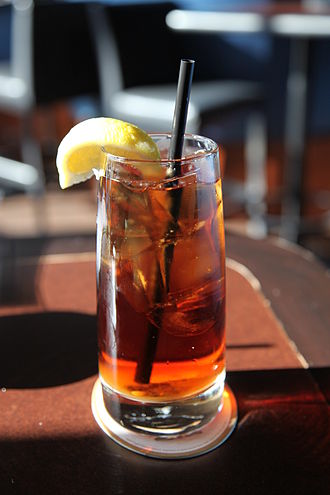
Photo: Wikipedia
This is a classic, ready-to-drink iced tea with a bright, tangy lemon flavor. It offers a crisp, refreshing texture and a clean, sweet finish, providing a quick source of carbohydrates from its sugar content.
Calorie split: 0% protein · 100% carbs · 0% fat
↓ Full nutrition💚 Why it's loved
People love it for its iconic, sweet-tart lemonade-tea balance that is both nostalgic and thirst-quenching. It's a staple at picnics, barbecues, and as a simple, satisfying pick-me-up.
⚠️ Watch-outs & how to enjoy it better
The primary downside is its high sugar content (9.63g per 100g), which can contribute to blood sugar spikes and empty calories. To counteract this, practice strict portion control (e.g., a single serving) and pair it with a source of protein or fiber (like nuts or a sandwich) to slow sugar absorption.
Key benefits
- Provides quick energy from carbohydrates
- Convenient, portable hydration
- Low in fat and protein
- Caffeine content can offer a mild alertness boost
🍽️ Popular dishes






🌍 Where it's eaten
💡 Did you know?
The iconic ARIZONA brand was founded in 1971, and its 99-cent, 23.5 oz tallboy can has remained a cultural and economic staple for decades, resisting inflation far longer than most consumer goods.
Full nutrition (USDA data · scales with serving)
| Water | 90.2 g |
| Energy | 39.0 kcal |
| Energy | 164 kj |
| Protein | 0.00 g |
| Total lipid (fat) | 0.00 g |
| Ash | 0.07 g |
| Carbohydrate, by difference | 9.8 g |
| Fiber, total dietary | 0.00 g |
| Total Sugars | 9.6 g |
| Calcium, Ca | 3.0 mg |
| Iron, Fe | 0.00 mg |
| Magnesium, Mg | 1.0 mg |
| Phosphorus, P | 1.0 mg |
| Potassium, K | 10.0 mg |
| Sodium, Na | 4.0 mg |
| Zinc, Zn | 0.01 mg |
| Copper, Cu | 0.01 mg |
| Manganese, Mn | 0.16 mg |
| Fluoride, F | 123 ug |
| Vitamin C, total ascorbic acid | 0.00 mg |
| Vitamin A, IU | 0.00 iu |
| Caffeine | 5.0 mg |
| Theobromine | 0.00 mg |
Fat & fatty acid profile (per 100g)
| Fatty acids, total saturated | 0.00 g |
| Fatty acids, total trans | 0.00 g |
| Cholesterol | 0.00 mg |
Amino acid profile (per 100g)
Estimated from Beverages, carbonated, tonic water — USDA does not publish this profile for Beverages.
| Tryptophan | 0.00 g |
| Threonine | 0.00 g |
| Isoleucine | 0.00 g |
| Leucine | 0.00 g |
| Lysine | 0.00 g |
| Methionine | 0.00 g |
| Cystine | 0.00 g |
| Phenylalanine | 0.00 g |
| Tyrosine | 0.00 g |
| Valine | 0.00 g |
| Arginine | 0.00 g |
| Histidine | 0.00 g |
| Alanine | 0.00 g |
| Aspartic acid | 0.00 g |
| Glutamic acid | 0.00 g |
| Glycine | 0.00 g |
| Proline | 0.00 g |
| Serine | 0.00 g |
FAQ
Is this the same as lemonade?
No. While both contain lemon and sugar, this is a tea-based beverage, typically brewed from black or green tea, then blended with lemon flavor and sweetener. Lemonade is traditionally made from lemon juice, water, and sugar without tea.
Does it contain caffeine?
Yes, most ready-to-drink lemon teas contain caffeine from the tea leaves, though the exact amount varies by brand and specific product line.
Can I use it in cooking or baking?
Absolutely. It can be used as a flavorful liquid in marinades for chicken or fish, as a base for sorbets or popsicles, or even to moisten cake layers for a lemon-tea infused dessert.
Nutrient density (calculated · NRF9.3)
Nutrient Rich Foods index: beneficial nutrients (protein, fiber, vitamins, minerals) minus saturated fat, added sugar & sodium, per 100 kcal.
NRF9.3 index — Fulgoni, Keast & Drewnowski, 2009. Computed from USDA nutrients.
Weight-loss friendliness (composite index)
Energy density 0.39 kcal/g · 0% calories from protein · 0.0 g fiber · 9.6 g sugar per 100 g.
Composite of energy density (Rolls et al., 1999), protein & fiber satiety, minus sugar. A calculated heuristic — ranks satiety-per-calorie, not a clinical measure.
Dietary load (calculated from USDA values)
Potential renal acid load. Positive = acid-forming, negative = alkaline-forming.
Sodium-to-potassium ratio: 0.40 (lower is better — aim for ≤ 1)
Sodium:potassium per WHO potassium guidance. Computed from USDA nutrients.