

Chicken, thigh, meat and skin, raw
Whole food · Poultry Products

Photo: Wikipedia
Chicken thigh with skin is a succulent, dark meat cut prized for its rich, savory flavor and tender, juicy texture that holds up beautifully to high-heat cooking. It's a protein powerhouse, delivering over 17 grams of protein per 100 grams, with a higher fat content (13.35g) that contributes to its satisfying mouthfeel and satiety. The skin adds a layer of crispy, flavorful fat that renders during cooking, making it a favorite for those who enjoy a more indulgent chicken experience.
Calorie split: 36% protein · 0% carbs · 64% fat
↓ Full nutrition💚 Why it's loved
People love chicken thighs for their deep, umami-rich flavor and forgiving, juicy texture that stays moist even with aggressive cooking methods like grilling or braising. Their versatility makes them a staple in countless global cuisines, from crispy fried chicken to slow-cooked stews, offering comfort and satisfaction in every bite.
⚠️ Watch-outs & how to enjoy it better
The higher fat content, especially from the skin, can be a concern for those monitoring calorie or saturated fat intake, and the skin can become greasy if not rendered properly. To counteract this, trim excess skin before cooking or use methods like roasting on a rack to allow fat to drip away, and pair the dish with fiber-rich vegetables or salads to balance the meal's overall fat profile.
Key benefits
- Excellent source of complete protein for muscle maintenance and repair.
- Rich in iron and zinc, essential minerals for immune function and energy metabolism.
- Contains B vitamins (especially niacin and B6) crucial for brain health and energy production.
- The skin provides a source of healthy monounsaturated fats when rendered.
- More flavorful and forgiving to cook than leaner cuts like breast, reducing the risk of dryness.
🍽️ Popular dishes

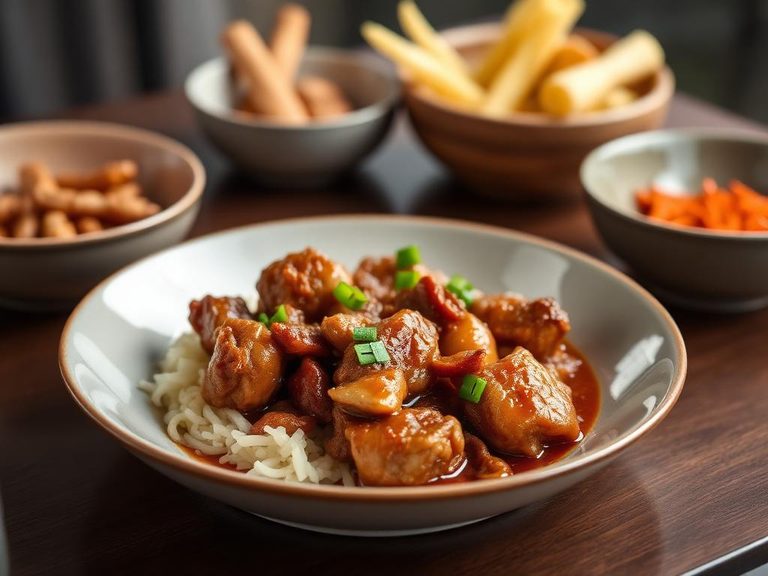




🌍 Where it's eaten
💡 Did you know?
Chicken thighs contain more myoglobin than breast meat, which is why they are darker in color and have a richer, more 'meaty' flavor profile, making them the preferred cut for many traditional slow-cooked dishes worldwide.
Full nutrition (USDA data · scales with serving)
| Water | 68.9 g |
| Energy (Atwater General Factors) | 188 kcal |
| Energy (Atwater Specific Factors) | 193 kcal |
| Nitrogen | 2.7 g |
| Protein | 17.1 g |
| Total lipid (fat) | 13.3 g |
| Ash | 0.85 g |
| Carbohydrate, by difference | -0.17 g |
| Calcium, Ca | 5.7 mg |
| Iron, Fe | 0.59 mg |
| Magnesium, Mg | 18.5 mg |
| Phosphorus, P | 154 mg |
| Potassium, K | 246 mg |
| Sodium, Na | 63.5 mg |
| Zinc, Zn | 1.2 mg |
| Copper, Cu | 0.04 mg |
| Manganese, Mn | 0.00 mg |
Fat & fatty acid profile (per 100g)
| Cholesterol | 95.5 mg |
Amino acid profile (per 100g)
Estimated from Chicken, broilers or fryers, meat and skin and giblets and neck, raw — USDA does not publish this profile for Chicken.
| Tryptophan | 0.20 g |
| Threonine | 0.76 g |
| Isoleucine | 0.91 g |
| Leucine | 1.3 g |
| Lysine | 1.5 g |
| Methionine | 0.48 g |
| Cystine | 0.25 g |
| Phenylalanine | 0.72 g |
| Tyrosine | 0.59 g |
| Valine | 0.89 g |
| Arginine | 1.2 g |
| Histidine | 0.53 g |
| Alanine | 1.1 g |
| Aspartic acid | 1.6 g |
| Glutamic acid | 2.7 g |
| Glycine | 1.2 g |
| Proline | 0.91 g |
| Serine | 0.66 g |
FAQ
Is chicken thigh with skin healthier than chicken breast?
Chicken thigh with skin is higher in fat and calories than breast, but it offers more iron, zinc, and B vitamins. The choice depends on dietary goals; for lower fat, choose skinless breast, but for flavor and nutrient density, thigh can be a better option.
How do I cook chicken thighs to get crispy skin?
Pat the skin dry with paper towels, season generously, and roast at high heat (425°F/220°C) on a rack to allow air circulation and fat rendering. Alternatively, pan-sear skin-side down first to render fat and crisp the skin before finishing in the oven.
Can I eat chicken thighs if I'm watching my cholesterol?
Chicken thighs, especially with skin, are higher in saturated fat than breast, which can affect cholesterol levels. Opt for skinless thighs, trim visible fat, and use cooking methods like grilling or baking to reduce fat content.
Nutrient density (calculated · NRF9.3)
Nutrient Rich Foods index: beneficial nutrients (protein, fiber, vitamins, minerals) minus saturated fat, added sugar & sodium, per 100 kcal.
NRF9.3 index — Fulgoni, Keast & Drewnowski, 2009. Computed from USDA nutrients.
Weight-loss friendliness (composite index)
Energy density 1.88 kcal/g · 36% calories from protein · 0.0 g fiber · 0.0 g sugar per 100 g.
Composite of energy density (Rolls et al., 1999), protein & fiber satiety, minus sugar. A calculated heuristic — ranks satiety-per-calorie, not a clinical measure.
Dietary load (calculated from USDA values)
Potential renal acid load. Positive = acid-forming, negative = alkaline-forming.
Sodium-to-potassium ratio: 0.26 (lower is better — aim for ≤ 1)
Sodium:potassium per WHO potassium guidance. Computed from USDA nutrients.