

Chicken, drumstick, meat and skin, raw
Whole food · Poultry Products

Photo: Wikipedia
A raw chicken drumstick with its skin intact is a staple of home kitchens, offering a juicy, tender bite once cooked and a rich, savory flavor amplified by the fat in the skin. Nutritionally, it's a powerhouse of complete protein, essential for muscle repair and growth, with a modest calorie count that makes it a satisfying, lean-focused meal component.
Calorie split: 58% protein · 0% carbs · 42% fat
↓ Full nutrition💚 Why it's loved
People adore chicken drumsticks for their perfect balance of juicy, flavorful meat and crispy, rendered skin when cooked properly. They are a universally loved, budget-friendly comfort food that's easy to handle and ideal for everything from simple weeknight roasts to elaborate grilled feasts.
⚠️ Watch-outs & how to enjoy it better
The skin, while flavorful, is high in saturated fat and calories, which can be a concern for those monitoring heart health or calorie intake. To counteract this, simply remove the skin before or after cooking to significantly reduce fat content, or opt for baking, grilling, or air-frying to allow excess fat to render off rather than frying.
Key benefits
- Excellent source of high-quality, complete protein
- Rich in essential vitamins like B6 and B12 for energy metabolism
- Contains minerals such as selenium and phosphorus
- Skin provides dietary fat for satiety and nutrient absorption
- Versatile base for countless global cuisines
🍽️ Popular dishes
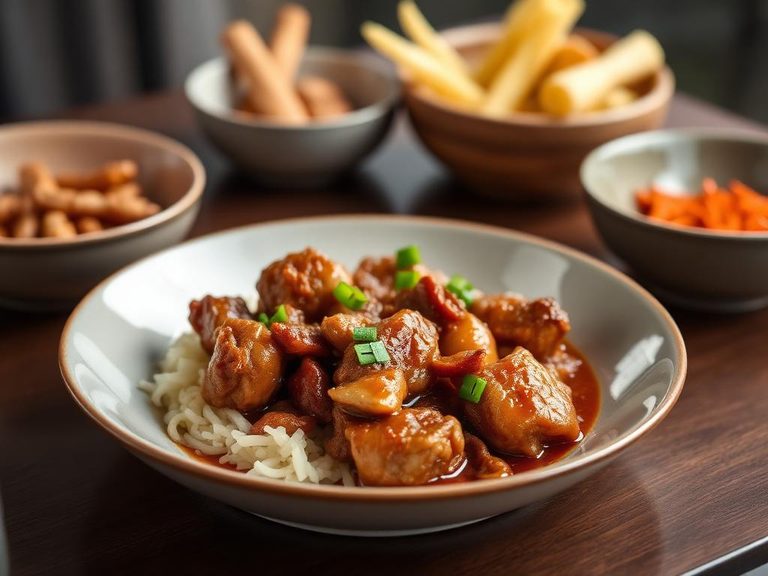




🌍 Where it's eaten
💡 Did you know?
The 'drumstick' name comes from its resemblance to a percussion instrument, and in the U.S., it's the most popular part of the chicken for grilling, often called a 'lollipop' when the meat is frenched down the bone.
Full nutrition (USDA data · scales with serving)
| Water | 75.3 g |
| Energy (Atwater General Factors) | 125 kcal |
| Energy (Atwater Specific Factors) | 130 kcal |
| Nitrogen | 2.9 g |
| Protein | 18.4 g |
| Total lipid (fat) | 5.9 g |
| Ash | 0.89 g |
| Carbohydrate, by difference | -0.48 g |
| Calcium, Ca | 8.3 mg |
| Iron, Fe | 0.67 mg |
| Magnesium, Mg | 18.6 mg |
| Phosphorus, P | 153 mg |
| Potassium, K | 244 mg |
| Sodium, Na | 91.0 mg |
| Zinc, Zn | 1.7 mg |
| Copper, Cu | 0.04 mg |
| Manganese, Mn | 0.01 mg |
Fat & fatty acid profile (per 100g)
| Cholesterol | 94.5 mg |
Amino acid profile (per 100g)
Estimated from Chicken, broilers or fryers, meat and skin and giblets and neck, raw — USDA does not publish this profile for Chicken.
| Tryptophan | 0.20 g |
| Threonine | 0.76 g |
| Isoleucine | 0.91 g |
| Leucine | 1.3 g |
| Lysine | 1.5 g |
| Methionine | 0.48 g |
| Cystine | 0.25 g |
| Phenylalanine | 0.72 g |
| Tyrosine | 0.59 g |
| Valine | 0.89 g |
| Arginine | 1.2 g |
| Histidine | 0.53 g |
| Alanine | 1.1 g |
| Aspartic acid | 1.6 g |
| Glutamic acid | 2.7 g |
| Glycine | 1.2 g |
| Proline | 0.91 g |
| Serine | 0.66 g |
FAQ
Is chicken drumstick dark or white meat?
It's considered dark meat. Dark meat comes from muscles used more frequently, like legs, and contains more myoglobin, giving it a richer flavor and slightly higher fat content than breast meat.
How can I tell if a raw drumstick is fresh?
Look for pink, moist flesh with no gray or green discoloration. The skin should be intact and not slimy, and it should have a mild, fresh smell—never a sour or ammonia-like odor.
What's the best way to cook it for maximum juiciness?
Brining (soaking in salt water) or marinating helps. For cooking, a combination method works well: start with a sear on the stovetop for crispy skin, then finish in a 375°F (190°C) oven until the internal temperature reaches 165°F (74°C).
Nutrient density (calculated · NRF9.3)
Nutrient Rich Foods index: beneficial nutrients (protein, fiber, vitamins, minerals) minus saturated fat, added sugar & sodium, per 100 kcal.
NRF9.3 index — Fulgoni, Keast & Drewnowski, 2009. Computed from USDA nutrients.
Weight-loss friendliness (composite index)
Energy density 1.25 kcal/g · 59% calories from protein · 0.0 g fiber · 0.0 g sugar per 100 g.
Composite of energy density (Rolls et al., 1999), protein & fiber satiety, minus sugar. A calculated heuristic — ranks satiety-per-calorie, not a clinical measure.
Dietary load (calculated from USDA values)
Potential renal acid load. Positive = acid-forming, negative = alkaline-forming.
Sodium-to-potassium ratio: 0.37 (lower is better — aim for ≤ 1)
Sodium:potassium per WHO potassium guidance. Computed from USDA nutrients.