

Beef, top sirloin steak, raw
Whole food · Beef Products
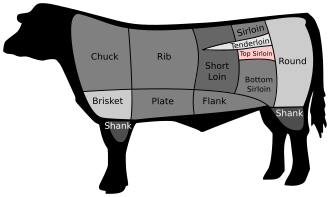
Photo: Wikipedia
Beef top sirloin steak is a lean, robust cut from the hindquarter, prized for its firm yet tender bite and a deep, mineral-rich beef flavor that stands up boldly to high-heat searing. With a remarkable 22 grams of protein per 100 grams and minimal fat, it's a powerhouse for muscle maintenance, delivering a satisfying, meaty chew without excessive calories.
Calorie split: 63% protein · 1% carbs · 37% fat
↓ Full nutrition💚 Why it's loved
People adore top sirloin for its balanced versatility—it offers premium steakhouse flavor and a satisfying texture at a more accessible price point than prime cuts like ribeye. It's a reliable workhorse that grills to a perfect medium-rare, holds up in stir-fries, and is flavorful enough to be enjoyed simply seasoned with salt and pepper.
⚠️ Watch-outs & how to enjoy it better
While lean, it can become tough and dry if overcooked due to its lower intramuscular fat. Its relatively high protein density means a large portion may be more than some people need in one sitting. To counteract dryness, marinate briefly with an acidic component (like vinegar or citrus) to tenderize, and use a meat thermometer to avoid overcooking; aim for 130-135°F (54-57°C) for medium-rare. Pairing it with a flavorful sauce or compound butter can add moisture and richness.
Key benefits
- Excellent source of complete, high-quality protein for muscle repair
- Rich in heme iron, which is more readily absorbed than plant-based iron
- Provides zinc, crucial for immune function and wound healing
- Contains B vitamins like B12 and niacin for energy metabolism
- Low in carbohydrates, making it suitable for low-carb and ketogenic diets
🍽️ Popular dishes
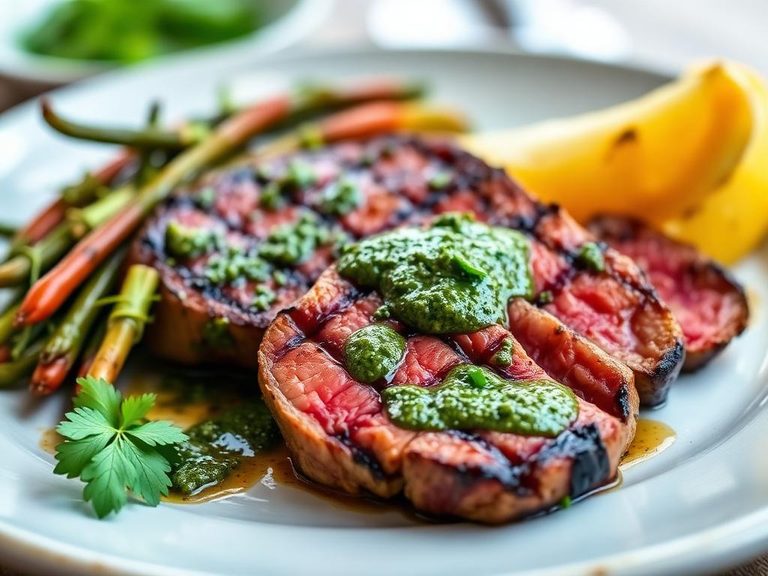
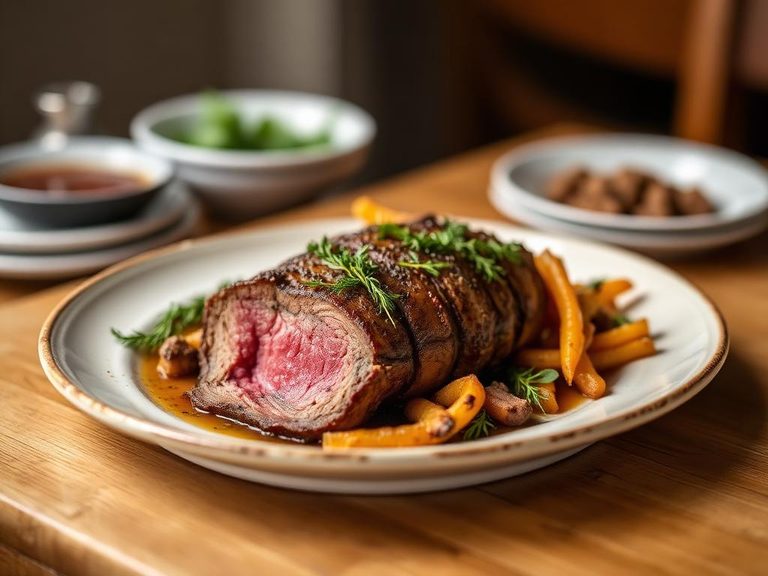
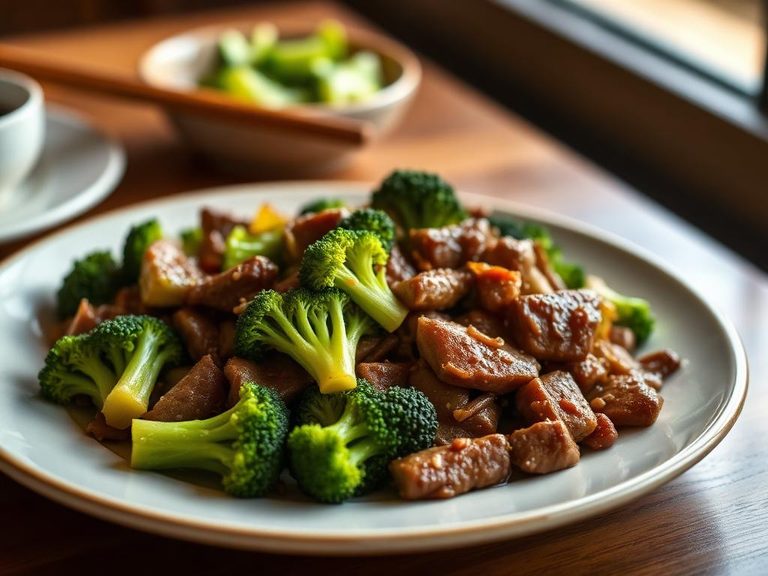
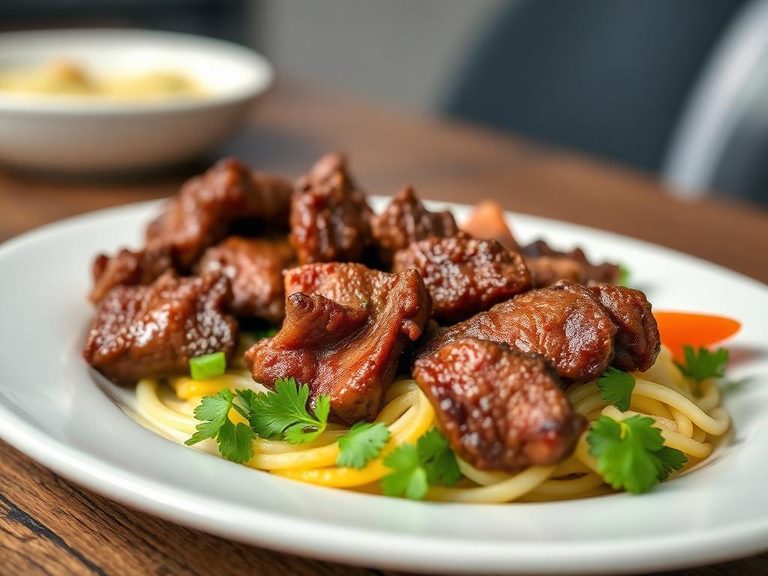
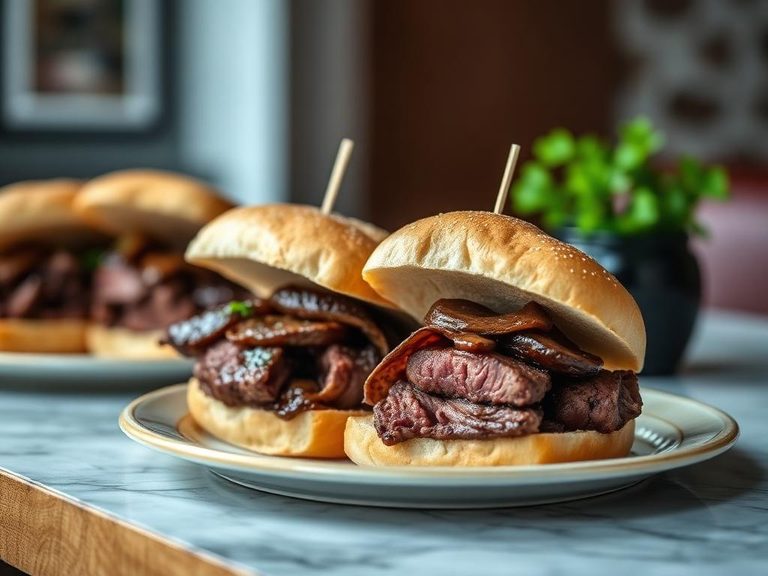
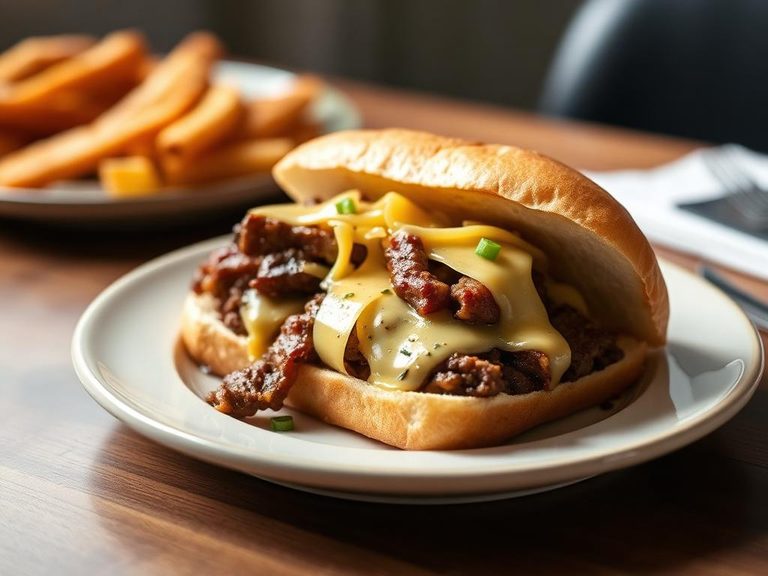
🌍 Where it's eaten
💡 Did you know?
The 'sir' in sirloin doesn't refer to a knight's title; it's likely derived from the French word 'surlonge,' meaning 'over the loin,' which describes its anatomical position on the animal.
Full nutrition (USDA data · scales with serving)
| Water | 71.0 g |
| Energy (Atwater General Factors) | 140 kcal |
| Energy (Atwater Specific Factors) | 146 kcal |
| Nitrogen | 3.5 g |
| Protein | 22.0 g |
| Total lipid (fat) | 5.7 g |
| Ash | 1.1 g |
| Carbohydrate, by difference | 0.22 g |
| Calcium, Ca | 3.7 mg |
| Iron, Fe | 2.2 mg |
| Magnesium, Mg | 22.1 mg |
| Phosphorus, P | 193 mg |
| Potassium, K | 349 mg |
| Sodium, Na | 42.9 mg |
| Zinc, Zn | 3.5 mg |
| Copper, Cu | 0.07 mg |
| Manganese, Mn | 0.00 mg |
Fat & fatty acid profile (per 100g)
| Cholesterol | 60.1 mg |
Amino acid profile (per 100g)
Estimated from Beef, variety meats and by-products, mechanically separated beef, raw — USDA does not publish this profile for Beef.
| Tryptophan | 0.17 g |
| Threonine | 0.47 g |
| Isoleucine | 0.58 g |
| Leucine | 1.2 g |
| Lysine | 1.2 g |
| Methionine | 0.43 g |
| Cystine | 0.23 g |
| Phenylalanine | 0.64 g |
| Tyrosine | 0.38 g |
| Valine | 0.92 g |
| Arginine | 1.2 g |
| Histidine | 0.44 g |
| Alanine | 1.0 g |
| Aspartic acid | 1.3 g |
| Glutamic acid | 2.1 g |
| Glycine | 1.2 g |
| Proline | 0.92 g |
| Serine | 0.57 g |
FAQ
Is top sirloin steak tough?
It has a firmer texture than marbled cuts like ribeye, but when cooked correctly to medium-rare and sliced against the grain, it should be tender and chewable, not tough.
What's the best way to cook it?
High-heat methods like grilling, pan-searing, or broiling are ideal. Bring the steak to room temperature first, season generously, and cook quickly to avoid drying it out. Rest for 5-10 minutes before slicing.
How does it differ from bottom sirloin?
Top sirloin is more tender and leaner than bottom sirloin. Bottom sirloin is often used for roasts, stews, or ground beef, while top sirloin is preferred for grilling and quick-cooking steaks.
Nutrient density (calculated · NRF9.3)
Nutrient Rich Foods index: beneficial nutrients (protein, fiber, vitamins, minerals) minus saturated fat, added sugar & sodium, per 100 kcal.
NRF9.3 index — Fulgoni, Keast & Drewnowski, 2009. Computed from USDA nutrients.
Weight-loss friendliness (composite index)
Energy density 1.40 kcal/g · 63% calories from protein · 0.0 g fiber · 0.0 g sugar per 100 g.
Composite of energy density (Rolls et al., 1999), protein & fiber satiety, minus sugar. A calculated heuristic — ranks satiety-per-calorie, not a clinical measure.
Dietary load (calculated from USDA values)
Potential renal acid load. Positive = acid-forming, negative = alkaline-forming.
Sodium-to-potassium ratio: 0.12 (lower is better — aim for ≤ 1)
Sodium:potassium per WHO potassium guidance. Computed from USDA nutrients.