

Beef, short loin (NY strip steak), raw
Whole food · Beef Products
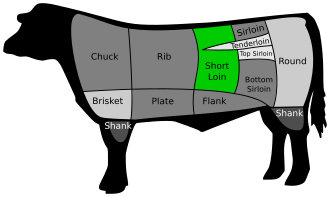
Photo: Wikipedia
The New York strip steak, cut from the short loin, is a premium, well-marbled cut prized for its robust beefy flavor and firm, satisfying texture. With a rich, buttery mouthfeel and a signature strip of fat along one edge, it offers a deeply savory experience that's both lean and indulgent. Nutritionally, it's a powerhouse of high-quality protein with minimal carbs, making it a staple for those seeking a nutrient-dense, low-carb meal.
Calorie split: 45% protein · 0% carbs · 55% fat
↓ Full nutrition💚 Why it's loved
People adore the New York strip for its bold, beefy flavor and the satisfying contrast between its tender center and slightly chewy, caramelized crust when seared. It's a versatile cut that shines in both simple preparations and complex dishes, embodying the classic steakhouse experience and a symbol of celebratory dining across cultures.
⚠️ Watch-outs & how to enjoy it better
While leaner than ribeye, it can still be high in saturated fat and cholesterol, which may concern those managing heart health. To counteract, opt for grass-fed varieties, trim excess fat before cooking, and pair it with fiber-rich vegetables like roasted broccoli or a leafy salad to balance the meal. For those sensitive to histamines, ensure the steak is fresh and properly stored to minimize reactions.
Key benefits
- Excellent source of complete protein for muscle maintenance and satiety
- Very low in carbohydrates, making it ideal for ketogenic and low-carb diets
- Rich in essential minerals like iron, zinc, and B12 for energy and immune function
- Provides healthy monounsaturated fats from its marbling
- Contains creatine, which supports muscle performance and cognitive function
🍽️ Popular dishes
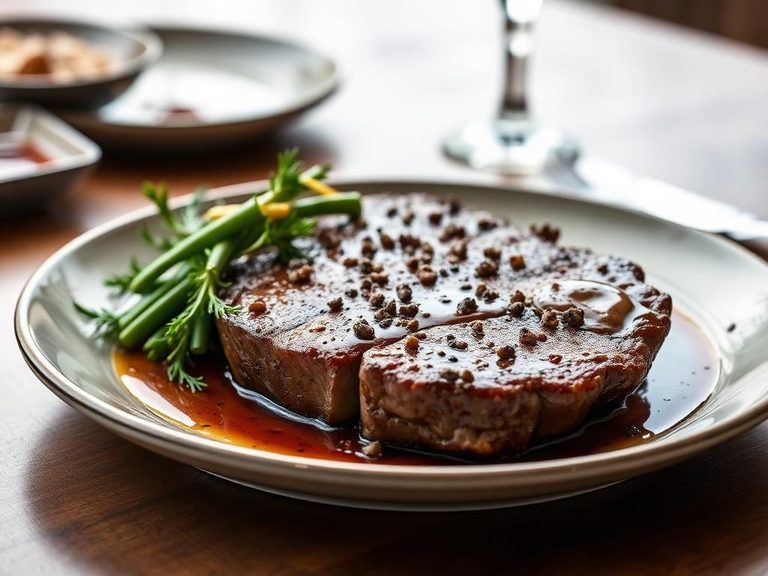
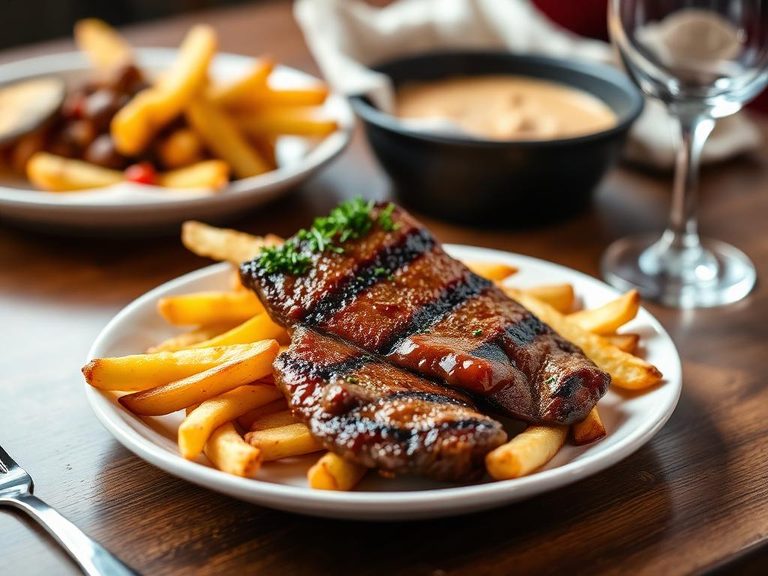


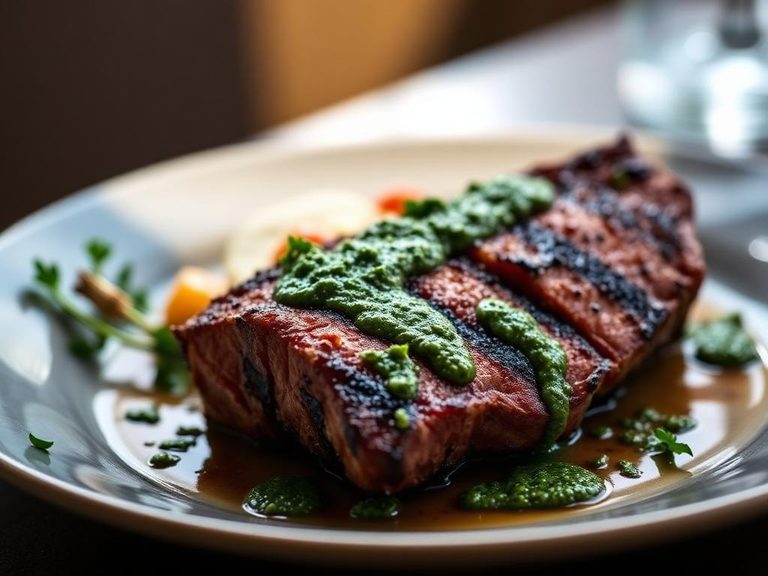
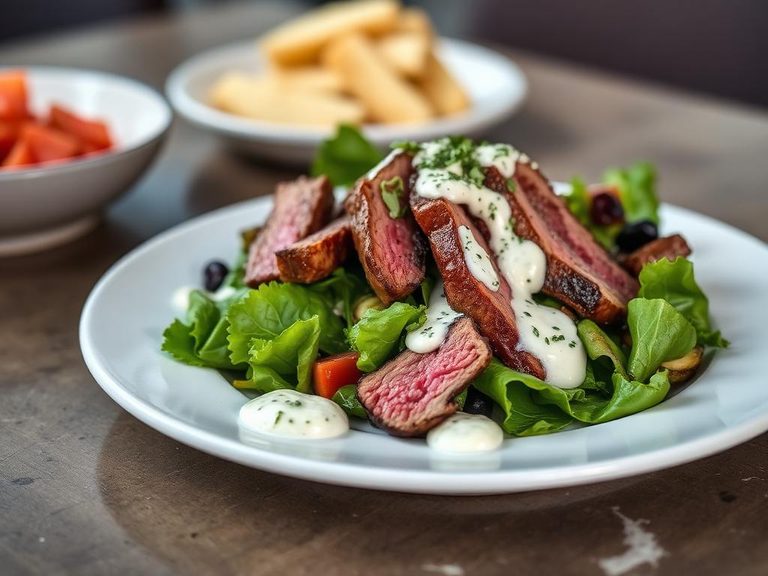
🌍 Where it's eaten
💡 Did you know?
The 'New York strip' name originated from the 19th-century Delmonico's restaurant in Manhattan, where it was a signature dish, though the cut itself is more commonly called a 'sirloin' or 'striploin' in other parts of the world.
Full nutrition (USDA data · scales with serving)
| Water | 66.0 g |
| Energy (Atwater General Factors) | 190 kcal |
| Energy (Atwater Specific Factors) | 196 kcal |
| Nitrogen | 3.4 g |
| Protein | 21.3 g |
| Total lipid (fat) | 11.5 g |
| Ash | 0.96 g |
| Carbohydrate, by difference | 0.22 g |
| Calcium, Ca | 5.0 mg |
| Iron, Fe | 1.6 mg |
| Magnesium, Mg | 19.5 mg |
| Phosphorus, P | 171 mg |
| Potassium, K | 323 mg |
| Sodium, Na | 43.1 mg |
| Zinc, Zn | 3.3 mg |
| Copper, Cu | 0.04 mg |
| Manganese, Mn | 0.00 mg |
Fat & fatty acid profile (per 100g)
| Cholesterol | 57.6 mg |
Amino acid profile (per 100g)
Estimated from Beef, variety meats and by-products, mechanically separated beef, raw — USDA does not publish this profile for Beef.
| Tryptophan | 0.17 g |
| Threonine | 0.47 g |
| Isoleucine | 0.58 g |
| Leucine | 1.2 g |
| Lysine | 1.2 g |
| Methionine | 0.43 g |
| Cystine | 0.23 g |
| Phenylalanine | 0.64 g |
| Tyrosine | 0.38 g |
| Valine | 0.92 g |
| Arginine | 1.2 g |
| Histidine | 0.44 g |
| Alanine | 1.0 g |
| Aspartic acid | 1.3 g |
| Glutamic acid | 2.1 g |
| Glycine | 1.2 g |
| Proline | 0.92 g |
| Serine | 0.57 g |
FAQ
What's the difference between a New York strip and a ribeye?
The New York strip comes from the short loin and is leaner with a firm texture, while the ribeye is from the rib section and has more marbling, making it richer and more tender.
How should I cook a New York strip steak for the best flavor?
For optimal flavor, sear it in a hot cast-iron skillet or grill to develop a crust, then finish in the oven to your desired doneness. Let it rest for 5-10 minutes before slicing to retain juices.
Is New York strip steak healthy for a low-carb diet?
Yes, it's an excellent choice for low-carb diets due to its high protein and near-zero carb content, but be mindful of portion sizes and cooking methods to avoid excess fat.
Nutrient density (calculated · NRF9.3)
Nutrient Rich Foods index: beneficial nutrients (protein, fiber, vitamins, minerals) minus saturated fat, added sugar & sodium, per 100 kcal.
NRF9.3 index — Fulgoni, Keast & Drewnowski, 2009. Computed from USDA nutrients.
Weight-loss friendliness (composite index)
Energy density 1.90 kcal/g · 45% calories from protein · 0.0 g fiber · 0.0 g sugar per 100 g.
Composite of energy density (Rolls et al., 1999), protein & fiber satiety, minus sugar. A calculated heuristic — ranks satiety-per-calorie, not a clinical measure.
Dietary load (calculated from USDA values)
Potential renal acid load. Positive = acid-forming, negative = alkaline-forming.
Sodium-to-potassium ratio: 0.13 (lower is better — aim for ≤ 1)
Sodium:potassium per WHO potassium guidance. Computed from USDA nutrients.