

Balsam-pear (bitter gourd), pods, raw
Whole food · Vegetables and Vegetable Products

Photo: Wikipedia
Balsam-pear, or bitter gourd, is a crinkly, oblong fruit with a strikingly bitter taste and a crisp, watery texture when raw. Nutritionally, it's a low-calorie, high-fiber powerhouse, delivering nearly 3 grams of fiber per 100 grams with virtually no fat or sugar.
Calorie split: 20% protein · 73% carbs · 8% fat
↓ Full nutrition💚 Why it's loved
People cherish it for its bold, acquired bitterness that cuts through rich, fatty, or savory dishes, and for its incredible versatility in stir-fries, curries, and teas across global cuisines.
⚠️ Watch-outs & how to enjoy it better
The intense bitterness is a major hurdle for many palates. To reduce it, you can salt the sliced pods and let them sit for 20 minutes to draw out bitter juices, or blanch them briefly. Those with sensitive digestive systems should start with small portions.
Key benefits
- Excellent source of dietary fiber for digestive health.
- Very low in calories, supporting weight management.
- Provides vitamin C and folate.
- Contains antioxidants like charantin and polypeptide-p.
- May help support healthy blood sugar levels.
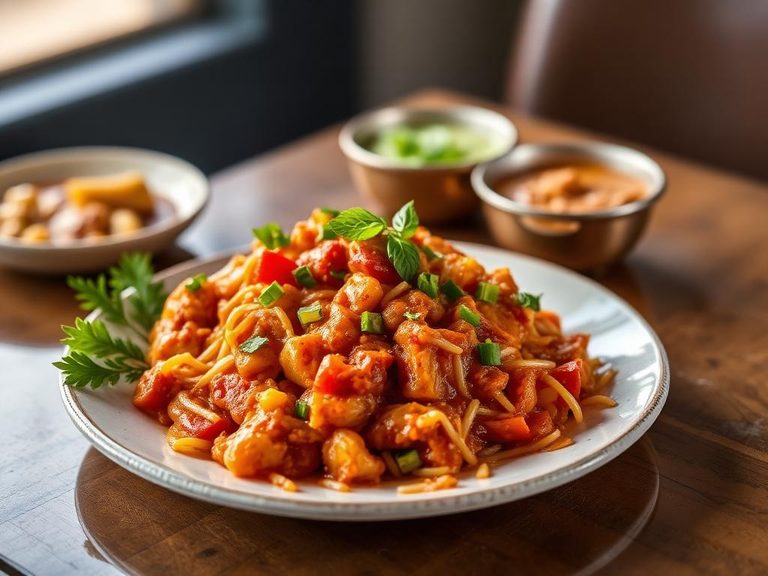
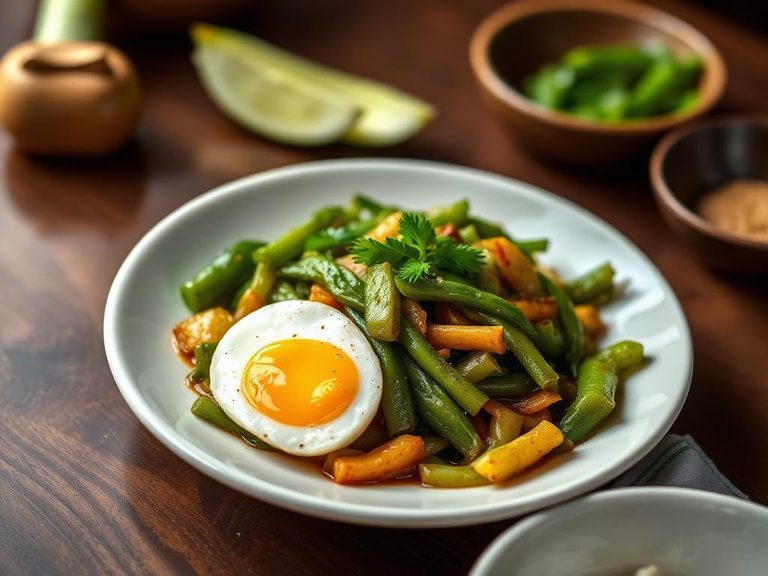
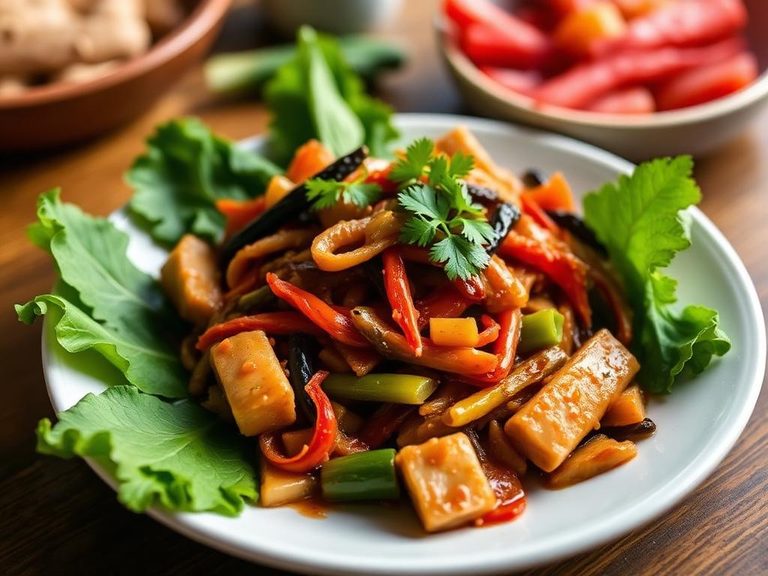
🍽️ Popular dishes
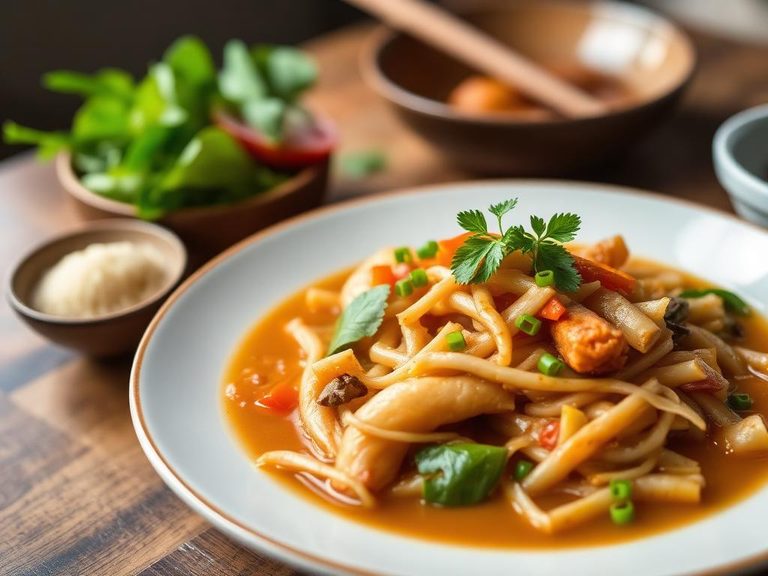

🌍 Where it's eaten
💡 Did you know?
Despite its name, bitter gourd is botanically a fruit, not a vegetable, and is related to cucumbers and watermelons.
Full nutrition (USDA data · scales with serving)
| Water | 94.0 g |
| Energy | 17.0 kcal |
| Energy | 71.0 kj |
| Protein | 1.0 g |
| Total lipid (fat) | 0.17 g |
| Ash | 1.1 g |
| Carbohydrate, by difference | 3.7 g |
| Fiber, total dietary | 2.8 g |
| Calcium, Ca | 19.0 mg |
| Iron, Fe | 0.43 mg |
| Magnesium, Mg | 17.0 mg |
| Phosphorus, P | 31.0 mg |
| Potassium, K | 296 mg |
| Sodium, Na | 5.0 mg |
| Zinc, Zn | 0.80 mg |
| Copper, Cu | 0.03 mg |
| Manganese, Mn | 0.09 mg |
| Selenium, Se | 0.20 ug |
| Vitamin C, total ascorbic acid | 84.0 mg |
| Thiamin | 0.04 mg |
| Riboflavin | 0.04 mg |
| Niacin | 0.40 mg |
| Pantothenic acid | 0.21 mg |
| Vitamin B-6 | 0.04 mg |
| Folate, total | 72.0 ug |
| Folic acid | 0.00 ug |
| Folate, food | 72.0 ug |
| Folate, DFE | 72.0 ug |
| Vitamin B-12 | 0.00 ug |
| Vitamin A, RAE | 24.0 ug |
| Retinol | 0.00 ug |
| Carotene, beta | 190 ug |
| Carotene, alpha | 185 ug |
| Vitamin A, IU | 471 iu |
| Lutein + zeaxanthin | 170 ug |
| Vitamin D (D2 + D3), International Units | 0.00 iu |
| Vitamin D (D2 + D3) | 0.00 ug |
Fat & fatty acid profile (per 100g)
| Fatty acids, total trans | 0.00 g |
| Cholesterol | 0.00 mg |
FAQ
How do I reduce the bitterness of raw bitter gourd?
Salting and letting the slices sit for 20-30 minutes, then rinsing, is the most effective method. Blanching in boiling water for 1-2 minutes also helps.
Is bitter gourd the same as bitter melon?
Yes, they are different names for the same fruit. 'Bitter gourd' is more common in South Asian English, while 'bitter melon' is widely used elsewhere.
Can I eat bitter gourd raw?
Yes, it is often eaten raw in salads or as a juice, but its strong bitterness is more pronounced. Cooking it with other flavors is more common.
Nutrient density (calculated · NRF9.3)
Nutrient Rich Foods index: beneficial nutrients (protein, fiber, vitamins, minerals) minus saturated fat, added sugar & sodium, per 100 kcal.
NRF9.3 index — Fulgoni, Keast & Drewnowski, 2009. Computed from USDA nutrients.
Weight-loss friendliness (composite index)
Energy density 0.17 kcal/g · 24% calories from protein · 2.8 g fiber · 0.0 g sugar per 100 g.
Composite of energy density (Rolls et al., 1999), protein & fiber satiety, minus sugar. A calculated heuristic — ranks satiety-per-calorie, not a clinical measure.
Dietary load (calculated from USDA values)
Potential renal acid load. Positive = acid-forming, negative = alkaline-forming.
Sodium-to-potassium ratio: 0.02 (lower is better — aim for ≤ 1)
Sodium:potassium per WHO potassium guidance. Computed from USDA nutrients.