

Salad dressing, KRAFT Mayo Light Mayonnaise
Whole food · Fats and Oils
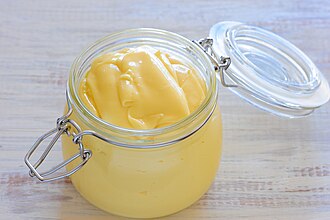
Photo: Wikipedia
Kraft Mayo Light is a creamy, tangy, and slightly sweet mayonnaise made with a blend of oil, egg, and vinegar, designed to deliver the classic mayo experience with fewer calories and fat. Its smooth, spreadable texture is ideal for binding salads or adding richness to sandwiches, though it has a lighter mouthfeel than traditional mayo. Nutritionally, it provides a significant source of fat per 100g, but with about half the calories of full-fat versions.
Calorie split: 1% protein · 10% carbs · 89% fat
↓ Full nutrition💚 Why it's loved
People love it for its familiar, comforting flavor that instantly elevates simple dishes like tuna salad or a BLT sandwich. Its versatility makes it a kitchen staple, serving as a base for countless dressings, dips, and marinades across many cuisines.
⚠️ Watch-outs & how to enjoy it better
As a processed condiment, it can be high in sodium and may contain additives some prefer to avoid. For those monitoring blood sugar or fat intake, the 32.9g of fat per 100g is significant. To mitigate, use strict portion control (e.g., 1 tablespoon) and pair it with high-fiber foods like leafy greens or protein-rich ingredients to slow absorption.
Key benefits
- Lower in calories and fat than traditional mayonnaise
- Good source of monounsaturated fats from oil
- Adds creaminess and flavor without excessive calories
- Convenient, shelf-stable condiment for quick meals
- Helps increase palatability of vegetables and lean proteins
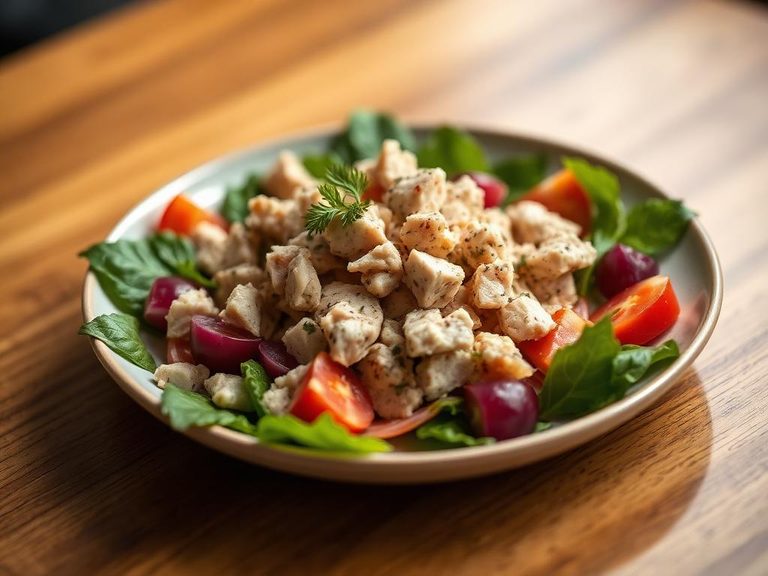
🍽️ Popular dishes





🌍 Where it's eaten
💡 Did you know?
Kraft introduced its mayonnaise in the United States in 1925, but the 'Light' version was developed much later, in 1987, in response to growing consumer demand for lower-fat foods.
Full nutrition (USDA data · scales with serving)
| Water | 55.4 g |
| Energy | 334 kcal |
| Energy | 1397 kj |
| Protein | 0.60 g |
| Total lipid (fat) | 32.9 g |
| Ash | 2.1 g |
| Carbohydrate, by difference | 8.5 g |
| Fiber, total dietary | 0.10 g |
| Total Sugars | 4.2 g |
| Calcium, Ca | 6.0 mg |
| Iron, Fe | 0.20 mg |
| Phosphorus, P | 58.0 mg |
| Potassium, K | 52.0 mg |
| Sodium, Na | 633 mg |
| Vitamin C, total ascorbic acid | 0.30 mg |
| Vitamin A, IU | 185 iu |
| Vitamin K (phylloquinone) | 155 ug |
Fat & fatty acid profile (per 100g)
| Fatty acids, total saturated | 5.0 g |
| Cholesterol | 35.0 mg |
Amino acid profile (per 100g)
Estimated from Salad dressing, sesame seed dressing, regular — USDA does not publish this profile for Salad dressing.
| Tryptophan | 0.05 g |
| Threonine | 0.05 g |
| Isoleucine | 0.05 g |
| Leucine | 0.08 g |
| Lysine | 0.14 g |
| Methionine | 0.03 g |
| Cystine | 0.00 g |
| Phenylalanine | 0.09 g |
| Tyrosine | 0.10 g |
| Valine | 0.07 g |
| Arginine | 0.40 g |
| Histidine | 0.03 g |
| Alanine | 0.00 g |
| Aspartic acid | 0.00 g |
| Glutamic acid | 0.46 g |
| Glycine | 0.00 g |
| Proline | 0.00 g |
| Serine | 0.00 g |
FAQ
How does Kraft Mayo Light differ from regular mayonnaise?
It typically contains about half the calories and fat of regular mayo by using a blend of oils and sometimes adding thickeners like modified food starch to maintain a creamy texture.
Is it suitable for a low-carb diet?
With 8.5g of carbs per 100g (mostly from added sugar), it can fit in moderation, but very strict low-carb dieters may prefer mayonnaise with zero carbs.
What can I use as a direct substitute?
For a similar texture and lower fat, you can use Greek yogurt or a mix of Greek yogurt and a small amount of regular mayo. For a vegan option, try a store-bought vegan mayonnaise.
Nutrient density (calculated · NRF9.3)
Nutrient Rich Foods index: beneficial nutrients (protein, fiber, vitamins, minerals) minus saturated fat, added sugar & sodium, per 100 kcal.
NRF9.3 index — Fulgoni, Keast & Drewnowski, 2009. Computed from USDA nutrients.
Weight-loss friendliness (composite index)
Energy density 3.34 kcal/g · 1% calories from protein · 0.1 g fiber · 4.2 g sugar per 100 g.
Composite of energy density (Rolls et al., 1999), protein & fiber satiety, minus sugar. A calculated heuristic — ranks satiety-per-calorie, not a clinical measure.
Dietary load (calculated from USDA values)
Potential renal acid load. Positive = acid-forming, negative = alkaline-forming.
Sodium-to-potassium ratio: 12.17 (lower is better — aim for ≤ 1)
Sodium:potassium per WHO potassium guidance. Computed from USDA nutrients.