

Wasabi, root, raw
Whole food · Vegetables and Vegetable Products

Photo: Wikipedia
The raw rhizome of the Wasabia japonica plant, wasabi is a pungent, bright green root prized for its fiery, sinus-clearing heat and complex, sweet-herbaceous flavor. Unlike its common horseradish-based substitutes, true wasabi offers a delicate, fleeting burn that dissipates quickly, leaving a clean, refreshing finish. Nutritionally, it is a low-calorie powerhouse, exceptionally high in dietary fiber (7.8g per 100g) and a good source of plant-based protein.
Calorie split: 16% protein · 79% carbs · 5% fat
↓ Full nutrition💚 Why it's loved
People love wasabi for its unique, electrifying sensation that is more aromatic than purely spicy, offering a sophisticated heat that enhances rather than overwhelms. It is also cherished for its cultural significance in Japanese cuisine, where it represents a mark of quality and a traditional pairing with sushi and sashimi.
⚠️ Watch-outs & how to enjoy it better
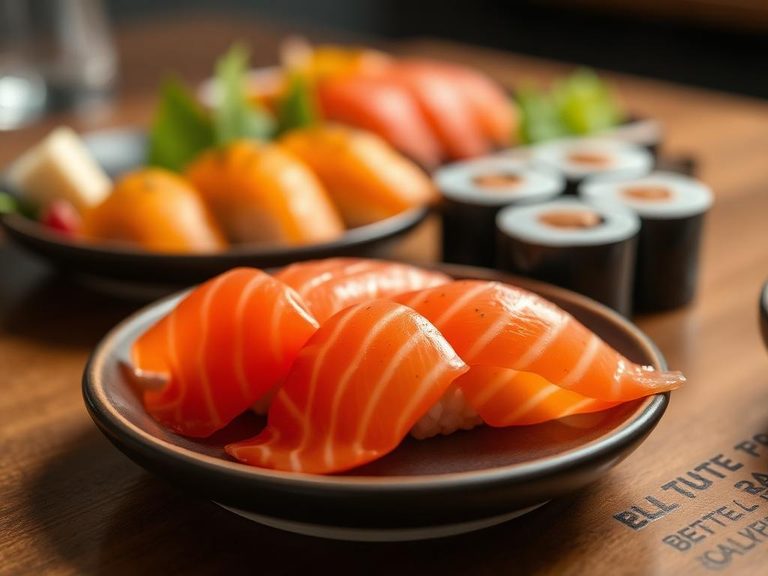
The intense, volatile heat can be overwhelming for some, and raw wasabi is often mistaken for the more common, harsher horseradish-based paste, which can lead to disappointment. To mitigate the sharpness, pair it with fatty foods like avocado or salmon, or use it in very small, controlled amounts as a condiment rather than a main ingredient.
Key benefits
- Rich in isothiocyanates, compounds studied for their potential anti-inflammatory properties.
- High in dietary fiber, supporting digestive health and satiety.
- Contains antioxidants like vitamin C and beta-carotene.
- May have antimicrobial properties, traditionally used to help preserve food.
- Low in calories and fat, making it a nutrient-dense flavor enhancer.
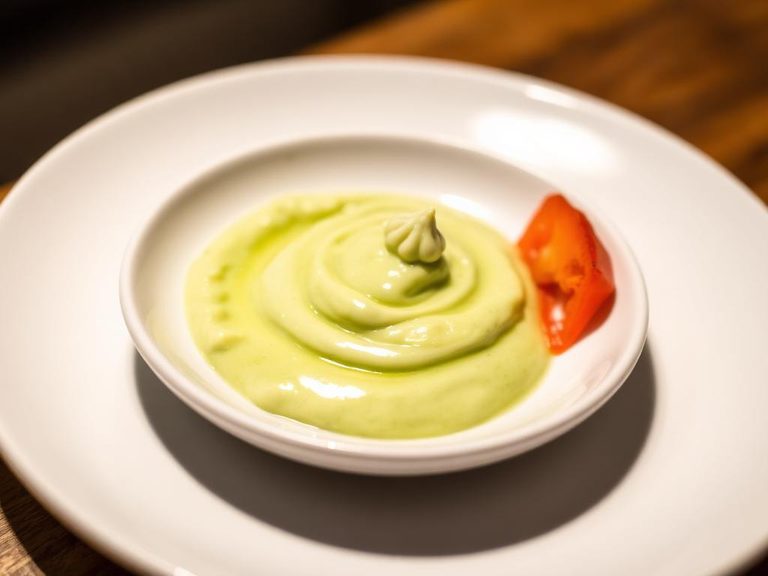
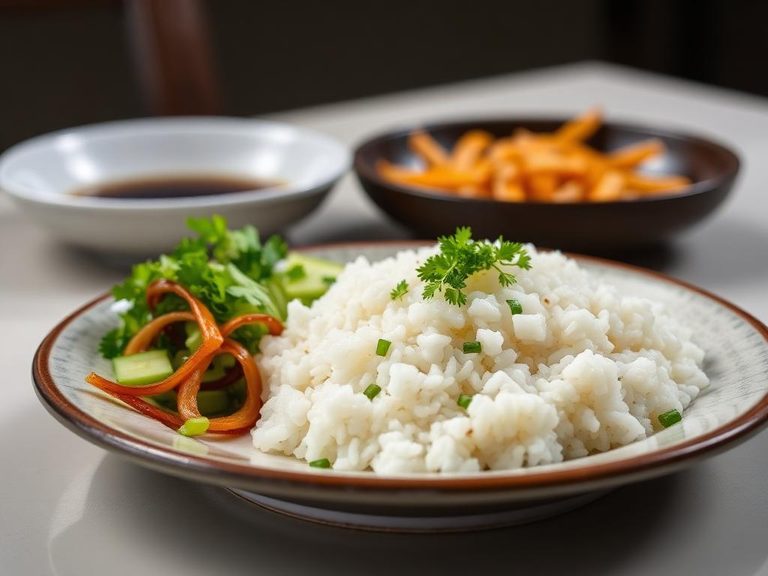
🍽️ Popular dishes
🌍 Where it's eaten
💡 Did you know?
True wasabi is one of the most difficult plants to cultivate commercially, requiring specific cool, shaded, and wet conditions, which is why over 95% of what is sold as 'wasabi' outside Japan is actually a mixture of horseradish, mustard, and green food coloring.
Full nutrition (USDA data · scales with serving)
| Water | 69.1 g |
| Energy | 109 kcal |
| Energy | 456 kj |
| Protein | 4.8 g |
| Total lipid (fat) | 0.63 g |
| Ash | 1.9 g |
| Carbohydrate, by difference | 23.5 g |
| Fiber, total dietary | 7.8 g |
| Calcium, Ca | 128 mg |
| Iron, Fe | 1.0 mg |
| Magnesium, Mg | 69.0 mg |
| Phosphorus, P | 80.0 mg |
| Potassium, K | 568 mg |
| Sodium, Na | 17.0 mg |
| Zinc, Zn | 1.6 mg |
| Copper, Cu | 0.15 mg |
| Manganese, Mn | 0.39 mg |
| Vitamin C, total ascorbic acid | 41.9 mg |
| Thiamin | 0.13 mg |
| Riboflavin | 0.11 mg |
| Niacin | 0.74 mg |
| Pantothenic acid | 0.20 mg |
| Vitamin B-6 | 0.27 mg |
| Folate, total | 18.0 ug |
| Folic acid | 0.00 ug |
| Folate, food | 18.0 ug |
| Folate, DFE | 18.0 ug |
| Vitamin B-12 | 0.00 ug |
| Vitamin A, RAE | 2.0 ug |
| Retinol | 0.00 ug |
| Carotene, beta | 21.0 ug |
| Carotene, alpha | 0.00 ug |
| Cryptoxanthin, beta | 0.00 ug |
| Vitamin A, IU | 35.0 iu |
| Vitamin D (D2 + D3), International Units | 0.00 iu |
| Vitamin D (D2 + D3) | 0.00 ug |
Fat & fatty acid profile (per 100g)
| Fatty acids, total trans | 0.00 g |
| Cholesterol | 0.00 mg |
FAQ
Is the green paste in sushi restaurants real wasabi?
Most likely not. The common green paste is typically a mixture of horseradish, mustard, and food coloring. True wasabi is much more expensive and has a more complex, less harsh flavor.
How should I store fresh wasabi root?
Wrap the root in a damp paper towel, place it in a plastic bag, and store it in the refrigerator's crisper drawer. It will stay fresh for about two weeks. Once grated, it loses its potency quickly and should be used within an hour.
Can I grow wasabi at home?
Yes, but it is challenging. Wasabi thrives in cool, shaded, and consistently moist environments, similar to a stream bank. It requires patience, as the plant can take up to two years to mature.
Nutrient density (calculated · NRF9.3)
Nutrient Rich Foods index: beneficial nutrients (protein, fiber, vitamins, minerals) minus saturated fat, added sugar & sodium, per 100 kcal.
NRF9.3 index — Fulgoni, Keast & Drewnowski, 2009. Computed from USDA nutrients.
Weight-loss friendliness (composite index)
Energy density 1.09 kcal/g · 18% calories from protein · 7.8 g fiber · 0.0 g sugar per 100 g.
Composite of energy density (Rolls et al., 1999), protein & fiber satiety, minus sugar. A calculated heuristic — ranks satiety-per-calorie, not a clinical measure.
Dietary load (calculated from USDA values)
Potential renal acid load. Positive = acid-forming, negative = alkaline-forming.
Sodium-to-potassium ratio: 0.03 (lower is better — aim for ≤ 1)
Sodium:potassium per WHO potassium guidance. Computed from USDA nutrients.