

Potatoes, yellow fleshed, french fried, frozen, unprepared
Whole food · Vegetables and Vegetable Products
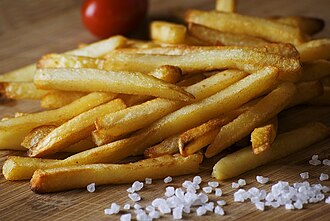
Photo: Wikipedia
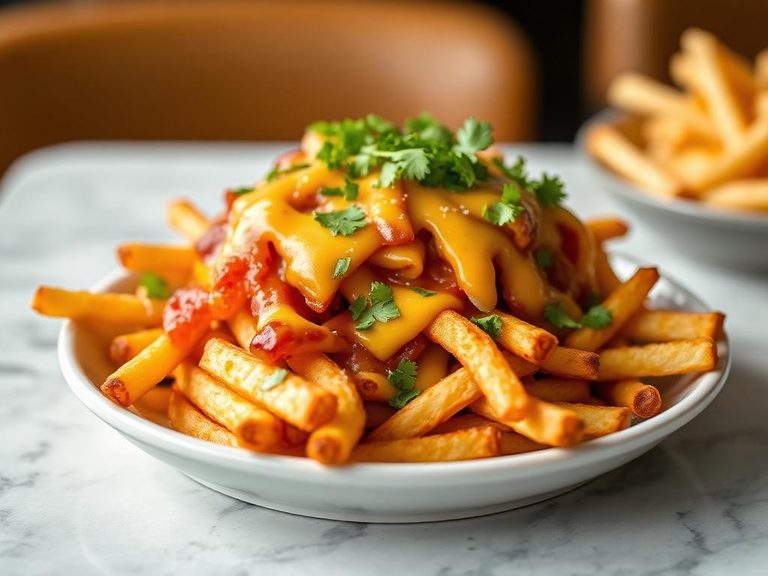
These are pre-cut, blanched, and flash-frozen yellow potato strips, designed to be baked or fried into golden, crispy french fries. They offer a satisfying crunch on the outside with a fluffy, tender interior and a subtly sweet, earthy potato flavor. Nutritionally, they are a moderate source of energy from carbohydrates, with a notable fiber content that aids digestion.
Calorie split: 6% protein · 62% carbs · 32% fat
↓ Full nutrition💚 Why it's loved
People adore them for delivering the quintessential french fry experience—crispy, salty, and deeply satisfying—with minimal prep work. They are a beloved, versatile canvas for countless dipping sauces and seasonings, forming the backbone of casual meals and snacks worldwide.
⚠️ Watch-outs & how to enjoy it better
The frying process can add significant calories and unhealthy fats, and commercial versions are often high in sodium, which may concern those monitoring blood pressure or heart health. To counteract, bake or air-fry them instead of deep-frying, use minimal added salt, and pair with a protein-rich dip like hummus or a side salad to balance the meal.
Key benefits
- Provides quick energy from complex carbohydrates.
- Contains dietary fiber, which supports digestive health.
- Offers a convenient, time-saving base for a popular comfort food.
- Source of potassium, an essential mineral for fluid balance.
- Yellow flesh indicates the presence of carotenoid antioxidants.
🍽️ Popular dishes

🌍 Where it's eaten
💡 Did you know?
The specific cut and pre-treatment of frozen fries are engineered to maximize surface area for crisping while maintaining a moist interior, a process perfected in the mid-20th century to supply the booming fast-food industry.
Full nutrition (USDA data · scales with serving)
| Water | 65.0 g |
| Energy | 162 kcal |
| Energy | 680 kj |
| Protein | 2.5 g |
| Total lipid (fat) | 5.8 g |
| Ash | 1.6 g |
| Carbohydrate, by difference | 25.0 g |
| Fiber, total dietary | 2.2 g |
| Total Sugars | 0.37 g |
| Calcium, Ca | 9.0 mg |
| Iron, Fe | 0.48 mg |
| Potassium, K | 447 mg |
| Sodium, Na | 300 mg |
| Vitamin C, total ascorbic acid | 10.9 mg |
| Vitamin A, IU | 0.00 iu |
Fat & fatty acid profile (per 100g)
| Fatty acids, total saturated | 1.4 g |
| Fatty acids, total trans | 0.11 g |
| Cholesterol | 0.00 mg |
Amino acid profile (per 100g)
Estimated from Potatoes, french fried, all types, salt added in processing, frozen, unprepared — USDA does not publish this profile for Potatoes.
| Tryptophan | 0.02 g |
| Threonine | 0.08 g |
| Isoleucine | 0.08 g |
| Leucine | 0.13 g |
| Lysine | 0.13 g |
| Methionine | 0.04 g |
| Cystine | 0.04 g |
| Phenylalanine | 0.10 g |
| Tyrosine | 0.08 g |
| Valine | 0.12 g |
| Arginine | 0.13 g |
| Histidine | 0.05 g |
| Alanine | 0.09 g |
| Aspartic acid | 0.50 g |
| Glutamic acid | 0.40 g |
| Glycine | 0.07 g |
| Proline | 0.08 g |
| Serine | 0.10 g |
FAQ
What's the best way to cook frozen french fries for maximum crispiness?
For best results, preheat your oven or air fryer to a high temperature (around 400-425°F / 200-220°C). Arrange fries in a single layer without overcrowding, and cook until golden brown, flipping halfway. This ensures even heat circulation for a crisp exterior.
Are frozen french fries less nutritious than fresh potatoes?
The freezing process itself doesn't significantly reduce the core macronutrients like carbs and fiber. However, the preparation method (deep-frying vs. baking) and added salt in many frozen varieties can make them a less healthy choice compared to a simply baked fresh potato.
Can I refreeze french fries after cooking?
It's not recommended. Refreezing cooked fries will degrade their texture, making them soggy and unappetizing upon reheating. It's best to cook only the portion you plan to eat immediately.
Nutrient density (calculated · NRF9.3)
Nutrient Rich Foods index: beneficial nutrients (protein, fiber, vitamins, minerals) minus saturated fat, added sugar & sodium, per 100 kcal.
NRF9.3 index — Fulgoni, Keast & Drewnowski, 2009. Computed from USDA nutrients.
Weight-loss friendliness (composite index)
Energy density 1.62 kcal/g · 6% calories from protein · 2.2 g fiber · 0.4 g sugar per 100 g.
Composite of energy density (Rolls et al., 1999), protein & fiber satiety, minus sugar. A calculated heuristic — ranks satiety-per-calorie, not a clinical measure.
Dietary load (calculated from USDA values)
Sodium-to-potassium ratio: 0.67 (lower is better — aim for ≤ 1)
Sodium:potassium per WHO potassium guidance. Computed from USDA nutrients.