

Potatoes, french fried, wedge cut, frozen, unprepared
Whole food · Vegetables and Vegetable Products
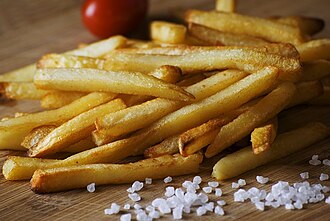
Photo: Wikipedia
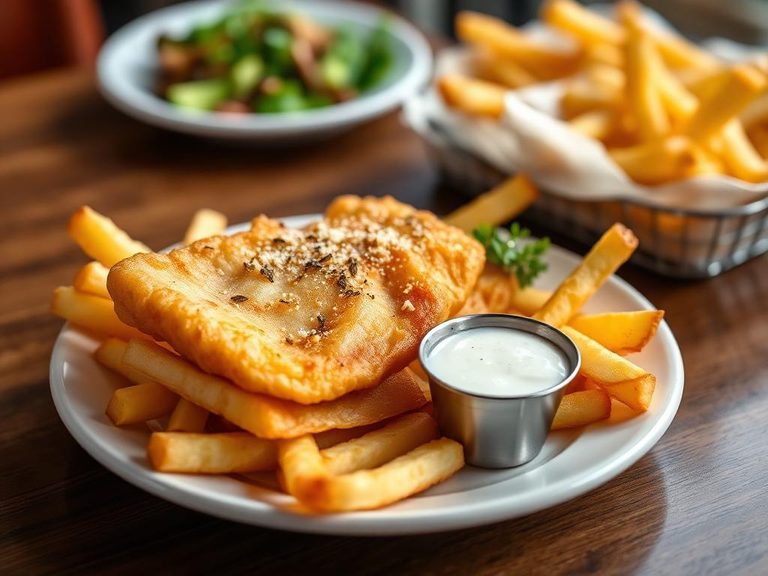
These are thick-cut, wedge-shaped potato pieces, frozen before cooking to lock in a fluffy interior and a crisp, golden exterior when baked or fried. Their substantial size provides a satisfying starchy bite with a mild, earthy potato flavor. Nutritionally, they offer a moderate calorie base with a good source of carbohydrates for energy and some dietary fiber.
Calorie split: 6% protein · 53% carbs · 40% fat
↓ Full nutrition💚 Why it's loved
People adore the perfect contrast of a crispy, seasoned exterior giving way to a soft, pillowy inside. They are a beloved, versatile canvas for everything from simple salt to elaborate spice blends, embodying comfort food across many cultures.
⚠️ Watch-outs & how to enjoy it better
As a fried or roasted potato product, they can be high in sodium and absorb significant oil, potentially contributing to blood sugar spikes. To counteract this, bake or air-fry with minimal oil instead of deep-frying, and pair with a protein source like grilled chicken or a dip like Greek yogurt to balance the meal and slow carb absorption.
Key benefits
- Convenient, pre-cut base for quick meals or sides
- Good source of potassium and vitamin C from potatoes
- Provides dietary fiber, especially with skin on
- Versatile for baking, air-frying, or roasting at home
- Offers a satisfying, hearty texture compared to thin fries
🍽️ Popular dishes

🌍 Where it's eaten
💡 Did you know?
The wedge cut is specifically designed to maximize the surface area for crispiness while preserving a large, fluffy interior, making it structurally superior for holding up to heavy toppings compared to thinner fries.
Full nutrition (USDA data · scales with serving)
| Water | 66.1 g |
| Energy | 162 kcal |
| Energy | 677 kj |
| Protein | 2.6 g |
| Total lipid (fat) | 7.5 g |
| Ash | 1.7 g |
| Carbohydrate, by difference | 22.2 g |
| Fiber, total dietary | 2.4 g |
| Total Sugars | 0.34 g |
| Calcium, Ca | 14.0 mg |
| Iron, Fe | 0.72 mg |
| Potassium, K | 381 mg |
| Sodium, Na | 380 mg |
| Vitamin C, total ascorbic acid | 5.1 mg |
| Vitamin A, IU | 0.00 iu |
Fat & fatty acid profile (per 100g)
| Fatty acids, total saturated | 1.8 g |
| Fatty acids, total trans | 0.15 g |
| Cholesterol | 0.00 mg |
Amino acid profile (per 100g)
Estimated from Potatoes, french fried, all types, salt added in processing, frozen, unprepared — USDA does not publish this profile for Potatoes.
| Tryptophan | 0.02 g |
| Threonine | 0.08 g |
| Isoleucine | 0.08 g |
| Leucine | 0.13 g |
| Lysine | 0.13 g |
| Methionine | 0.04 g |
| Cystine | 0.04 g |
| Phenylalanine | 0.10 g |
| Tyrosine | 0.08 g |
| Valine | 0.12 g |
| Arginine | 0.13 g |
| Histidine | 0.05 g |
| Alanine | 0.09 g |
| Aspartic acid | 0.50 g |
| Glutamic acid | 0.40 g |
| Glycine | 0.07 g |
| Proline | 0.08 g |
| Serine | 0.10 g |
FAQ
How do I get frozen wedges crispy without deep frying?
Preheat your oven or air fryer to a high temperature (400-425°F / 200-220°C). Spread wedges in a single layer on a hot, lightly oiled baking sheet. Don't overcrowd them. Flip halfway through cooking for even browning.
Are potato wedges healthier than french fries?
They can be, depending on preparation. Their thicker cut often means less oil absorption per gram than thin fries, especially if baked. However, the nutritional difference is small; the cooking method (baked vs. fried) is the most significant factor.
What's the best way to season frozen wedges?
Toss them in a bowl with a small amount of oil and your chosen spices (paprika, garlic powder, rosemary, salt) before baking. For extra flavor, toss with fresh herbs or a sprinkle of parmesan cheese immediately after cooking while they're hot.
Nutrient density (calculated · NRF9.3)
Nutrient Rich Foods index: beneficial nutrients (protein, fiber, vitamins, minerals) minus saturated fat, added sugar & sodium, per 100 kcal.
NRF9.3 index — Fulgoni, Keast & Drewnowski, 2009. Computed from USDA nutrients.
Weight-loss friendliness (composite index)
Energy density 1.62 kcal/g · 6% calories from protein · 2.4 g fiber · 0.3 g sugar per 100 g.
Composite of energy density (Rolls et al., 1999), protein & fiber satiety, minus sugar. A calculated heuristic — ranks satiety-per-calorie, not a clinical measure.
Dietary load (calculated from USDA values)
Sodium-to-potassium ratio: 1.00 (lower is better — aim for ≤ 1)
Sodium:potassium per WHO potassium guidance. Computed from USDA nutrients.