

Parsley, freeze-dried
Whole food · Vegetables and Vegetable Products

Photo: Wikipedia
Freeze-dried parsley is a vibrant, concentrated form of the fresh herb, offering an intense, earthy, and slightly peppery flavor with a light, crumbly texture. This process locks in its remarkable nutrient density, making it a powerhouse of protein and fiber relative to its weight. It's a pantry staple that delivers a potent burst of fresh herb flavor year-round.
Calorie split: 37% protein · 50% carbs · 14% fat
↓ Full nutrition💚 Why it's loved
People love freeze-dried parsley for its unparalleled convenience and ability to instantly add a bright, fresh herbaceous note to dishes without the wilting or spoilage of fresh bunches. It's a chef's secret for consistent flavor and color in sauces, rubs, and garnishes.
⚠️ Watch-outs & how to enjoy it better
Due to its highly concentrated form, it's easy to overuse, leading to a bitter or overpowering taste. Those on low-fiber diets or with digestive sensitivities should introduce it gradually. To counteract, start with a small pinch (about 1/4 teaspoon) and rehydrate it in a little liquid or mix it thoroughly into a larger dish to distribute the flavor evenly.
Key benefits
- Exceptionally high in protein for a herb (31.3g per 100g).
- An outstanding source of dietary fiber (32.7g per 100g).
- Rich in vitamins A, C, and K, as well as iron and antioxidants.
- Provides a significant flavor boost with minimal fat and zero sugar.
- Long shelf life and easy to store compared to fresh parsley.
🍽️ Popular dishes
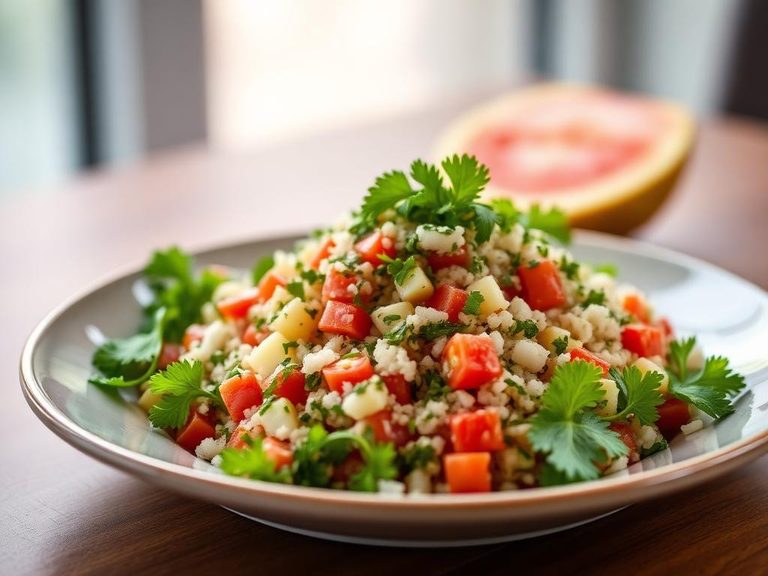


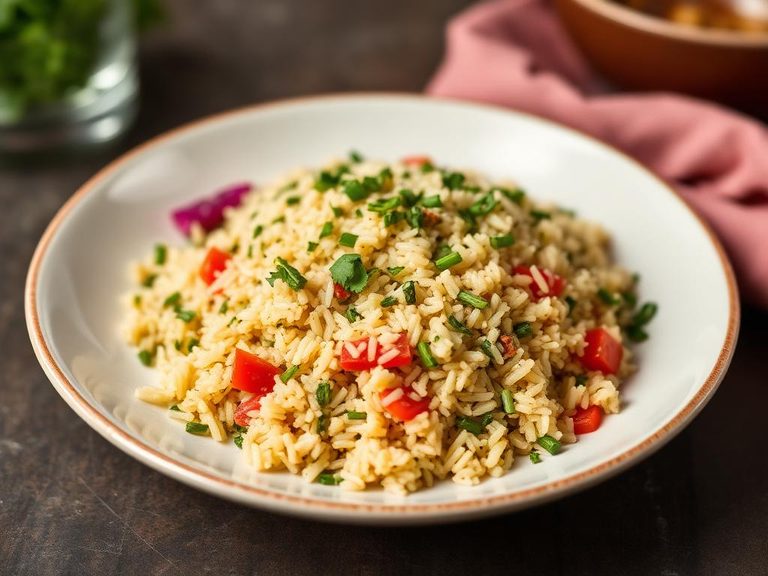


🌍 Where it's eaten
💡 Did you know?
Parsley was traditionally used in ancient Greece to crown victorious gladiators and to adorn tombs, symbolizing both triumph and remembrance.
Full nutrition (USDA data · scales with serving)
| Water | 2.0 g |
| Energy | 271 kcal |
| Energy | 1134 kj |
| Protein | 31.3 g |
| Total lipid (fat) | 5.2 g |
| Ash | 19.1 g |
| Carbohydrate, by difference | 42.4 g |
| Fiber, total dietary | 32.7 g |
| Calcium, Ca | 176 mg |
| Iron, Fe | 53.9 mg |
| Magnesium, Mg | 372 mg |
| Phosphorus, P | 548 mg |
| Potassium, K | 6300 mg |
| Sodium, Na | 391 mg |
| Zinc, Zn | 6.1 mg |
| Copper, Cu | 0.46 mg |
| Manganese, Mn | 1.3 mg |
| Selenium, Se | 32.3 ug |
| Vitamin C, total ascorbic acid | 149 mg |
| Thiamin | 1.0 mg |
| Riboflavin | 2.3 mg |
| Niacin | 10.4 mg |
| Pantothenic acid | 2.5 mg |
| Vitamin B-6 | 1.4 mg |
| Folate, total | 194 ug |
| Folic acid | 0.00 ug |
| Folate, food | 194 ug |
| Folate, DFE | 194 ug |
| Vitamin B-12 | 0.00 ug |
| Vitamin A, IU | 63240 iu |
| Vitamin D (D2 + D3), International Units | 0.00 iu |
| Vitamin D (D2 + D3) | 0.00 ug |
Fat & fatty acid profile (per 100g)
| Fatty acids, total trans | 0.00 g |
| Cholesterol | 0.00 mg |
Amino acid profile (per 100g)
| Tryptophan | 0.52 g |
| Lysine | 3.1 g |
| Methionine | 0.21 g |
FAQ
How does freeze-dried parsley compare to fresh?
Freeze-drying preserves more heat-sensitive nutrients (like Vitamin C) than air-drying, and it retains a more vibrant color and closer-to-fresh flavor. The texture is different—crumbly vs. leafy—so it's often used as a flavoring ingredient or garnish rather than a structural component like in a fresh salad.
Can I substitute it 1:1 for fresh parsley in recipes?
Generally, no. Freeze-dried parsley is much more concentrated. A good rule of thumb is to use about 1 teaspoon of freeze-dried parsley for every 1 tablespoon of fresh chopped parsley called for in a recipe. Always start with less and taste as you go.
How should I store it to maintain quality?
Store it in an airtight container in a cool, dark place like a pantry. Once opened, keeping it sealed tightly is crucial to prevent moisture from causing it to clump or lose its potency. It does not need refrigeration.
Nutrient density (calculated · NRF9.3)
Nutrient Rich Foods index: beneficial nutrients (protein, fiber, vitamins, minerals) minus saturated fat, added sugar & sodium, per 100 kcal.
NRF9.3 index — Fulgoni, Keast & Drewnowski, 2009. Computed from USDA nutrients.
Weight-loss friendliness (composite index)
Energy density 2.71 kcal/g · 46% calories from protein · 32.7 g fiber · 0.0 g sugar per 100 g.
Composite of energy density (Rolls et al., 1999), protein & fiber satiety, minus sugar. A calculated heuristic — ranks satiety-per-calorie, not a clinical measure.
Dietary load (calculated from USDA values)
Potential renal acid load. Positive = acid-forming, negative = alkaline-forming.
Sodium-to-potassium ratio: 0.06 (lower is better — aim for ≤ 1)
Sodium:potassium per WHO potassium guidance. Computed from USDA nutrients.