

Chrysanthemum leaves, raw
Whole food · Vegetables and Vegetable Products

Photo: Wikipedia
Chrysanthemum leaves, known as 'shungiku' in Japan or 'tong hao' in China, are a leafy green with a distinct, aromatic, and slightly bitter flavor profile. Their tender texture becomes pleasantly silky when cooked, making them a staple in various Asian cuisines. Nutritionally, they are a low-calorie powerhouse, offering a good source of protein and fiber for a leafy green.
Calorie split: 44% protein · 39% carbs · 17% fat
↓ Full nutrition💚 Why it's loved
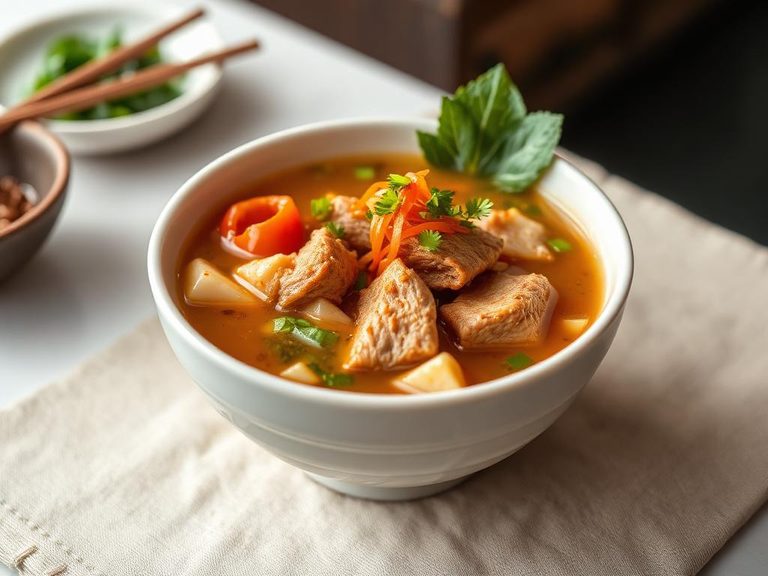
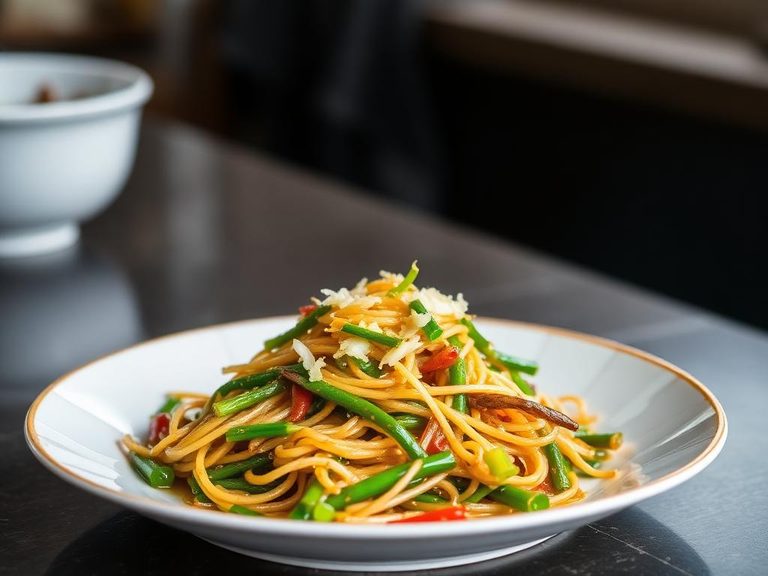
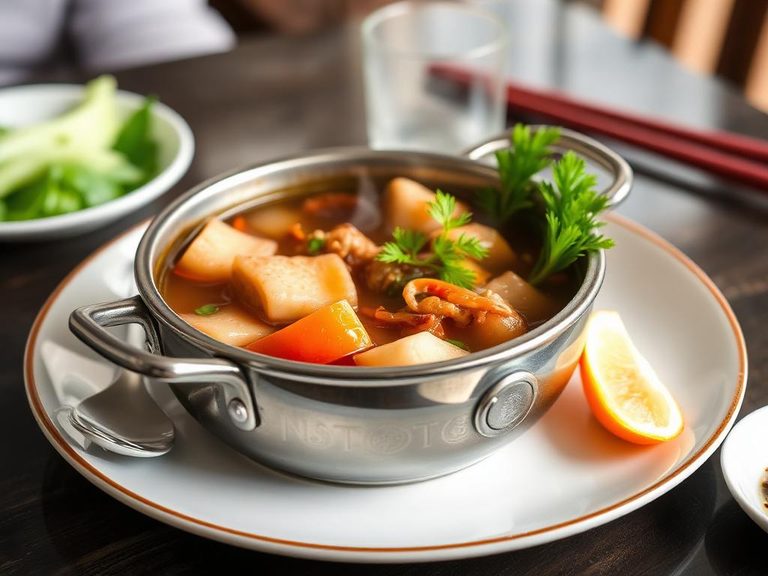
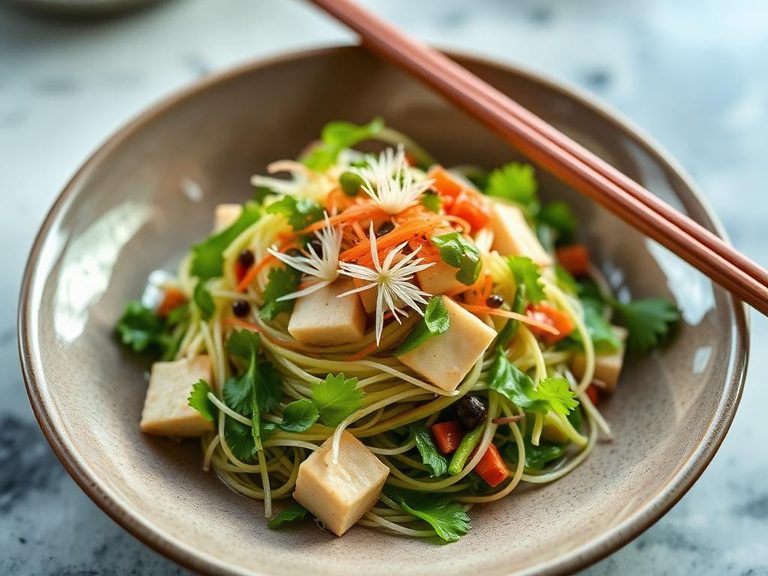
People cherish chrysanthemum leaves for their unique, herbaceous flavor that adds depth and complexity to dishes, cutting through rich broths and oils. They are beloved for their versatility, used fresh in salads, quickly blanched, or simmered in soups and hot pots.
⚠️ Watch-outs & how to enjoy it better
The pronounced bitter note can be an acquired taste for some palates. The leaves contain oxalates, which can be a concern for individuals prone to certain types of kidney stones. To mitigate bitterness, a quick blanch in salted water before further cooking can help. Pairing with umami-rich ingredients like soy sauce, dashi, or sesame oil can balance the flavor profile.
Key benefits
- High in dietary fiber, supporting digestive health.
- Good source of plant-based protein for a leafy vegetable.
- Rich in antioxidants like beta-carotene and vitamin C.
- Contains essential minerals such as potassium and calcium.
- Very low in calories and naturally sugar-free.
🍽️ Popular dishes
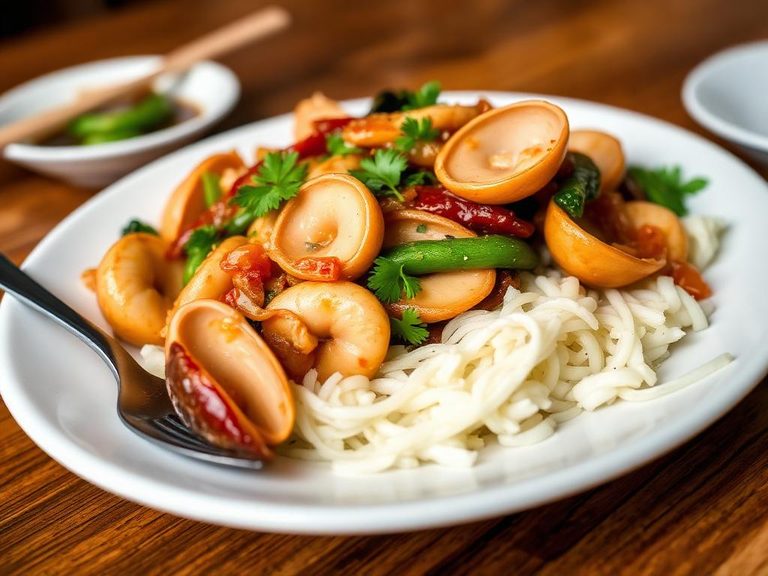
🌍 Where it's eaten
💡 Did you know?
The edible flowers of the chrysanthemum plant are also used in cuisine, most famously to infuse sake or vinegar, but the leaves are the primary vegetable harvested for cooking in many Asian cultures.
Full nutrition (USDA data · scales with serving)
| Water | 91.4 g |
| Energy | 24.0 kcal |
| Energy | 100 kj |
| Protein | 3.4 g |
| Total lipid (fat) | 0.56 g |
| Ash | 1.7 g |
| Carbohydrate, by difference | 3.0 g |
| Fiber, total dietary | 3.0 g |
| Calcium, Ca | 117 mg |
| Iron, Fe | 2.3 mg |
| Magnesium, Mg | 32.0 mg |
| Phosphorus, P | 54.0 mg |
| Potassium, K | 567 mg |
| Sodium, Na | 118 mg |
| Zinc, Zn | 0.71 mg |
| Copper, Cu | 0.14 mg |
| Manganese, Mn | 0.94 mg |
| Selenium, Se | 0.30 ug |
| Vitamin C, total ascorbic acid | 1.4 mg |
| Thiamin | 0.13 mg |
| Riboflavin | 0.14 mg |
| Niacin | 0.53 mg |
| Pantothenic acid | 0.22 mg |
| Vitamin B-6 | 0.18 mg |
| Folate, total | 177 ug |
| Folic acid | 0.00 ug |
| Folate, food | 177 ug |
| Folate, DFE | 177 ug |
| Vitamin B-12 | 0.00 ug |
| Vitamin A, RAE | 94.0 ug |
| Retinol | 0.00 ug |
| Vitamin A, IU | 1870 iu |
| Vitamin D (D2 + D3), International Units | 0.00 iu |
| Vitamin D (D2 + D3) | 0.00 ug |
Fat & fatty acid profile (per 100g)
| Fatty acids, total trans | 0.00 g |
| Cholesterol | 0.00 mg |
FAQ
How do I prepare chrysanthemum leaves to reduce bitterness?
Blanch the leaves in boiling salted water for 30-60 seconds, then plunge them into ice water. This quick process tames the bitterness while preserving their vibrant color and texture before adding them to stir-fries or salads.
Can I eat chrysanthemum leaves raw?
Yes, young, tender leaves can be used raw in salads for a peppery, aromatic kick. However, their flavor is more commonly mellowed and integrated through quick cooking methods like stir-frying or blanching.
What's the difference between chrysanthemum greens and garland chrysanthemum?
They are the same vegetable. 'Garland chrysanthemum' is the common English name for the plant species (Glebionis coronaria), while 'chrysanthemum greens,' 'shungiku,' or 'tong hao' are the culinary names for its edible leaves.
Nutrient density (calculated · NRF9.3)
Nutrient Rich Foods index: beneficial nutrients (protein, fiber, vitamins, minerals) minus saturated fat, added sugar & sodium, per 100 kcal.
NRF9.3 index — Fulgoni, Keast & Drewnowski, 2009. Computed from USDA nutrients.
Weight-loss friendliness (composite index)
Energy density 0.24 kcal/g · 56% calories from protein · 3.0 g fiber · 0.0 g sugar per 100 g.
Composite of energy density (Rolls et al., 1999), protein & fiber satiety, minus sugar. A calculated heuristic — ranks satiety-per-calorie, not a clinical measure.
Dietary load (calculated from USDA values)
Potential renal acid load. Positive = acid-forming, negative = alkaline-forming.
Sodium-to-potassium ratio: 0.21 (lower is better — aim for ≤ 1)
Sodium:potassium per WHO potassium guidance. Computed from USDA nutrients.